Mysterious Signal in South Dakota Gold Mine Sparks Dark Matter Hopes
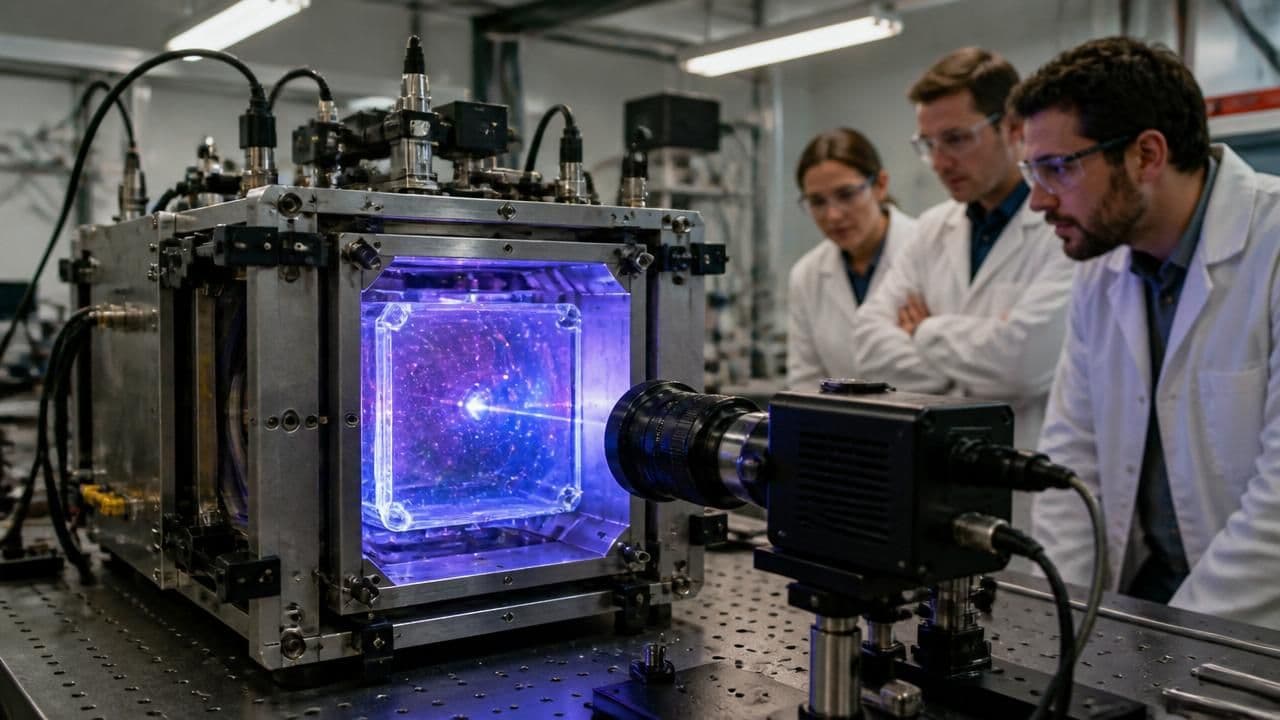
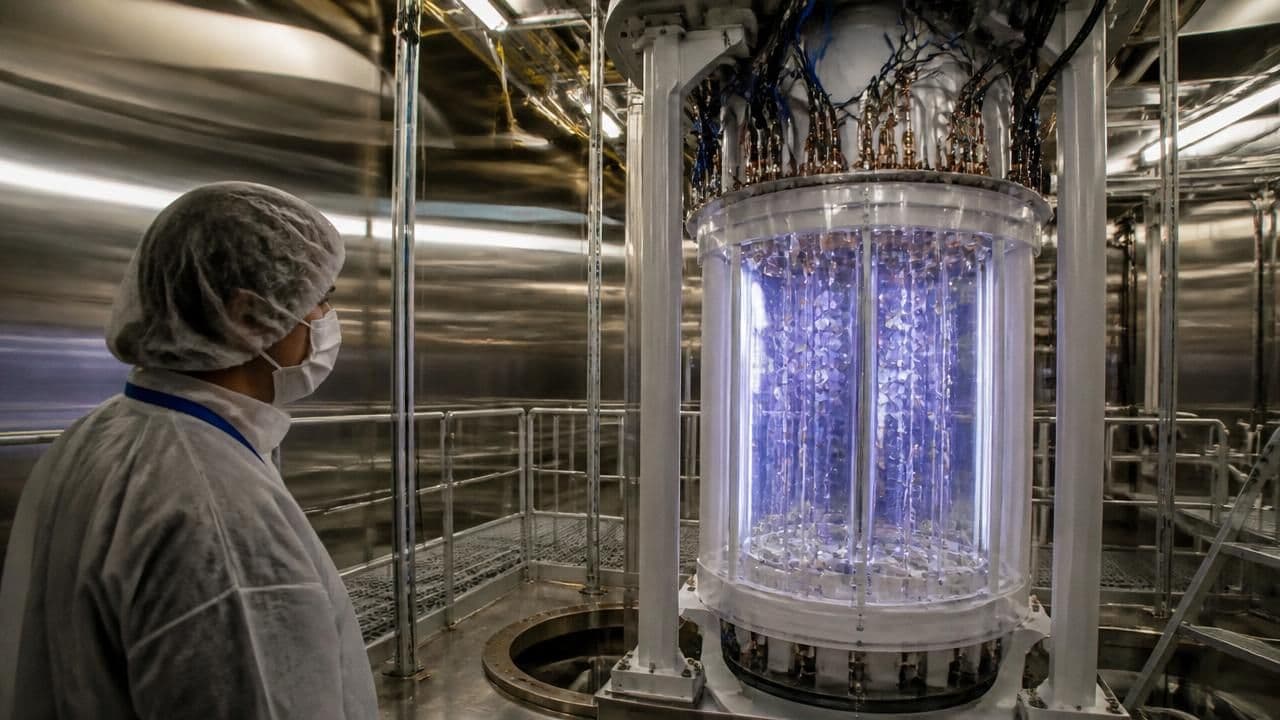
The LUX-ZEPLIN experiment has detected an unexplained event that could be a dark matter particle—but scientists caution that more data is needed to rule out background noise.

The LUX-ZEPLIN experiment has detected an unexplained event that could be a dark matter particle—but scientists caution that more data is needed to rule out background noise.

Advanced imaging reveals two distinct mechanisms of electronic phase formation and confirms hydrodynamic electron flow, deepening our understanding of superconductivity and magnetism.

New RHIC and CERN data reveal a Y-shaped gluon network inside protons, challenging decades-old textbook models and deepening our understanding of matter's stability.

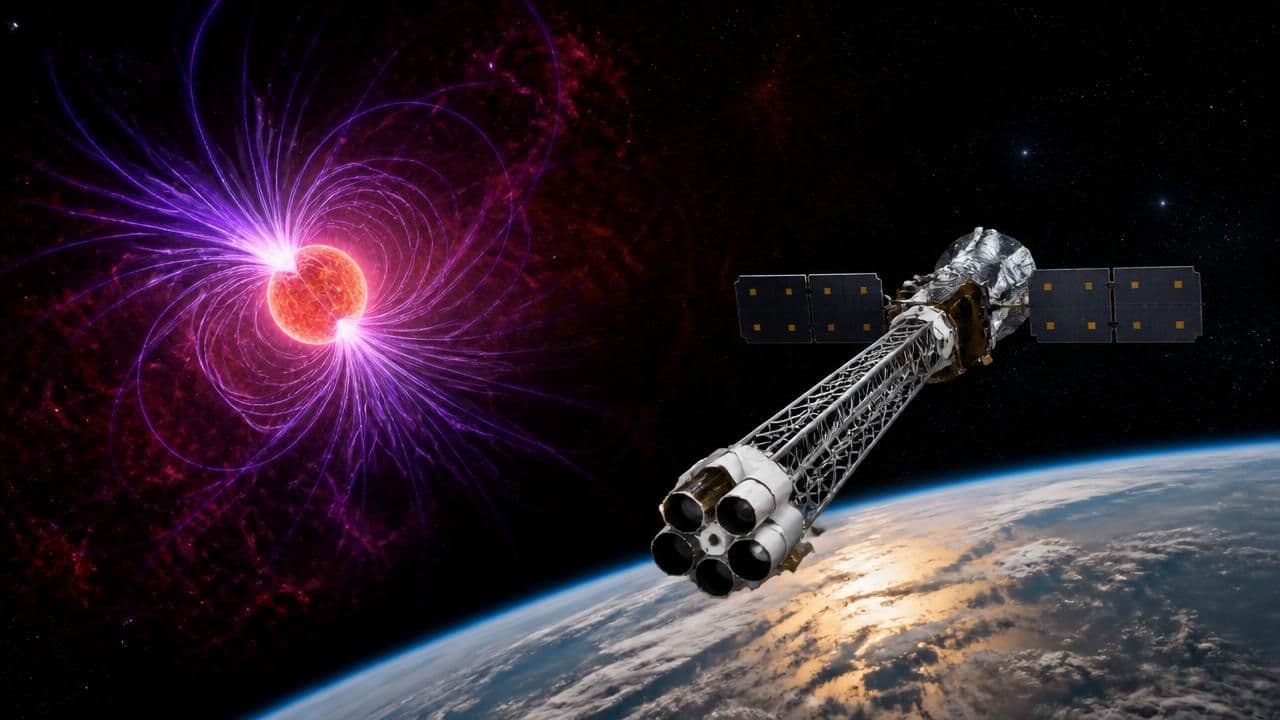
First-of-its-kind X-ray polarization measurements of magnetar 1E 1547.0-5408 validate quantum electrodynamics and challenge pulsar emission models.

From hidden dark-matter interactions to CERN’s antimatter gravity test, new findings are challenging the standard model and our place in the universe.

From expanding galaxies to hypothetical particles, modern physics explores multiple ways to surpass light speed—without violating known laws.

A trio of researchers from Norway investigates the bizarre quantum behavior of photons when a mirror is suddenly removed mid-reflection, revealing a complex particle swarm.

Scientists develop a scalable detector that could replace millions of components and enhance medical imaging, with potential applications in quantum entanglement research.

Physicists from HHU Düsseldorf and DLR develop a real-number quantum model, challenging a century-old mathematical foundation.

After more than a decade of predictions, researchers have synthesized a two-dimensional quantum material with controllable edge states, opening the door to room-temperature quantum electronics.