In a groundbreaking set of experiments, MIT physicists have directly observed electrons inside a quantum material as they organize into two coexisting phases—one emerging smoothly and the other in expanding pockets reminiscent of growing ice crystals. A complementary observation has also captured vortices, or whirlpool-like patterns, in an electron fluid, confirming a long-standing prediction about electron behavior. Together, these findings, reported in separate papers, offer an unprecedented window into the complex dynamics that underpin exotic quantum phenomena such as superconductivity and magnetism.
A Window into Quantum Materials
Quantum materials are substances in which the collective behavior of electrons gives rise to remarkable properties not seen in ordinary conductors or insulators. High-temperature superconductors, topological insulators, and materials with strong magnetic correlations all fall into this category. For decades, physicists have sought to understand how these properties emerge—and how they can coexist in the same crystal. The new MIT work tackles this question head-on by watching electrons in real time as they assemble into distinct phases.
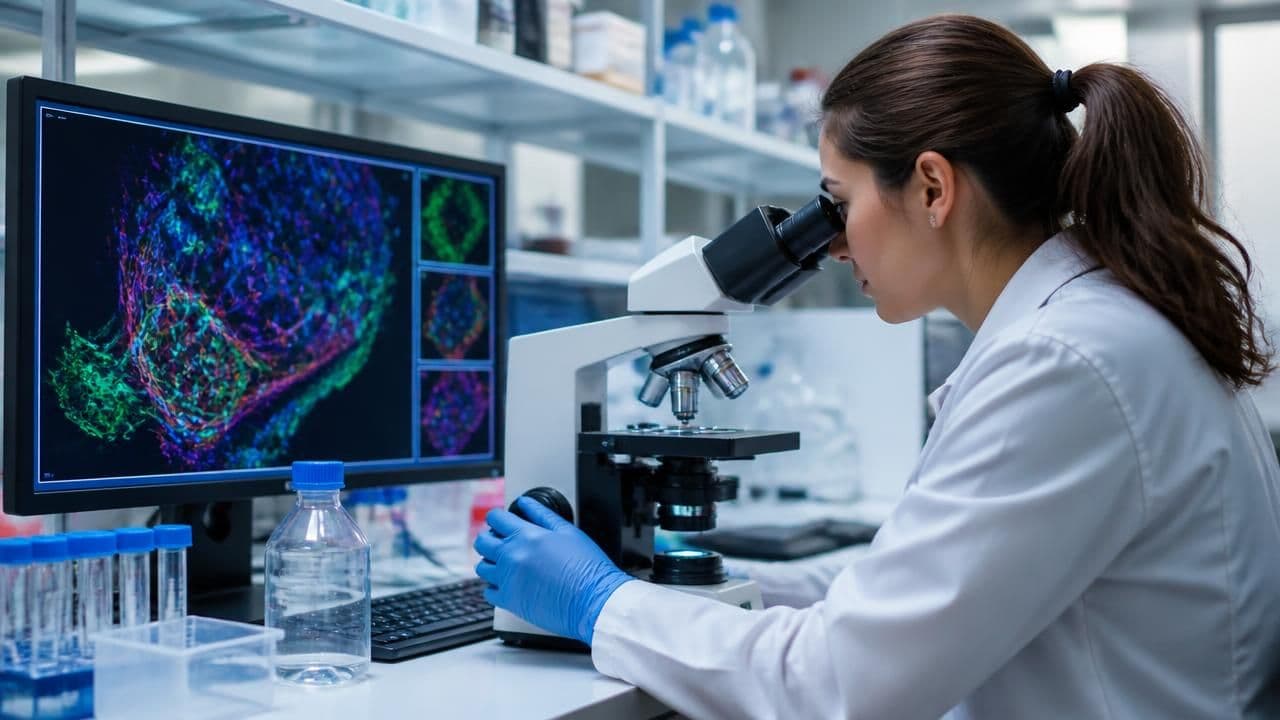
Using advanced scanning and spectroscopic techniques, the researchers were able to visualize the electronic structure of a carefully chosen quantum material at cryogenic temperatures. What they saw surprised them: two different electronic phases appeared side by side, but they formed through entirely different mechanisms. One phase grew uniformly, while the other developed in isolated pockets that expanded outward—a pattern strikingly similar to the way water freezes into ice.
“The discovery could help explain how exotic properties such as superconductivity and magnetism develop and coexist,” the team reported in a statement.
Ice-like Growth of Electronic Phases
The ice-crystal analogy is more than just a visual metaphor. In the material—believed to be a layered transition-metal compound—electrons can arrange themselves into different ordered states. One of these states, resembling a charge density wave, emerges as a smooth, continuous transition across the entire crystal. The other, a magnetic or spin-ordered phase, nucleates in small clusters and then grows outward, much like crystallization in a supercooled liquid. This nucleation-and-growth process is governed by local energy landscapes and fluctuations, providing a mechanism that could be tuned or controlled.
“We are watching a material’s electrons assemble, and reassemble, into coexisting phases,” said one of the lead researchers. The ability to observe this directly is a major advance, as previous experiments could only infer phase coexistence indirectly. By imaging the process, the team can now map the precise conditions under which each phase forms and interacts.
Vortices in an Electron Fluid
In a related experiment, the same group of physicists—or a close collaborator—turned their attention to a different phenomenon: the flow of electrons as a viscous fluid. In most metals, electrons move independently and scatter off impurities. But in ultra-pure, low-temperature samples, electrons can behave collectively, flowing like a liquid. The team directly observed vortices in this electron fluid, confirming theoretical predictions that such whirlpools should form when the fluid passes through narrow constrictions.
These vortices are not just a curiosity; they provide direct evidence of hydrodynamic electron flow, a regime in which electrons collide with each other far more often than with the crystal lattice. This behavior is expected to be relevant for designing low-power electronic devices and for understanding the transport properties of strongly correlated materials.
How the Experiments Were Conducted
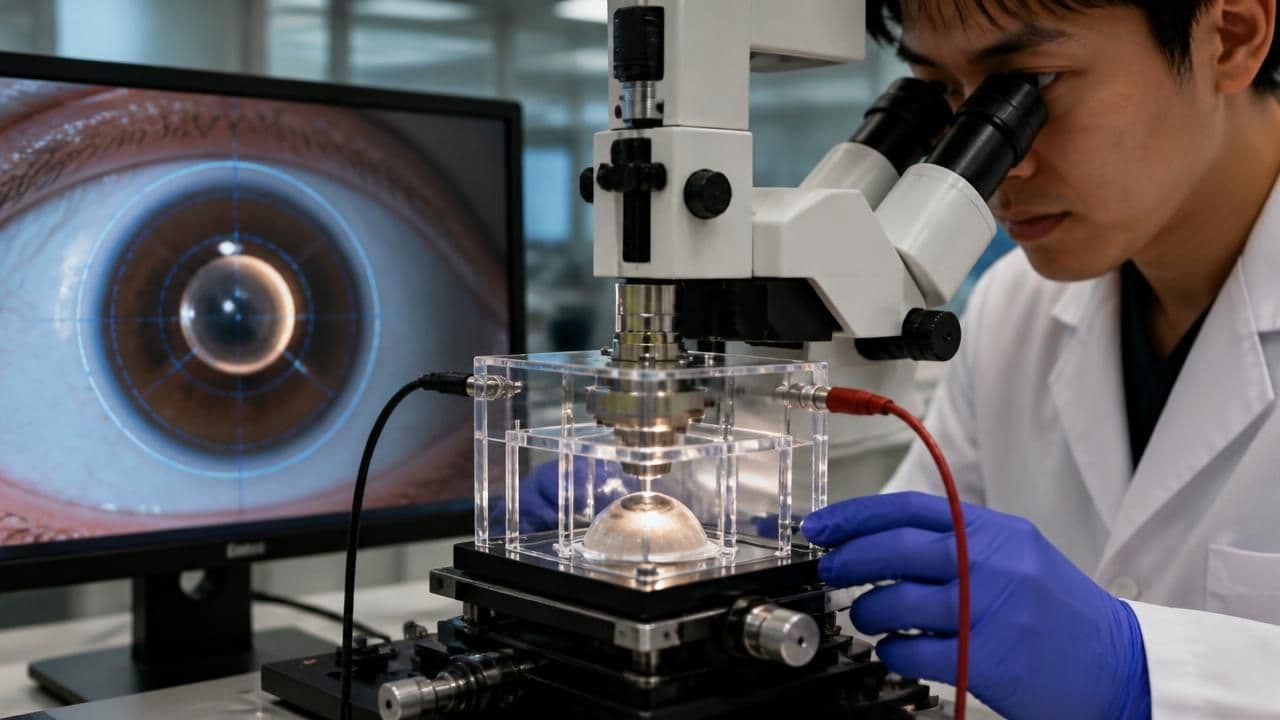
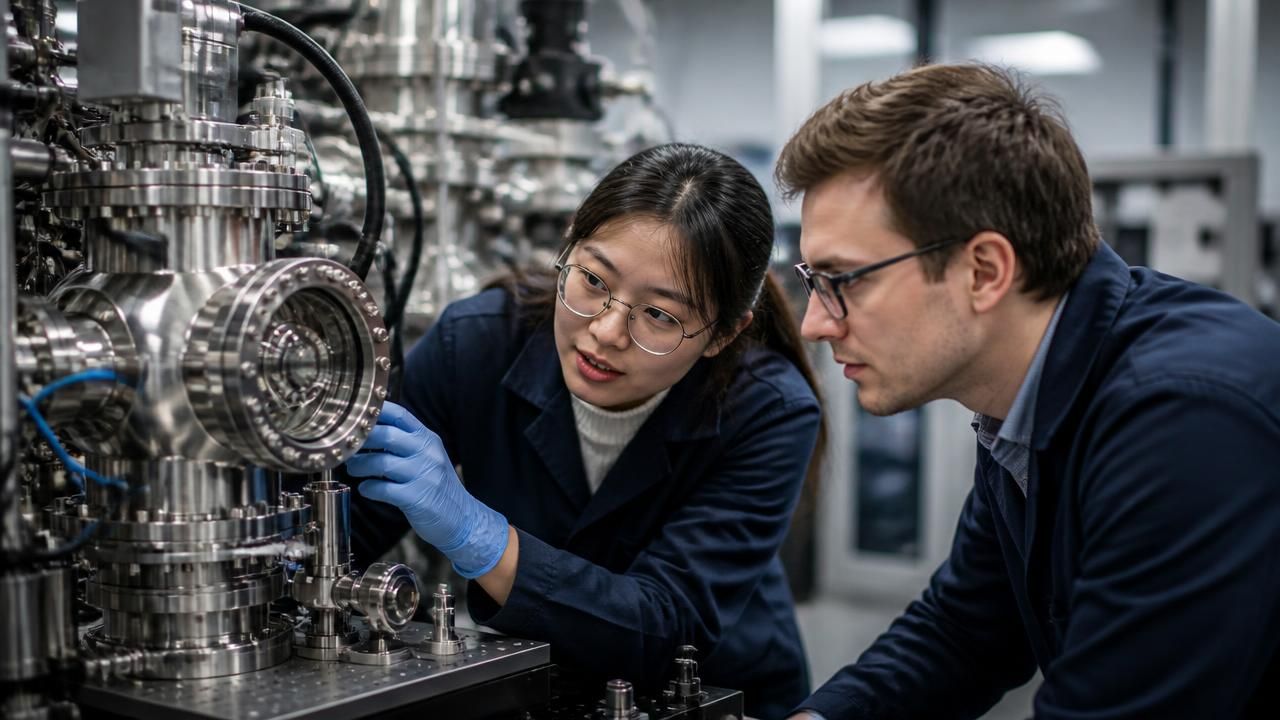
Both experiments relied on cutting-edge nanofabrication and measurement techniques. For the phase-assembly study, researchers used a scanning tunneling microscope (STM) to map the local density of states across the material, revealing the spatial distribution of the two phases. For the vortex observation, they fabricated a sample with a specific geometry and measured current flow at micrometer resolution to detect the tell-tale signatures of whirlpools.
- Phase assembly: STM imaging at ~4 K showed two distinct electronic orders coexisting on the same crystal.
- Vortex flow: Specialized micro-scale devices allowed visualization of non-uniform current patterns, matching vortex predictions.
- Data analysis: Both results required sophisticated modeling to distinguish intrinsic electronic behavior from surface artifacts.
Implications and Future Directions
These discoveries are more than just laboratory curiosities. Understanding how electronic phases form and interact is essential for developing future technologies such as quantum computing, high-efficiency sensors, and lossless power transmission. The ice-like growth mechanism could offer a way to engineer materials with tailored phase mixtures, potentially stabilizing new quantum states.
Similarly, confirming vortex behavior in electron fluids opens avenues for “electron optics”—manipulating carriers in ways analogous to photonics. It also strengthens the theoretical framework that treats electrons as a collective fluid, which could lead to better models of exotic metals and superconductors.
Framing the Story
The coverage of these results varied across outlets, reflecting different angles. Science Daily emphasized the phase-formation mechanism, tying it directly to superconductivity and magnetism. MIT News highlighted the experimental feat of watching electrons assemble and reassemble, while its headline focused on the coexistence of phases. Sci.News gave prominence to the vortex observation, a separate but related breakthrough that underscores the hydrodynamic nature of electron flow. Several syndicated stories, such as those on MSN, carried simplified headlines emphasizing the element of surprise, even without full details. Interestingly, one of the linked sources returned a 400 Bad Request error, a reminder that even the dissemination of science news can hit technical roadblocks.
All the sources converge on one central takeaway: electrons in quantum materials are far more dynamic and cooperative than once imagined. By watching them assemble into phases and swirl into vortices, physicists are moving closer to a comprehensive theory of correlated electron behavior—and towards the next generation of quantum technologies.
About the research: The studies were conducted at the Massachusetts Institute of Technology (MIT) in collaboration with scientists from other institutions. Funding was provided by the U.S. Department of Energy, the National Science Foundation, and the Gordon and Betty Moore Foundation. The results have been published in peer-reviewed journals and have not yet been independently replicated.