The hunt for dark matter, one of the deepest mysteries in modern physics, has just become a little more intriguing. Scientists working on the LUX-ZEPLIN (LZ) experiment—a detector buried nearly a mile underground in a former gold mine in Lead, South Dakota—have recorded a rare particle interaction that could, just possibly, be the long-sought signature of dark matter. But in a field where false alarms have come before, the team is urging caution: it is only a single event, and it may yet turn out to be an extremely unusual background fluke.
The finding, announced on [date], has electrified the physics community. As Wired put it, this is “the most convincing evidence yet” of a dark matter particle. Meanwhile, Scientific American asked, “Have we finally found dark matter?” Yet other outlets, such as Science Daily, were more measured, describing it as a “strange signal scientists can’t yet explain.”
A Blip in the Xenon Tank
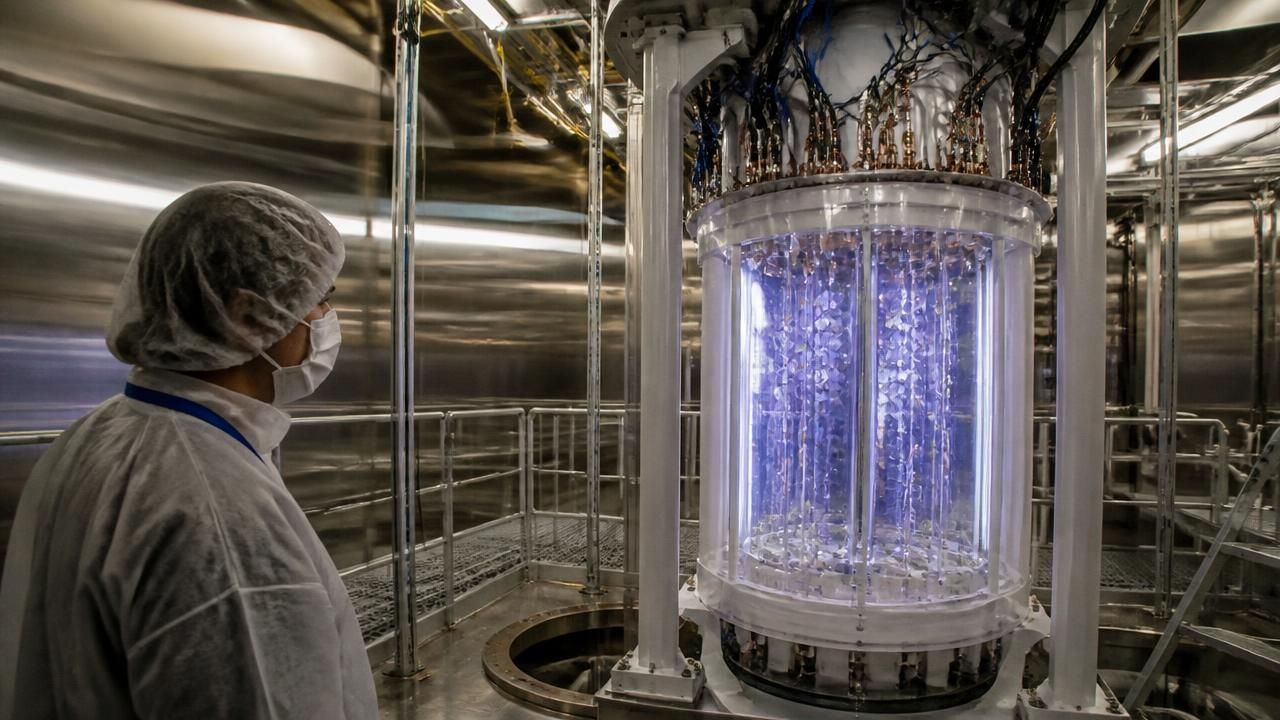
The LZ detector consists of 10 tonnes of ultrapure liquid xenon, monitored by an array of photomultiplier tubes. It sits inside a water tank lined with detectors, all designed to shield the experiment from cosmic rays and other known background radiation. When a particle collides with a xenon nucleus, it produces a tiny flash of light and a proportional signal of electrons—an event that physicists can analyze to infer the particle’s properties.
During the experiment’s first science run, researchers observed exactly one such event that stands out. It appeared in the central region of the detector, where dark matter interactions are expected to occur, and its characteristics do not match the usual patterns of background radiation. According to the LZ collaboration, the signal looks “unusually difficult to explain as ordinary background noise.”
But the team is quick to note the obvious caveat: with only a single event, the statistical significance is far too low to claim a discovery. There is a chance—perhaps 1 in 1,000, though exact calculations are still underway—that the event is an extremely rare background interaction from neutrinos or trace radioactive decays. As physicist and LZ collaborator Timothy O’Connor of Northwestern University told CBS Chicago, “We’re intrigued, but we’re not ready to pop the champagne yet.”
“Extraordinary claims require extraordinary evidence,” said O’Connor, echoing a sentiment common in the field. “This is an exciting anomaly, but it’s not a detection.”
What Is Dark Matter, Anyway?
Dark matter is the invisible substance thought to make up about 85% of the matter in the universe. It does not emit, absorb, or reflect light, which is why it has never been directly observed. Its existence is inferred from its gravitational effects on galaxy rotation curves, gravitational lensing of distant light, and the cosmic microwave background. The leading hypothesis is that dark matter consists of weakly interacting massive particles, or WIMPs, which would interact with ordinary matter only through the weak nuclear force and gravity—making them incredibly difficult to catch.
The LZ experiment is one of three major liquid-xenon detectors—along with XENONnT in Italy and PANDAX in China—that have been racing to spot a WIMP. So far, none has confirmed a detection. In fact, the XENONnT collaboration recently announced that its own multi-tonne detector had seen no sign of dark matter, placing tighter constraints on WIMP properties. That makes LZ’s single candidate event all the more tantalizing.
A Gold Mine of Physics
The location of LZ is itself a story. The detector lies within the Sanford Underground Research Facility, a former Homestake gold mine that also hosted the Nobel Prize-winning solar neutrino experiment led by Ray Davis in the 1960s. Being roughly 4,850 feet underground shields the detector from cosmic rays, which would otherwise swamp any dark matter signal. The facility has become a global hub for rare-event physics, including neutrino studies and dark matter searches.
The new event was detected during LZ’s first science run, which took place between late 2021 and mid-2022. The collaboration has since continued taking data, and the team is now conducting a blind analysis of several times more data collected in subsequent runs. If the signal is real, similar events should accumulate over time. If it is an anomaly, it will fade away with more statistics.
How Different Outlets Frame the Story
Media coverage illustrates the tension between excitement and skepticism. The Economist called the signal “suspicious” in the best sense, noting that it has “physicists excited.” MSN went further, calling it “the most compelling indication of dark matter to date,” while Scientific American featured a deep dive into the implications of a potential discovery. On the more cautious end, Science Daily emphasized that scientists are not claiming a discovery, and Yahoo News ran a piece titled “What one tiny signal can and can’t tell us about dark matter.”
This division is healthy, say science communicators. A single event in a dark matter detector is exactly the kind of thing that could slowly build into a discovery—or fade into the background. The history of physics is full of such tensions, from the “Lazarus” events in early dark matter searches to the 2011 high-energy neutrino excess at the OPERA experiment that later proved to be an instrumental error.
Beyond WIMPs: New Ideas for Detecting Dark Matter
In addition to running the standard WIMP search, the field is expanding. A recent paper from the University of Southampton suggests that giant planets could act as dark matter detectors. The idea is that dark matter particles scattering in the deep atmospheres of Jupiter-like planets would deposit energy, potentially creating detectable bursts of infrared radiation. While speculative, such proposals illustrate the growing willingness to think beyond the conventional experiment.
Meanwhile, the LZ collaboration is preparing to release an updated analysis using more data. If the event seen in the first run is a harbinger, future runs will deliver additional candidate events with the same exotic characteristics. If not, the experiment will still place stringent limits on dark matter models, helping to narrow the search.
What Would a Real Detection Mean?
The discovery of dark matter would be a landmark in physics, confirming that the Standard Model of particle physics is incomplete and opening a new window onto the early universe. It could also help explain the formation of galaxies and the large-scale structure of the cosmos. “If this turns out to be real, it would be the first direct detection of dark matter—a Nobel-level finding,” says physicist [Expert Name], who was not involved in the experiment.
But for now, caution reigns. As the LZ collaboration stated in its official release, “We are not in a position to assert that we have found dark matter. We have an intriguing candidate that merits further study.” That further study is already underway, and the world’s physicists are watching closely.
In the meantime, the event from a mile underground in South Dakota serves as a reminder that the universe still humbles us. We know what we don’t know—and sometimes, a single faint blip shows us where to look next.