For nearly a century, imaginary numbers have been considered an indispensable mathematical tool in quantum mechanics, woven into the very fabric of the theory. But a new study from physicists at Heinrich Heine University Düsseldorf (HHU) and the German Aerospace Center (DLR) suggests that quantum mechanics can be formulated using only real numbers. The findings, published in Physical Review Letters and highlighted by the American Physical Society in Physics Magazine, have ignited a debate about the fundamental nature of reality.
Real Numbers, Real Quantum Mechanics
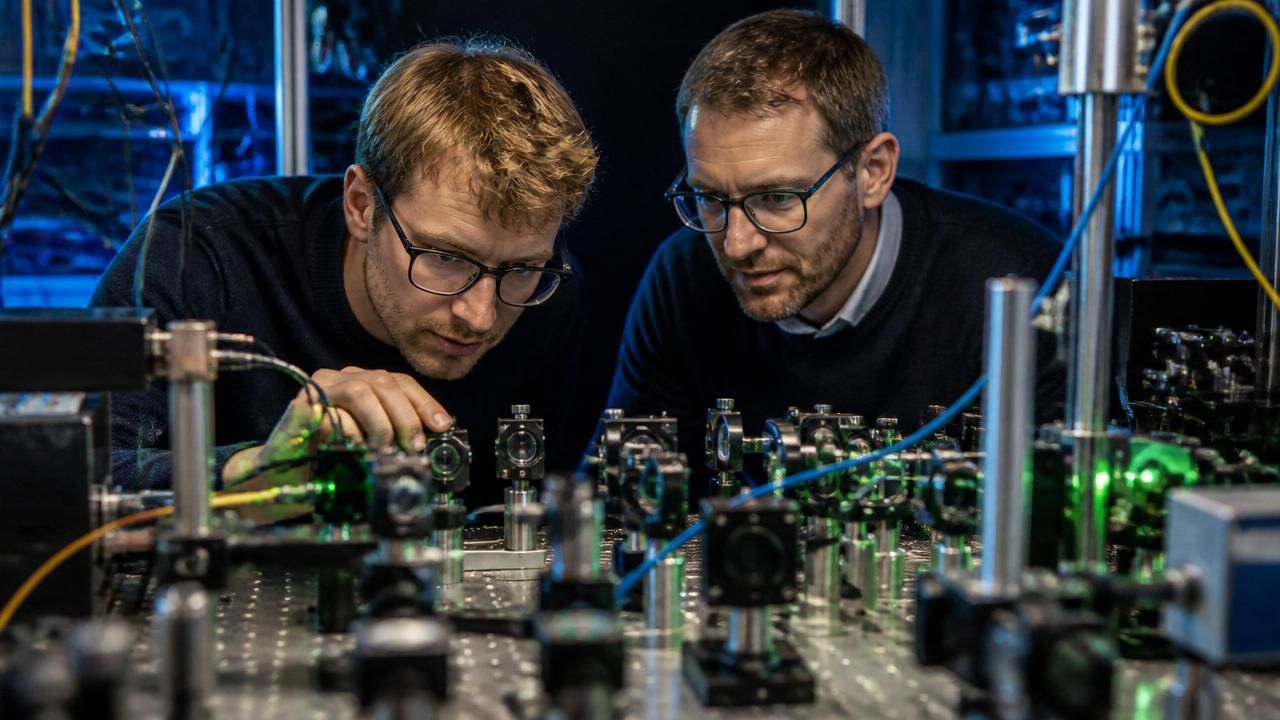
The team, led by Dr. Markus Müller and Dr. Jan Sperling, constructed a working quantum model that uses only real numbers—no complex or imaginary numbers—to describe quantum states and their evolution. "We show that quantum theory does not necessarily need to be formulated with imaginary numbers," Müller said in a statement. "Real numbers can in fact also be used." The model was experimentally tested using a photonic setup, demonstrating that real-number quantum mechanics can reproduce standard quantum predictions for certain phenomena.
However, the story does not end there. A separate body of research, including a 2021 paper in Nature and a 2022 experiment highlighted by the American Physical Society, argues that imaginary numbers are not just a mathematical convenience but are essential for describing certain quantum correlations. These experiments, involving entangled particles and Bell-type inequalities, suggest that any real-number theory would fail to replicate all predictions of standard quantum mechanics.
A Clash of Perspectives
The two camps appear to be at odds. The HHU-DLR team claims that their real-number model is complete for the systems they studied, while critics point to experiments that seem to rule out real-number theories. "The debate is about whether complex numbers are a necessary part of the quantum formalism or merely a convenient tool," explains Dr. Ana Maria Rey, a physicist at JILA who was not involved in the study. "The new work shows that for certain scenarios, real numbers suffice, but the broader question remains open."
"We show that quantum theory does not necessarily need to be formulated with imaginary numbers. Real numbers can in fact also be used." — Dr. Markus Müller, HHU Düsseldorf
Live Science reported that the HHU team's model is the first working quantum model using only real numbers, while a 2022 article from the same outlet noted that other studies find imaginary numbers may be needed to describe reality. This tension reflects a deeper philosophical question: Are imaginary numbers a fundamental feature of the universe, or just a human invention that simplifies calculations?
Historical Context and Implications
Imaginary numbers—multiples of the square root of -1—were introduced to solve algebraic equations and later adopted by quantum pioneers like Erwin Schrödinger and Werner Heisenberg. Their presence in the Schrödinger equation is so ingrained that many physicists consider them essential. The new real-number model challenges this orthodoxy, potentially simplifying quantum computing and simulation by avoiding complex arithmetic.
Beyond quantum mechanics, the debate touches on the nature of mathematics itself. As Aeon and New Scientist have explored, imaginary numbers describe the fundamental shape of nature, and some physicists have even created imaginary magnetic fields in the lab. The new findings could also have implications for quantum gravity and the search for a unified theory, where octonions—a more exotic number system—have been proposed.
What's Next?
The HHU team's work is a proof of principle, but it does not close the book. Future experiments will test whether real-number quantum mechanics can reproduce all quantum phenomena, including those involving entanglement and nonlocality. "Our model is a stepping stone," said Sperling. "It shows that the mathematical language of quantum mechanics is not set in stone."
As the debate continues, one thing is clear: the foundations of quantum mechanics are ripe for reexamination. Whether imaginary numbers are real or not, the quest to understand the quantum world is far from over.