In a year marked by both dazzling innovation and familiar restraint, the technology industry has delivered a mixed bag of products that reflect a maturing market. Ars Technica's extensive catalog of reviews—spanning from Apple's latest MacBooks and iPhones to Google's Pixel series and the rise of modular computing—paints a picture of an industry grappling with the tension between breakthrough potential and the steady march of incremental improvements.
The Apple Ecosystem: Refinement Over Revolution
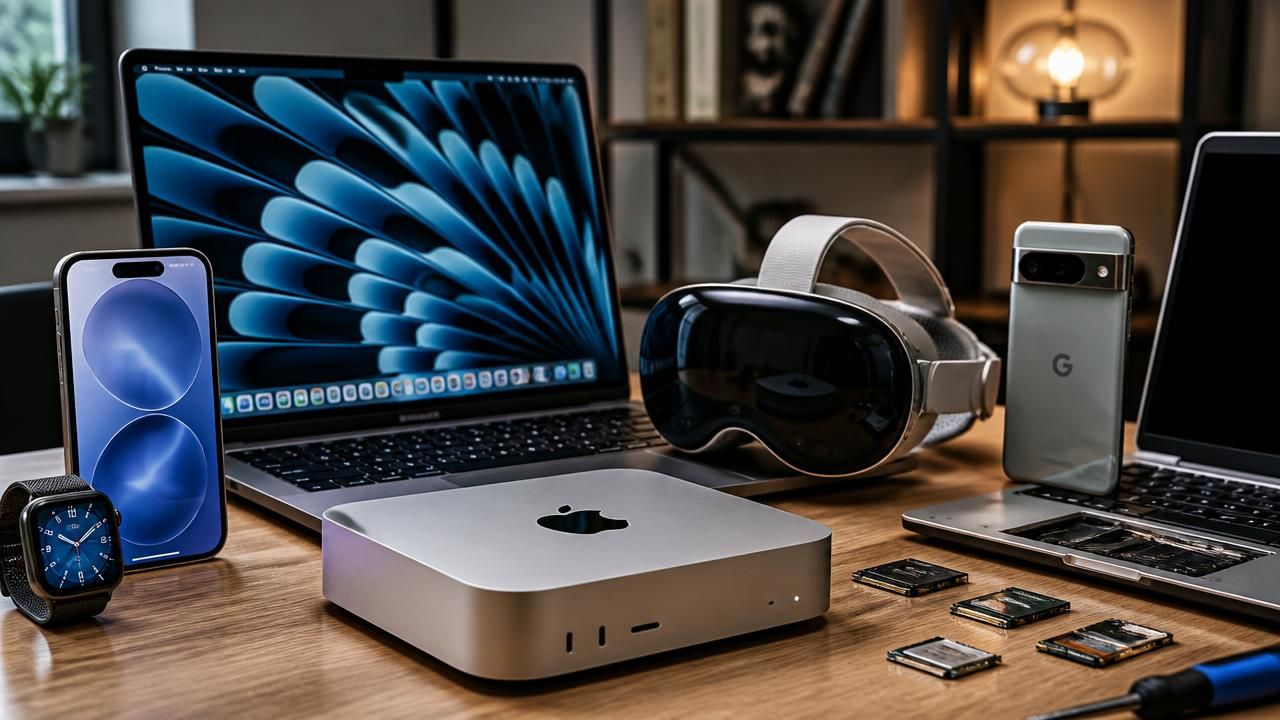
Apple's 2025 lineup has been characterized by cautious iteration rather than bold leaps. The MacBook Air with M5 received praise as 'still the best MacBook for almost everybody,' while the M4 Mac mini was hailed as 'probably Apple's best Mac minis ever.' Yet, reviewers noted that the company's latest offerings often feel like sidegrades rather than upgrades. The iPhone 17 was described as 'sometimes boring is best,' signaling a plateau in smartphone design. Meanwhile, the Vision Pro M5 review urged Apple to 'make some tough choices,' reflecting ongoing challenges in the mixed-reality space.
'Having it your way is one of the benefits of being an Ars Pro subscriber.' — Ars Technica, on customization
Subscriptions, too, came under scrutiny. Apple's Creator Studio subscriptions and the broader shift toward service revenue were dissected in a piece titled 'Seven things to know about how Apple’s Creator Studio subscriptions work.' The company's reliance on recurring revenue is a recurring theme, even as hardware sales plateau.
Google’s AI Offensive: Personal Intelligence and Pixel Progress
Google has taken a different tack, aggressively embedding AI into its ecosystem. The Pixel 10 series review provocatively asked, 'Don’t call it an Android,' highlighting how Google's software experience now feels distinct from the broader Android ecosystem. The Pixel 9 review focused on 'The Gemini AI stuff,' while the Pixel 10a was dubbed a 'sidegrade.' Most notably, Google announced a feature that adds 'your Gmail and Photos to AI Mode to enable Personal Intelligence,' raising both convenience and privacy questions.
In a more experimental vein, Google's Project Genie allows users to 'create interactive worlds from a photo or prompt,' blurring the line between AI and creative tools. Meanwhile, the Pixel Fold was praised as 'the first foldable that actually feels like a tablet.'
The Modular and DIY Ethos
Perhaps the most refreshing trend of 2025 is the rise of modular, repairable, and customizable hardware. Framework released both the Laptop 13 Pro and the Framework Desktop, the latter described as 'a mash-up of a regular desktop PC and the Mac Studio.' The company's commitment to user-upgradeable components stands in stark contrast to the sealed designs of Apple and others. Even Ars itself got in on the action, with a guide titled 'Hosting Ars, part three: CI/CD, or how I learned to stop worrying and love DevOps.'
Community and Customization
The DIY spirit extends beyond hardware. Ars readers explored how to 'declutter, quiet down, and take the AI out of Windows 11 25H2,' reflecting a growing desire to strip back unwanted features. One reader's experience 'running Windows 11 on “unsupported” PCs for 3 years' offered practical insights for those pushing the boundaries of compatibility. On the mechanical keyboard front, the Razer BlackWidow V4 Pro was criticized for having 'too much software,' while the Drop CTRL continued to lure enthusiasts down the rabbit hole of custom keyswitches.
However, not all customization efforts are welcome. The Nothing Phone 3a Pro design philosophy was summed up as 'Some people will hate it,' and the Yoga Tablet 2 Pro was 'so close to being good.' Even the beloved Land Rover Defender was praised for rugged charm but noted to 'drink like a fish.'
Apple’s Legacy: From PowerPC to Silicon
Ars Technica's historical deep dives—ranging from a review of the 2010 Mac Pro's '12-core' era to the 2013 Mac Pro's workstation ambitions—remind us how far Apple has come. The 2021 MacBook Pro review declared it 'what you’ve been waiting for,' while the 2019 model bid farewell to the butterfly keyboard. Yet, the 2016 MacBook Pro was criticized as 'an expensive MacBook Air on the inside.' The transition to Apple Silicon has been a decade in the making, with the M4 and M5 chips now defining the user experience.
'What I learned from 3 years of running Windows 11 on “unsupported” PCs.' — Ars Technica, reflecting on longevity
Beyond the big players, the year saw niche innovations. The Verge TS Pro electric motorbike baffled testers with its hubless design, and the Riven remake was declared 'even better than Myst.' The iPad 11 ($349) was noted as 'all the iPad most people need,' while the M4 iPad Pro was accused of 'showing off.'
The Business of Tech: Subscriptions, Lawsuits, and Ethics
The business side of tech also made headlines. A locksmith YouTuber faced a lawsuit after 10 million people watched him shim a lock—a case that underscores the legal perils of online content. Meanwhile, a USDA ARS article on biofuels hinted at the intersection of agriculture and energy, a reminder that tech extends beyond consumer gadgets.
Ars itself offered a subscription model that lets readers choose how they consume content: 'Both Grid and List views are available for all readers, but subscribing to Ars unlocks two additional layout options.' The message is clear: even tech journalism must adapt to a fragmented audience.
Conclusion: The Year of Living Cautiously
If there is a single narrative from 2025's tech reviews, it is that the industry is reaching a plateau. Incremental improvements dominate, AI continues its inexorable integration, and customization—whether through modular hardware or software tweaks—remains a rallying cry for enthusiasts. As Apple faces tough choices on Vision Pro, Google pushes personal AI, and Framework champions repairability, one thing is certain: the future will not be defined by a single breakthrough, but by the cumulative effect of many small changes.