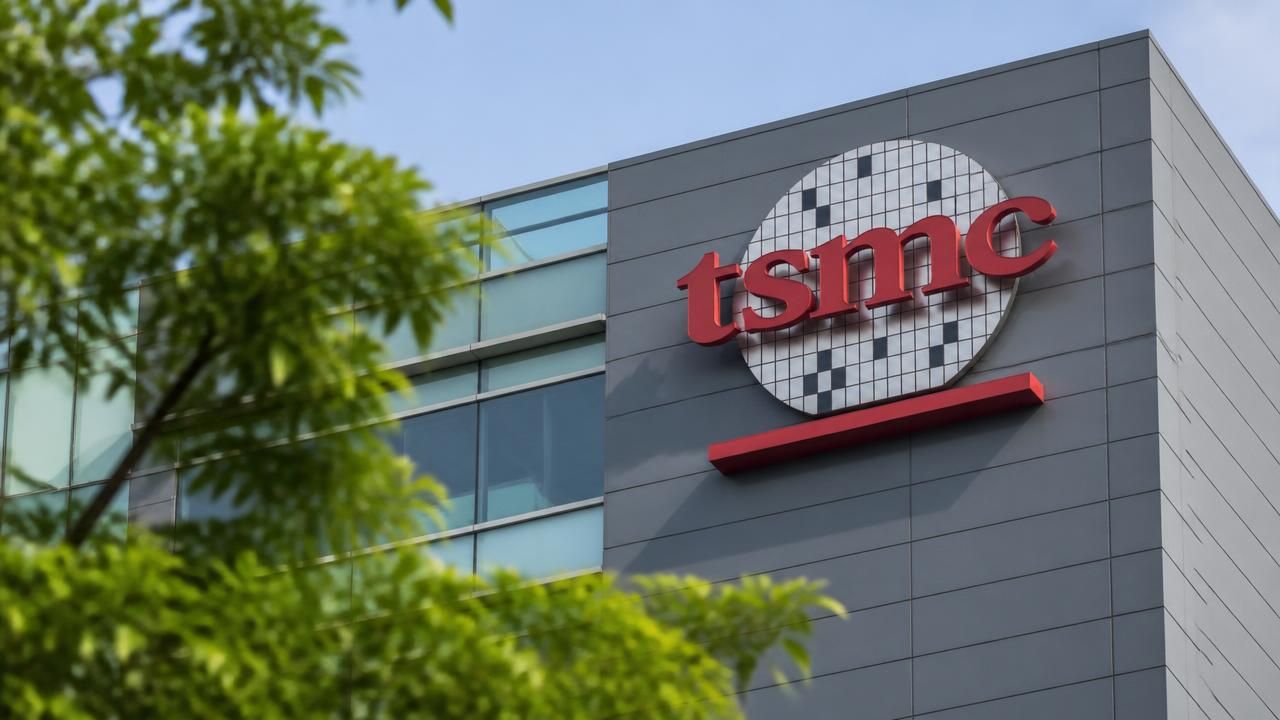
Taiwan Semiconductor Manufacturing Co. is moving from supplier to shareholder in the artificial intelligence boom. The Taiwanese chipmaking giant's board has approved plans to invest up to $1 billion in OpenAI and Anthropic, giving TSMC direct equity stakes in the two most prominent U.S. AI developers — companies whose models are trained on hardware that TSMC itself manufactures.
According to reports citing Reuters, the board authorized up to $500 million to purchase OpenAI preferred stock reserved for large strategic investors, and a further $500 million to buy Anthropic common shares at the company's expected initial public offering price. Neither TSMC nor the AI companies have publicly detailed the terms beyond the board authorization, and the OpenAI allocation is structured as preferred equity of the kind the ChatGPT maker has used to bring in heavyweight backers.
A bet on its own customers
The move formalizes a relationship that has already been extraordinarily lucrative for TSMC. The company is the world's dominant contract chipmaker, producing the advanced processors designed by Nvidia, AMD, Apple and others that fill AI data centers. The buildout of those facilities has driven TSMC's revenue to record levels and made it one of the most valuable companies in Asia.
That momentum was reinforced by October sales figures showing a 60% year-on-year increase, a data point widely cited alongside the investment announcement as evidence that demand for AI hardware has not slackened. For TSMC, taking stakes in OpenAI and Anthropic is a way of capturing some of the upside generated further up the value chain — and of securing influence over customers who will shape how much silicon the world needs in the years ahead.
The circular-financing question
Yet the deal also lands squarely in the middle of a debate that has unsettled AI investors in recent months: the growing web of cross-holdings, supply agreements and equity investments linking chipmakers, cloud providers and model developers. Nvidia has committed to large investments in OpenAI; Microsoft is both an investor in and a major cloud partner of OpenAI and, increasingly, Anthropic; and cloud providers now double as backers, suppliers and customers of the same startups.
The Wall Street Journal reported that an investment of this kind could give markets "a shot of confidence as the artificial-intelligence trade shows signs of strain." But analysts quoted by the Journal also cautioned that such circular financing among investors, suppliers and customers has made it increasingly difficult to evaluate real market demand for AI-related hardware and services — because money flowing into a model developer can return, indirectly, as orders for GPUs and the chips that power them.
"A shot of confidence as the artificial-intelligence trade shows signs of strain." — The Wall Street Journal, on the potential market impact of TSMC's investment
That concern is not academic. As coverage of the deal noted, when the same pool of capital circulates among a small group of players, headline revenue figures can overstate underlying end-user demand. TSMC's own order book is one of the clearest real-world signals of AI appetite — which is precisely why its decision to invest, rather than simply supply, is being read as both a vote of confidence and a potential conflict of interest.
What TSMC stands to gain
Beyond the financial return, the strategic logic is straightforward. A stake in Anthropic gives TSMC exposure to one of the fastest-growing enterprise AI businesses, with the added benefit of entering at an IPO price that could appreciate sharply if the listing is well received. The OpenAI preferred shares, meanwhile, position TSMC alongside the company's most important strategic partners.
- Equity upside: Direct participation in the value created by the AI applications layer, not just the hardware layer.
- Customer lock-in: Deeper ties to the developers whose compute needs drive advanced-node and CoWoS packaging demand.
- Demand visibility: Greater insight into the AI roadmaps and capital spending plans of two anchor customers.
- Geopolitical hedging: Stronger relationships with U.S. AI champions as TSMC expands its Arizona manufacturing footprint.
Risks and the road ahead
The obvious risk is concentration. TSMC would be tying a portion of its balance sheet to the same AI trade that determines its order book, amplifying exposure if spending slows. Governance questions also arise: holding equity in customers can complicate pricing negotiations and invite scrutiny from regulators already attentive to the AI supply chain.
Then there is the Anthropic question mark. The investment is priced against an expected IPO, an event that has been anticipated but not definitively scheduled. If the listing slips or valuations compress, the entry price that looks attractive today could look expensive in hindsight.
For now, the message from Hsinchu is unambiguous. TSMC spent three years profiting from the picks-and-shovels side of the AI gold rush. With this $1 billion authorization, it is buying a piece of the miners — and signaling that it expects the boom to run well beyond the current cycle.