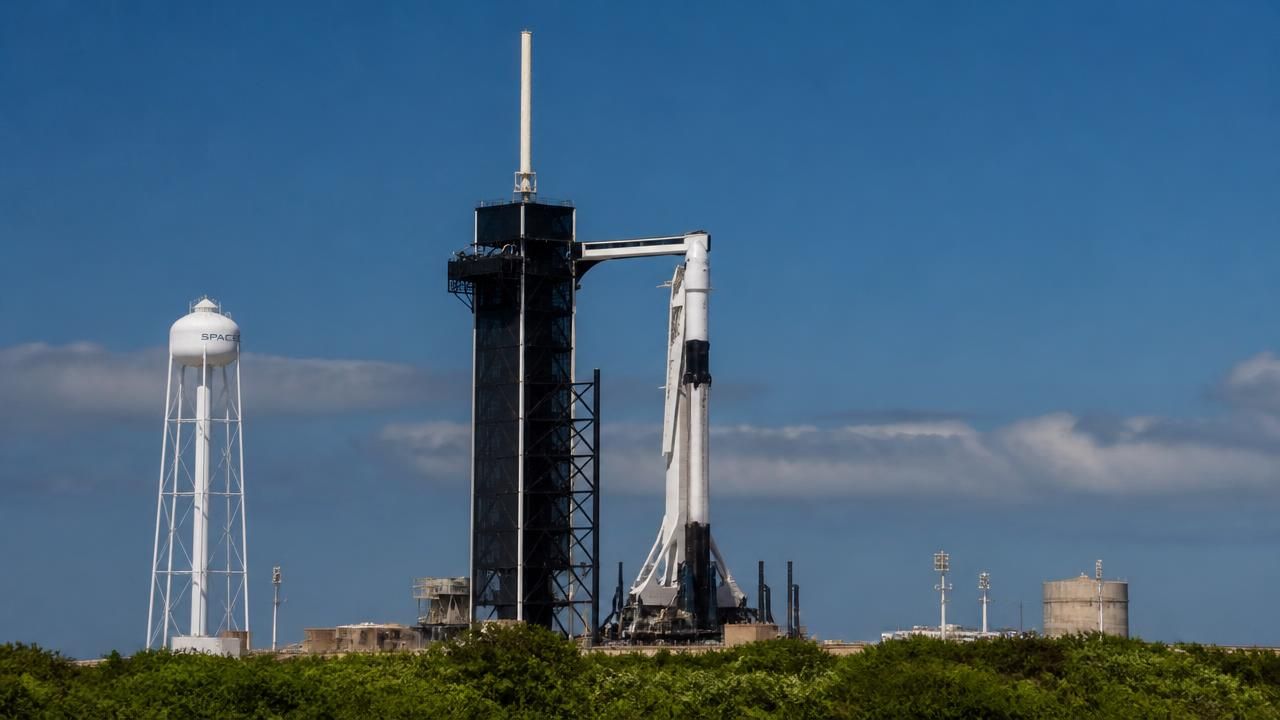
NASA's 35th Commercial Resupply Services mission is being readied for launch from Cape Canaveral Space Force Station in Florida, carrying a payload of biological and physical science investigations that agency officials say will advance human health both in orbit and on Earth. The flight, designated CRS-35, will send a SpaceX Dragon cargo spacecraft to the International Space Station with four experiments from NASA's Biological and Physical Sciences division aboard.
Launch is targeted for no earlier than Oct. 13, according to scheduling notes circulated by aggregators of NASA's manifest, though at least one local outlet listed the flight as 'set for Tuesday.' NASA has not confirmed a final instantaneous launch window in the material reviewed, and launch dates for ISS cargo flights routinely shift because of weather, range conflicts and orbital mechanics.
What is riding to orbit
NASA framed the mission squarely around health: astronaut health during long-duration missions, plant health in microgravity, and the behavior of drug-resistant organisms aboard the station. The agency described four investigations, each of which is designed to answer a question that cannot be answered well on the ground.
- Tiny brain models, big questions. A precision health investigation will send small, lab-grown models of the human brain to the orbiting laboratory for five weeks. Researchers will compare the tissue models that flew with identical ones kept on Earth to determine how a short spaceflight affects the human brain at the cellular level.
- Crop disease in microgravity. A space crops study will test whether crop diseases develop faster and more severely without gravity, comparing molecular and structural changes in plants grown in orbit against terrestrial controls.
- Antibiotic-resistant bacteria. An analysis of drug-resistant organisms already aboard the station aims to characterize how microgravity influences their behavior, a concern for crew health and for spacecraft hygiene on long missions.
- Faster health assessment. A new investigation seeks a quicker way to assess astronaut health, potentially giving flight surgeons earlier warning of physiological trouble.
The brain-model work is the headline item. NASA's release poses the central question bluntly: what happens to the human brain in space? The agency says the effort could deepen understanding of how the brain responds to stress and help lay the groundwork for countermeasures against risks astronauts may face on future missions to the Moon and beyond.
This research supports astronaut health during long-duration missions.
Why it matters
The station has spent more than two decades functioning as a laboratory for exactly this kind of question. Microgravity alters fluid distribution, bone density, muscle mass, immune function and, increasingly, researchers suspect, the nervous system itself. As NASA and its partners plan longer stays on the lunar surface under Artemis and eventual crewed voyages to Mars, the tolerance limits of the human body become mission architecture, not an academic curiosity.
Plant research carries a parallel logic. Any credible plan for sustained off-world habitation assumes crews will grow at least part of their food, and a crop that succumbs to disease in orbit is a crop that cannot feed a crew. Understanding whether pathogens behave differently in microgravity is a prerequisite for reliable space agriculture — and, because plant disease is a terrestrial problem too, the findings may feed back into Earth-based agricultural science.
Cargo Dragon is central to the enterprise because it is a two-way vehicle: it delivers hardware and experiments, then returns to Earth with samples and frozen specimens that can be analyzed in ground laboratories. That return capability is why tissue models flown for five weeks can be compared directly against their Earth-bound twins.
The view from Florida
Local coverage of CRS-35 has focused less on the biology and more on what residents can expect to see and hear. Reports from Central Florida outlets warn of sonic booms associated with the Falcon 9 first-stage booster's return, and raise the prospect of a 'space jellyfish' — the luminous, umbrella-shaped plume that can appear when a rocket launches near twilight, when sunlight illuminates exhaust gases against a darkening sky while the ground below is already in shadow.
That split in emphasis is typical. NASA's own communications lead with the science; regional outlets lead with the spectacle, the traffic and the launch schedule. Both frames are accurate, and together they capture what a resupply mission has become: a routine logistics flight that is also a public event.
How the story traveled
Several versions of the same NASA release were republished verbatim across news aggregators, in some cases behind security checks or paywalls that rendered the text inaccessible to readers. One syndicated headline appeared to conflate the cargo mission with a separate, unrelated NASA astrophysics launch, an example of how automated aggregation can blur distinct stories into one feed item. A pair of Florida outlets' launch-schedule pages were similarly blocked to outside readers.
The practical effect is that the most reliable account of what CRS-35 is carrying remains the agency's own release, while the most reliable account of when it will fly and what it will sound like tends to come from local reporting near the Cape.
What happens next
Once launched, Dragon will fly a rendezvous profile to the station and be captured and berthed by the crew, after which the experiments will be unpacked and installed. The brain tissue models will spend five weeks in orbit before being packed for return. A splashdown off the Florida coast will bring the specimens home for analysis — closing a loop that begins with a launch countdown on the Space Coast and ends, if the research pans out, with a better understanding of how to keep people healthy far from Earth.