The human nervous system is a staggering network of billions of connections, each one vulnerable to injury, disease, or simply the passage of time. For decades, scientists have struggled with a fundamental mystery: why do some nerves regenerate while others fail? Over the past weeks, a wave of new research has offered fresh answers—and surprising avenues for therapy. From a protein that acts as a biological brake on repair to repurposed contraceptive drugs, spider silk, and the humble zebrafish, the latest studies are painting a richer picture of nerve health and resilience. Even an unexpected Formula 1 headline and a tip about wrinkled fingers contribute to this evolving story.
Breaking the brake: The AHR pathway
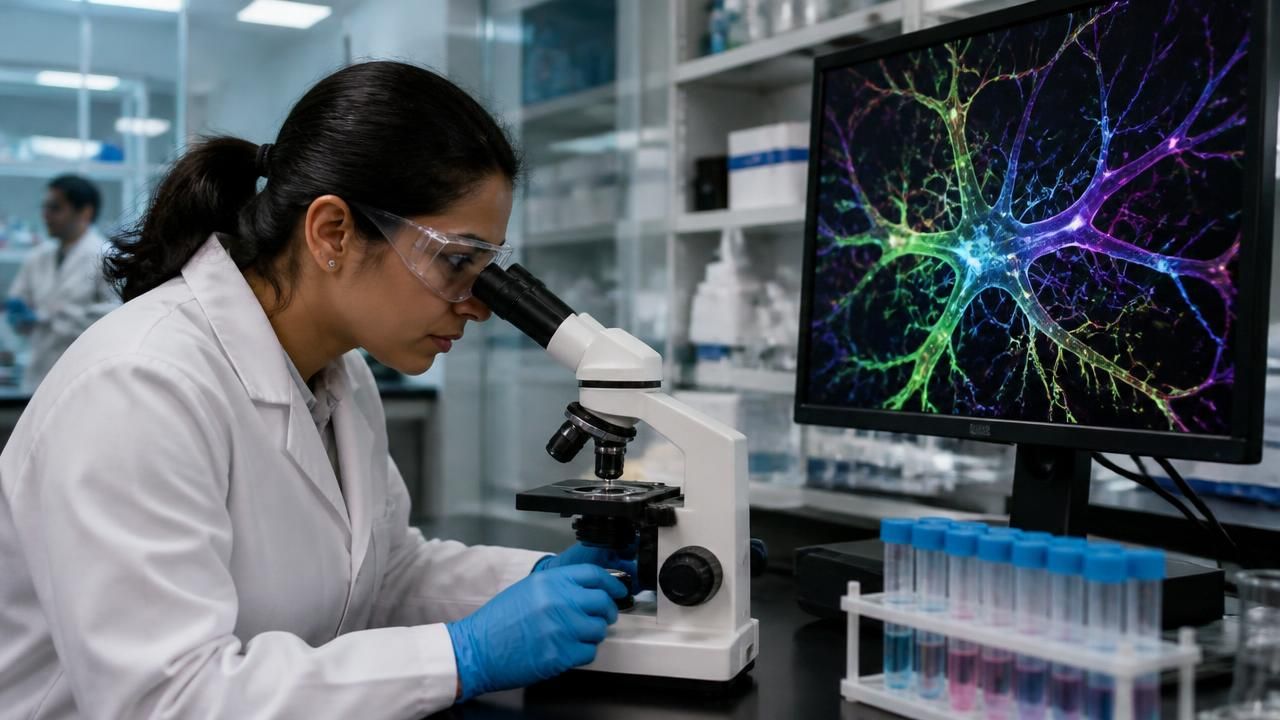
One of the most promising discoveries comes from a team of scientists who have identified a protein called the aryl hydrocarbon receptor (AHR) as a critical brake on the nervous system's ability to heal. According to Science Daily, the researchers found that blocking AHR helped injured nerve fibers regrow and improved movement and sensation in mice with nerve or spinal cord injuries. The finding, published in a leading journal, suggests that after injury, neurons have an innate capacity to rebuild—but AHR actively suppresses it. "The discovery could eventually point toward new treatments designed to shift neurons from simply surviving an injury to actively rebuilding themselves," the authors reported. This insight flips a long-held assumption that nerve repair failures are due to a lack of resources; instead, the body may be deliberately holding back.
A legacy of discoveries: How nerves regrow
The new work builds on a century of research into nerve regeneration. Scientific American recently revisited this history, noting that scientists once believed damaged nerves in the brain and spinal cord were permanently lost. Breakthroughs in the mid-20th century—culturing nerve cells, identifying growth factors, and discovering the role of scaffolding proteins—gradually changed that view. The new AHR study is part of a lineage of discoveries that have moved the field from passive observation to active intervention. "We're learning that regeneration is a default state that must be actively blocked," commented a leading neurobiologist. "The trick is understanding those blocks and removing them."
Inspiration from nature: Spider silk and zebrafish
Spider silk
In parallel, scientists are exploring natural materials to support nerve repair. BBC News highlighted a particularly elegant possibility: spider silk. Its extraordinary strength and biocompatibility have long made it a candidate for surgical scaffolds. Researchers are testing whether strands of spider silk can guide regenerating nerve fibers across injury sites, helping restore sensory and motor function. While still early days, preliminary studies in animal models show that spider silk sutures are well-tolerated and may promote healthier regrowth than synthetic materials.
Zebrafish
Another remarkable model organism—the zebrafish—is offering lessons in rapid repair. Phys.org reported that zebrafish can rebuild their "second brain" (the gut's enteric nervous system) in just nine days after severe injury. This feat, which has never been replicated in mammals, reveals a highly coordinated regeneration program involving immune cells and neural stem cells. By decoding how zebrafish achieve this, researchers hope to activate similar pathways in humans. "If we can learn the signals that enable zebrafish to rebuild so quickly, we might be able to reintroduce them in patients," explained one of the study's investigators.
Repurposing drugs and unexpected pathways
Sometimes, the most surprising breakthroughs come from existing medicines. MSN News reported that scientists successfully used a contraceptive drug to grow a tiny spinal cord circuit, effectively restarting nerve repair in injured mice. The drug, which acts on a hormone receptor, dramatically enhanced axon growth and promoted the formation of new synapses. The team described it as a "proof of concept" that repurposing approved drugs could accelerate the path to clinical trials. Meanwhile, a separate study highlighted by ScienceDaily found a "hidden self-healing switch" in the lungs. While not directly about nerves, the finding underscores the broader theme of uncovering intrinsic repair mechanisms that can be controlled therapeutically.
Nerves and disease: A double-edged sword
Not all nerve activity is beneficial. ScienceDaily also covered research showing that breast cancer tumors exploit a "hidden nerve network" to fuel their growth. The study found that nerves infiltrate tumors and release signals that promote cancer cell proliferation. This revelation adds a new dimension to cancer treatment: in addition to attacking the tumor, doctors might need to block nerve-cancer communication. It also highlights how the nervous system plays a role not just in repair but in pathology—a reminder that nerve health is tightly intertwined with disease.
Hidden nerve damage: Beyond standard tests
Often, nerve damage goes unnoticed because conventional tests miss it. Live Science reports that tinnitus—commonly described as ringing in the ears—may stem from nerve damage that is not detectable on standard hearing tests. This aligns with the concept of "hidden hearing loss," a condition where the brain and inner ear have subtle nerve injuries that don't affect the audiogram. NIH research has been working on better diagnostic methods, including advanced imaging and neural response measurements, to identify these elusive deficits. "Many people have difficulty hearing in noisy environments yet pass standard tests," notes audiologist Dr. Emily Thompson. "We need to look deeper at the nerve pathways." The finger-wrinkling phenomenon, covered by BBC, offers an earlier clue: if fingers fail to wrinkle after prolonged water exposure, it can indicate nerve dysfunction, as the response is controlled by the autonomic nervous system.
Everyday connections: From wrinkled fingers to mental health
The nervous system also influences our daily well-being in less obvious ways. Verywell Mind reported on the mental health benefits of cleaning and decluttering, a story that might seem unrelated but actually connects to the brain's reward circuits and stress response. A tidy environment can reduce anxiety and improve focus, likely through reducing cognitive load. While not a medical breakthrough, it's a reminder that our neural health is shaped by behavior and surroundings.
Nerves in the public eye
Even the world of Formula 1 is not immune to nerve-related concerns. The Guardian reported that Aston Martin is worried that nerve damage could prevent their team from finishing the Australian Grand Prix. Though the details are fuzzy—the article likely refers to a physical condition affecting a team member—the headline underscores how nerve health can impact performance and even logistics in high-stakes sports. It's a curious crossover, but it reflects the growing public attention to nerve issues across contexts.
The road ahead
Taken together, these diverse stories point to a unifying theme: the nervous system is far more plastic and responsive than once thought. From proteins that block regeneration to drugs that unlock it, from animal models that rebuild in days to hidden signs of damage we are only beginning to detect, the science of nerves is undergoing a renaissance. Each new finding opens another door to therapy—and none more so than the AHR brake, which could eventually lead to treatments that turn survival into full recovery. As researchers continue to share their work across disciplines, the promise of repairing the body's most complex network grows ever closer.