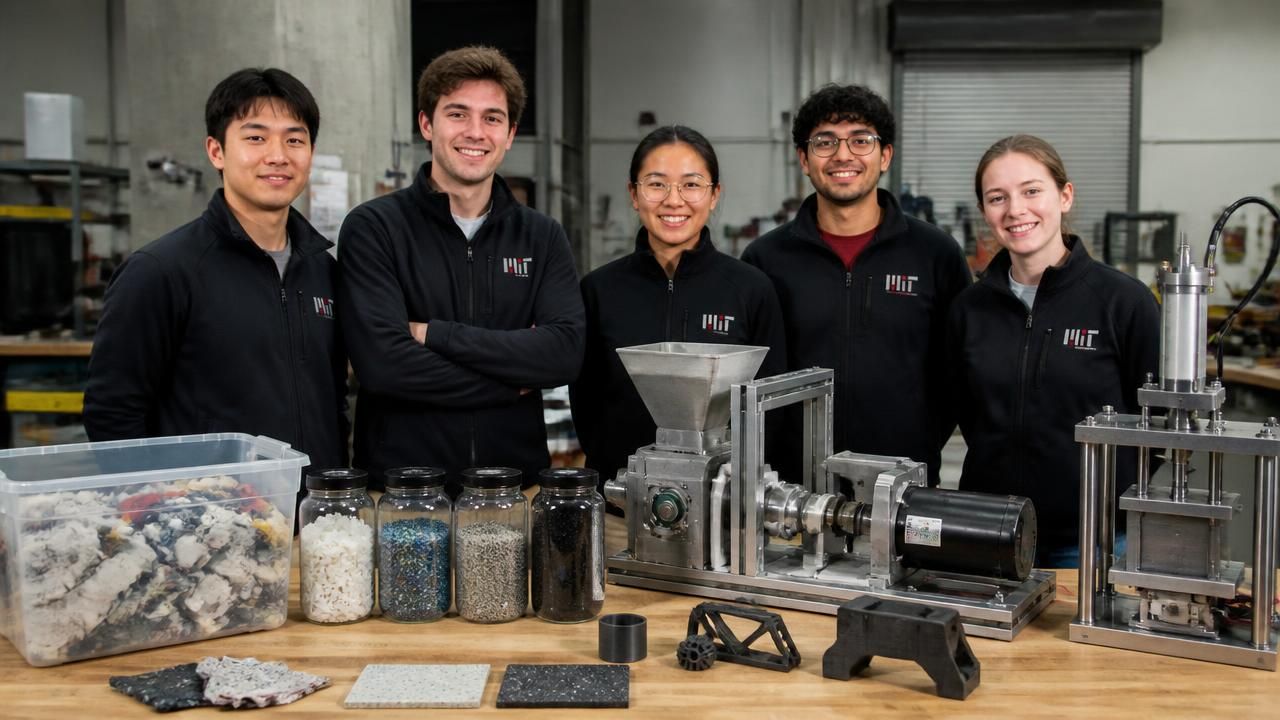
In a major step toward sustainable deep-space exploration, NASA has named a team from the Massachusetts Institute of Technology (MIT) as the first-prize winner of Phase 2 of the agency's LunaRecycle Challenge. The winning project, known as CERBERUZ (Composites for Extraterrestrial Recycling By Engineering the Reuse and Upcycling of Zotek), earned the team a combined award of $775,000. The competition sought innovative solutions for reducing waste during long-duration missions to the Moon or deep space by recycling common materials such as fabrics, plastics, foam, and metals.
The Challenge of Surviving Beyond Earth
As NASA prepares to return astronauts to the Moon through the Artemis program and eventually send humans to Mars, one of the most pressing engineering problems is not reaching these destinations—it's surviving there. Every kilogram of supplies launched from Earth costs thousands of dollars, and waste generated by crews—from food packaging to broken equipment—cannot simply be discarded or left behind. On future missions, there will be no resupply missions or waste collection services. Astronauts must become recyclers, transforming trash into usable resources.
"The challenge is not reaching Mars; it is surviving there," noted one commentary on the competition, highlighting the critical need for closed-loop life support systems. NASA's LunaRecycle Challenge was designed to spur exactly this kind of innovation, inviting teams from around the world to develop technologies that could turn mixed waste streams into valuable products, thereby reducing the mass that must be launched from Earth and enabling crews to live sustainably off-planet.
MIT's Winning Solution: CERBERUZ
The MIT team, composed of undergraduate, graduate, and doctoral students, developed a system that grinds mixed trash into a fine powder. Rather than treating materials like Zotek foam—a common closed-cell foam used in space applications—as contamination to be sorted out, CERBERUZ repurposes it as a reinforcement agent. The resulting powder serves as feedstock for both injection-molded finished parts and 3D-printing filament.
"The technology grinds mixed trash into a fine powder, repurposing materials such as Zotek foam as reinforcement rather than treating it as contamination that needs to be sorted out," NASA explained in its announcement.
This approach is significant because it avoids the need for complex sorting and separation, which is impractical in microgravity or on the lunar surface. Instead, the entire waste stream is homogenized and transformed into a versatile raw material. The team demonstrated that the process can produce durable, functional parts—from tools and replacement components to structural elements—that could be manufactured on demand during a mission.
Winning on Two Fronts: Prototype and Digital Twin
The LunaRecycle Challenge featured two parallel tracks. The first focused on developing a working prototype of a recycling system. The second asked teams to create a "digital twin"—a virtual model of the recycling system that can simulate performance, optimize operations, and predict maintenance needs without physical testing. MIT won both tracks, receiving first prize in the prototype development track and top honors for its virtual model.
The digital twin element is particularly forward-looking. It allows engineers to test different waste compositions, system configurations, and operational scenarios in software, dramatically reducing the time and cost of developing hardware for space. It also aligns with a broader trend in aerospace and manufacturing, where digital twins are used for everything from spacecraft health monitoring to predictive maintenance of industrial equipment.
From Alabama to the Moon: The Broader Context
NASA also invited media to a finale event in Alabama, where the winners were celebrated. This location is no coincidence—Alabama is home to NASA's Marshall Space Flight Center, which manages the agency's human lunar exploration programs and has a long history of developing life support and habitation systems. The event showcased not only the winning designs but also the collaborative spirit of the challenge, which drew participants from academia, industry, and even amateur innovators.
"This challenge is a prime example of how NASA engages the public and taps into the ingenuity of students and entrepreneurs to solve real-world problems for deep space exploration," said a NASA spokesperson at the event. The agency plans to continue the LunaRecycle Challenge with future phases, potentially scaling up the winning technology for demonstration on the International Space Station or as part of a lunar lander mission.
Different Perspectives on the Achievement
Coverage of the announcement varied across outlets. Some, like Recycling Product News, framed the story as "NASA challenge: transform space waste into useful products," emphasizing the practical recycling aspect. Others, such as Aldianews.com, chose a more philosophical angle, headlining "The Challenge Is Not Reaching Mars: It Is Surviving There," drawing attention to the harsh realities of deep-space living. Meanwhile, Cerebral Overload's coverage focused on the media event in Alabama, underscoring the public-facing nature of the competition.
- Innovation: CERBERUZ turns mixed waste into a single, usable powder—no sorting required.
- Sustainability: Recycling reduces the mass and volume of waste that must be stored or jettisoned.
- Autonomy: On-demand manufacturing with 3D printing and injection molding empowers crews to make what they need, when they need it.
- Digital twins: Virtual models accelerate development and enable optimization before hardware is built.
Implications for Artemis and Beyond
The LunaRecycle Challenge is part of NASA's broader efforts to establish a sustainable presence on the Moon under the Artemis Accords. By demonstrating that waste can be transformed into feedstock for manufacturing, the MIT team has laid groundwork for a "circular economy" in space. Such systems could also have terrestrial applications, helping to reduce plastic waste and promote recycling on Earth.
For the MIT students, the win is both a triumph and a responsibility. "We are thrilled to contribute to the future of human spaceflight," said a team representative. "This is just the beginning—we hope to see CERBERUZ flying on a mission someday, turning trash into the tools that help astronauts explore further."
As NASA pushes toward the Moon, Mars, and beyond, the ability to live off the land—or off the trash—will be essential. The LunaRecycle Challenge has proven that the next great leap for humanity may be powered not by rocket fuel alone, but by the creative reuse of everything we carry with us.