In an extraordinary meteorological event, the Atacama Desert—the driest non-polar desert on Earth—experienced a rare and widespread snowfall in August 2026. The snow, which blanketed a high-altitude plateau in the Chilean Andes, was so significant that it forced the shutdown of one of the world's most advanced astronomical observatories. Satellite images captured the dramatic transformation, showing the landscape turning from brown to white in a matter of days.
An Unprecedented Sight in the Driest Desert
NASA's Earth Observatory released satellite imagery comparing August 6 and August 14, 2026, showing the same plateau in the Chilean Andes—surrounded by stratovolcanoes and lava domes—first in its typical dry, brown state, then covered in a pristine blanket of snow. The region, part of the Atacama Desert, is known for receiving virtually no precipitation; some areas have gone decades without a single drop of rain. Yet this snowfall was not confined to the highest peaks but spread across the plateau, making the landscape almost unrecognizable.
The snowfall also caught the attention of meteorologists and astronomers alike. "This is a remarkable event for a place that is essentially a Mars analogue on Earth," said a climate scientist familiar with the region, speaking on condition of anonymity. "Widespread snow at this elevation, so far south, is highly unusual and may be linked to a cold air mass interacting with moisture from the Pacific."
The Telescope That Went Dark
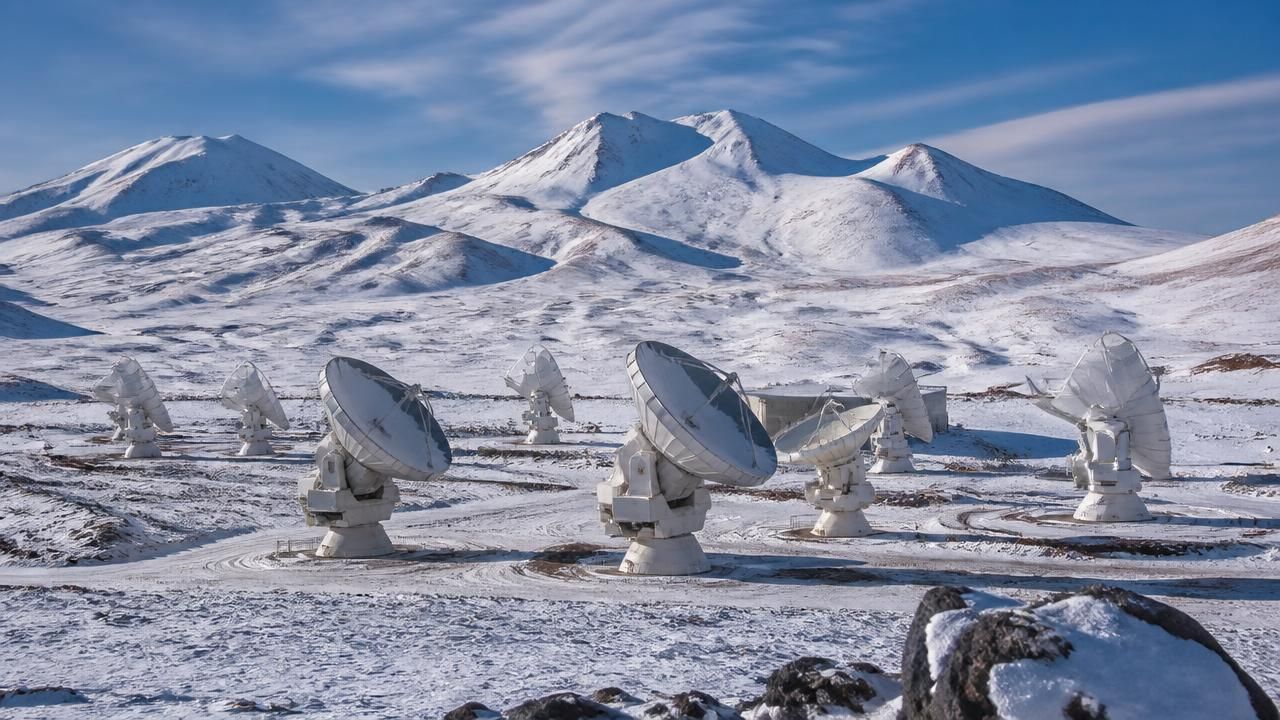
The most immediate impact was on the Atacama Large Millimeter/submillimeter Array (ALMA), one of the most powerful radio telescopes ever built. Located on the Chajnantor Plateau at an altitude of about 5,000 meters (16,400 feet), ALMA is designed to observe cold objects in the universe, such as distant galaxies and forming stars. But the snow forced operators to suspend observations as a safety precaution.
According to reports from Discover Magazine and other outlets, the snowfall shut down the facility, with staff unable to safely access the antennas or operate the machinery under heavy snow conditions. ALMA's antennas, some weighing over 100 tons, are extremely sensitive and require precise calibration; snow and ice can affect their alignment and electronics. The shutdown was a rare interruption for an observatory that typically operates year-round in the arid environment.
"One of Earth's most advanced telescopes just went dark after snow hit a place where it barely ever rains," reported Daily Galaxy, capturing the irony of an astronomy facility being crippled by weather in a desert known for its clear skies.
Why the Atacama Desert Is So Dry—and Why Snow Happened
The Atacama's extreme aridity is the result of several factors: its position between the Pacific Ocean and the Andes Mountains creates a rain shadow effect, while the cold Humboldt Current suppresses precipitation. On average, the region receives less than 1 millimeter of rain per year. However, in the Altiplano—the high plateau where ALMA sits—winter snow is not entirely impossible, but it is typically light and confined to the highest peaks. The August 2026 event was different: the snow was widespread and deep enough to cover the ground completely.
Meteorologists suspect that a combination of a polar cold front and an atmospheric river brought moisture into the region, colliding with the Andes and resulting in snowfall at lower elevations than usual. Climate change may also be playing a role, as warming oceans and shifting atmospheric patterns are disrupting historical weather norms. Yet scientists caution against drawing direct conclusions from a single event.
A Region Built for Astronomy
The Atacama Desert is home to some of the world's most important telescopes, including ALMA, the Very Large Telescope (VLT), and the upcoming Extremely Large Telescope (ELT). These facilities were built here precisely because of the extremely dry air and clear skies, which allow for exceptional astronomical observations. The snowfall has raised concerns about the resilience of these multi-billion-dollar installations in the face of a changing climate.
- ALMA consists of 66 radio antennas operating in unison to study star formation, galaxy evolution, and exoplanets.
- The Chajnantor Plateau is one of the highest observatory sites in the world, at 5,050 meters.
- Snowstorms at this altitude are rare but not unheard of; the last major event was in 2013, when a similar snowstorm briefly closed the facility.
Local and Global Reactions
For residents of the nearby towns, the snow was a mixed blessing. In a region where water is precious, the melting snow provided a temporary source of moisture for alpaca herds and agriculture. But it also disrupted transportation and power lines. Meanwhile, the astronomy community watched with a mix of wonder and worry. "It's a reminder that even the most remote, extreme environments are not immune to the impacts of changing weather patterns," noted a NASA Earth Observatory spokesperson in a statement accompanying the satellite images.
The snowfall also became a social media sensation, with photos of snow-dusted cacti and white-capped desert dunes circulating online. MSN's headline proclaimed "Chile's Atacama Desert Turns White After Rare Snowfall In The World's Driest Region," a sentiment echoed by snow enthusiasts and meteorologists alike.
What This Means for the Future
While the snow has melted and ALMA is expected to resume operations shortly, the event serves as a stark illustration of how extreme weather can affect critical infrastructure. For astronomers, the incident raises questions about the long-term planning of observatory sites. For climate scientists, it offers a natural experiment to study the interactions between cold polar air, tropical moisture, and global warming.
As the world watches the Atacama Desert's skies—both for its stars and its weather—the August 2026 snowfall will be remembered as a rare moment when the driest place on Earth turned white, silencing humanity's most advanced eyes on the universe for a brief, remarkable interlude.