Prime Video brought its most ambitious science-fiction bet to New York Comic-Con on Saturday night, unveiling the first full trailer for Blade Runner 2099 and confirming a November premiere date. The reveal came roughly a week after the streamer teased the project and about three months after a first look at San Diego Comic-Con in July.
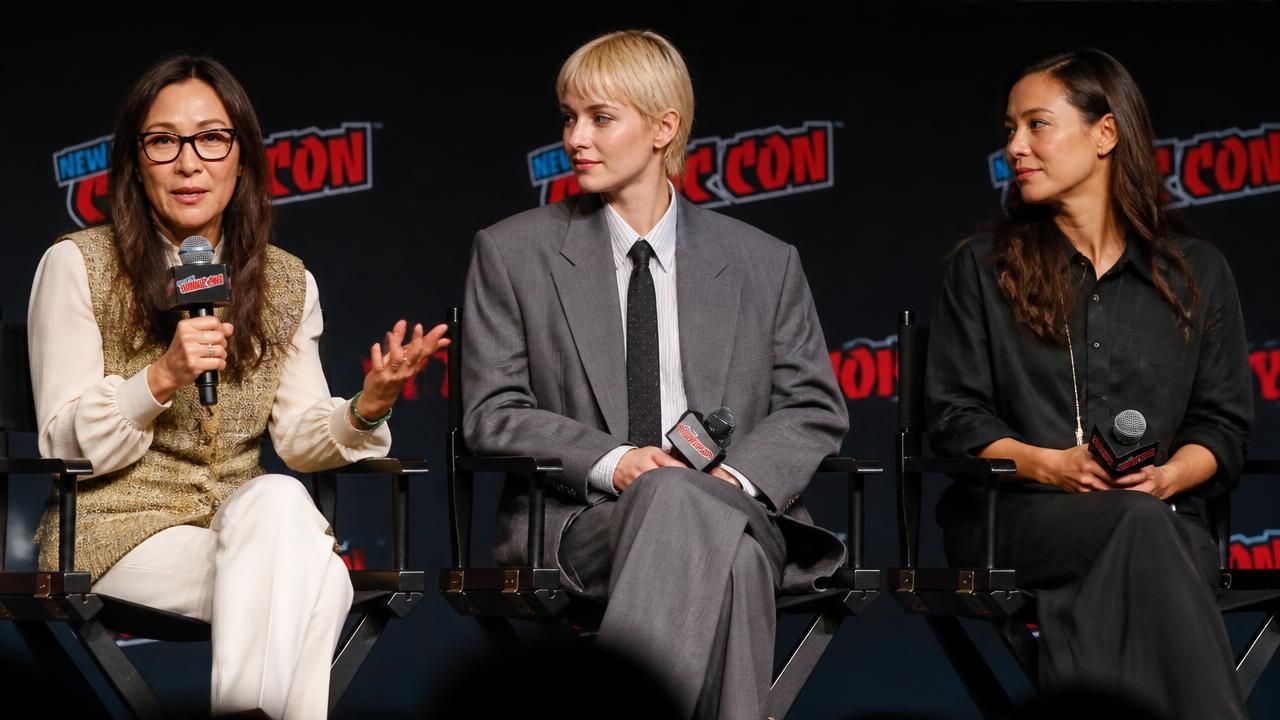
Series lead Michelle Yeoh and co-star Hunter Schafer joined showrunner Silka Luisa onstage for the panel, turning what could have been a routine marketing beat into a de facto thesis statement about the franchise's future. The trailer has since been dissected across entertainment outlets, with coverage ranging from Ars Technica's deep dive into the show's themes to aggregators like MSN and Meristation leading squarely on the release-date confirmation.
A world where the creations won
The series is set five decades after the events of Denis Villeneuve's Blade Runner 2049, and Luisa made clear that the timeline has not been kind to humanity. The long-simmering replicant uprising that the films only hinted at has, by 2099, succeeded — the engineered beings have surpassed their makers.
We are 50 years after [Blade Runner] 2049 and, bad news, the worst has happened. The replicant uprising that has been bubbling up in the films has taken place and the humans have lost. So the creations have surpassed their creators. And the series, the big question it asks is, 'What happens when our time as a species ends?'
— Showrunner Silka Luisa, speaking at the NYCC panel
Luisa framed the show as an inversion of Ridley Scott's 1982 original, which followed replicants fighting for more life. Where Blade Runner examined mortality on an intimate scale — most famously through Roy Batty's "tears in rain" monologue — the series scales that question up to an entire species.
2099 is taking place at a junction point when one species is ending and a new one is rising. This show asks that same question but on a macro level. Mankind — what happens when we realize our time is running out? And are we going to accept that loss? Can we hold on to our humanity during it?
Yeoh and Schafer anchor the cast
Yeoh, fresh off her Oscar-winning turn in Everything Everywhere All at Once, plays Olwen, described as a dying Replicant — a character whose condition echoes the built-in expiration dates that defined the original film's antagonists. Schafer, best known for HBO's Euphoria, plays Cora, a figure at the center of the mystery the trailer teases.
The ensemble also includes Hugo Hamlet as Buster Friendly — a name that will ring familiar to franchise devotees, since Buster Friendly was the television personality whose broadcasts pepper Scott's original — alongside Dmitri Abold, Lewis Gribben, Katelyn Rose Downey, Daniel Rigby, Johnny Harris, Amy Lennox, Sheila Atim, Matthew Needham, Tom Burke, and Maurizio Lombardi.
Outlets including The Playlist highlighted the pairing of Yeoh and Schafer as the show's commercial anchor, framing the series as a "new replicant future" built on the franchise's existing mythology rather than a reboot. Yahoo's coverage leaned into the mystery-thriller angle, emphasizing how the trailer positions Cora and Olwen at the center of an unresolved question about what replicants have become.
Franchise economics and a crowded sci-fi market
Blade Runner has always been a critical darling with a complicated commercial record. Scott's 1982 original was a box-office disappointment before becoming one of the most influential science-fiction films ever made; 2049, despite widespread acclaim, grossed roughly $260 million worldwide against a reported budget north of $150 million, making it a money-loser on paper. That history makes Prime Video's decision to mount a big-budget, effects-heavy series a notable bet — one Amazon is making as its genre slate, including The Lord of the Rings: The Rings of Power and Fallout, becomes a core pillar of its streaming strategy.
The timing also places Blade Runner 2099 in an unusually competitive field of science fiction built around artificial beings and questions of consciousness, from Westworld's legacy to a wave of AI-themed film and television. The series' November arrival on Prime Video gives it a holiday-season runway, though the trailer's reveal in October means marketing is compressed into a matter of weeks.
What the trailer shows — and what it withholds
Coverage across outlets converged on several points:
- A 50-year time jump from 2049, with Los Angeles and the wider world visibly transformed.
- A post-uprising status quo in which replicants, not humans, hold the upper hand — a reversal of the power dynamic in both prior films.
- A mystery structure centered on Cora and Olwen, with the trailer declining to spell out their relationship or Olwen's allegiances.
- A November premiere date on Prime Video, confirmed at the panel after months of speculation.
Luisa's comments suggest the series intends to keep faith with the philosophical register of its predecessors rather than pivot to pure action. That framing also carries risk: the original film's resonance came from ambiguity, and a nine-episode order leaves considerably more room to explain things fans might prefer left unexplained.
The bottom line
With the full trailer now public and a November date locked, Blade Runner 2099 moves from curiosity to imminent release. Prime Video is betting that Yeoh's star power, Schafer's younger-skewing fanbase, and a premise that literalizes the franchise's oldest obsession — what happens when the created outlive the creators — can turn a cult property into a franchise anchor. The show's central question, as Luisa put it, is whether we can hold on to our humanity while losing our place at the top. Whether audiences follow her there will be answered in a matter of weeks.