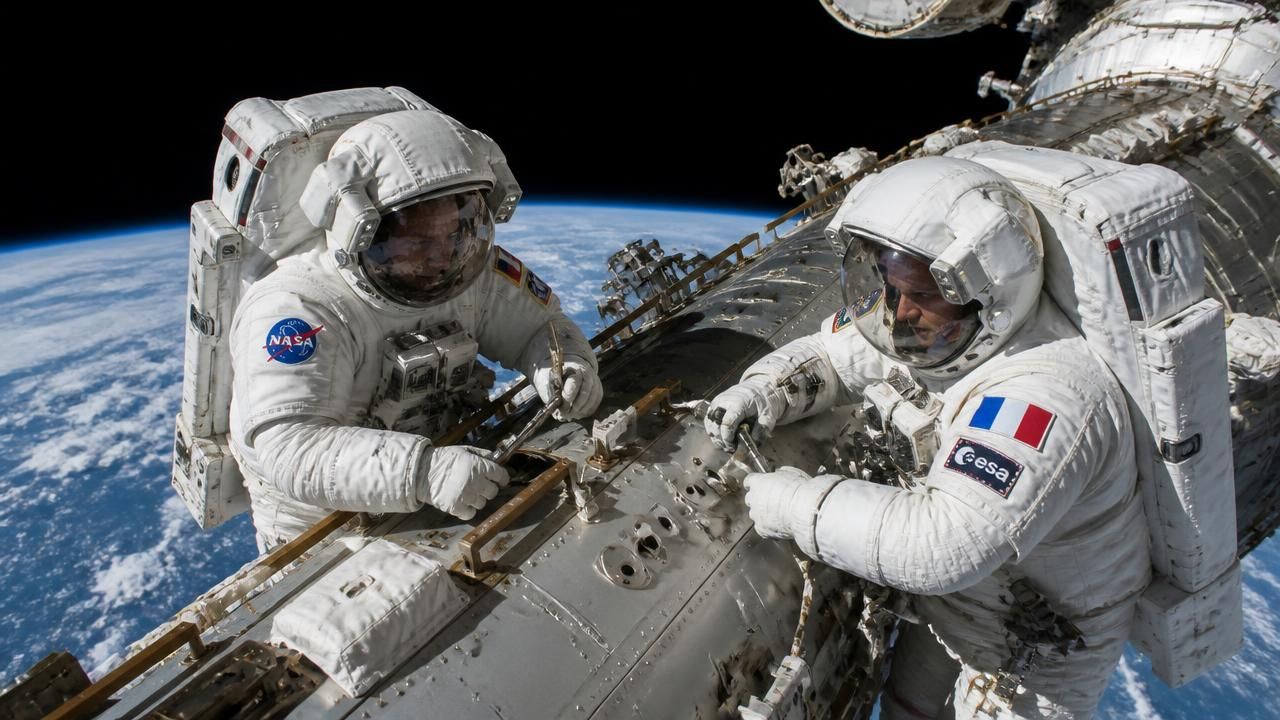
NASA has announced that two astronauts will step outside the International Space Station (ISS) on Tuesday, Sept. 1, for a marathon six-and-a-half-hour maintenance spacewalk. The EVA, designated U.S. spacewalk 99, will see NASA astronaut Jessica Meir and ESA astronaut Sophie Adenot replace a critical navigational aid, upgrade data-relay systems, and perform preventive maintenance on the orbiting laboratory's scientific instruments. Live coverage will begin at 7 a.m. EDT on NASA's streaming platforms, with the spacewalk expected to start at approximately 8:30 a.m. EDT.
A Complex Maintenance Mission
The primary task for Meir and Adenot will be replacing a retroreflector on the forward port of the station's Harmony module. This small but essential device allows incoming spacecraft—such as SpaceX Crew Dragons, Northrop Grumman Cygnus freighters, and Roscosmos Soyuz capsules—to navigate accurately during rendezvous and docking operations. The crew will also install jumper cables for the station's data-relay systems, a task that will improve communications between the truss, modules, and ground controllers.
In addition, the duo will prepare the radiator on the Alpha Magnetic Spectrometer (AMS) for future maintenance. AMS, a particle physics experiment searching for dark matter and antimatter, has been operating on the station since 2011. The radiator prep is part of an ongoing effort to extend the instrument's life. Finally, the astronauts will replace a high-definition camera mounted on the station's truss, ensuring that external views of the ISS and incoming spacecraft remain crisp for both operational and public outreach purposes.
“NASA will provide coverage as two astronauts step outside the International Space Station on Tuesday, Sept. 1, to replace a spacecraft navigational aid and complete several maintenance tasks in support of space station operations.” — NASA
A Historic All-Female Spacewalk Team
The pairing of Meir and Adenot is notable. Meir, who will serve as spacewalk crew member 2 and wear an unmarked suit, is a veteran of six previous EVAs, including the first all-female spacewalk alongside Christina Koch in October 2019. Adenot, making her third spacewalk, will be crew member 1, identifiable by the red stripes on her suit. This will be the second all-female spacewalk in history, and the first for both NASA and ESA in this configuration.
The mission also carries personal significance for Meir: with completion of this EVA, she will move into third place on the all-time list for total spacewalk time by a U.S. astronaut, a record that underscores her status as one of the most experienced spacewalkers in the fleet. Some outlets, including USA Today, highlighted this milestone, noting that “this astronaut set to make history” while others focused on the rarity of the all-female crew.
Why This Spacewalk Matters
The ISS has been continuously crewed for more than two decades, and its systems require regular maintenance. The retroreflector replacement is essential for the safe arrival of future crew and cargo missions. The jumper cable installation will strengthen the station's data infrastructure, ensuring real-time telemetry and video links remain robust. The AMS radiator work will help preserve one of the most important scientific instruments on the station, which has already outperformed its original three-year design lifetime.
NASA has also scheduled additional spacewalks later in the month, according to reports from Spaceflight Now and The Daily Galaxy, including work on upgrading the station's power systems with new solar arrays. These power upgrades are critical as the ISS prepares for increased research activities and the eventual transition to commercial space stations. The upcoming series of spacewalks, as MSN notes, “could change the future of the space station” by extending its operational lifespan and enhancing its capabilities.
How to Watch: NASA, Netflix, and Beyond
For the first time, NASA's spacewalk coverage will be simulcast on streaming services beyond its own platforms. USA Today and other outlets reported that Netflix will stream the event live, along with Amazon's streaming service, making it easier than ever for the public to watch the astronauts work 250 miles above Earth. NASA's traditional live stream will remain available at nasa.gov/live, with coverage starting at 7 a.m. EDT. Viewers can expect to see sweeping views of Earth from the station's external cameras, as well as helmet-cam feeds from the spacewalkers themselves.
The inclusion of Netflix and Amazon in the broadcast is a sign of growing interest in space exploration and NASA's effort to reach broader audiences. As one USA Today headline put it, “Ready for a spacewalk? How to watch NASA astronauts live outside ISS.” The collaboration between NASA and commercial streaming platforms marks a new chapter in public engagement with human spaceflight.
Outlets Frame the Story Differently
The coverage of this spacewalk illustrates how different news organizations emphasize different angles. NASA's official release focuses on the technical details and maintenance goals, while outlets like Florida Today and Cincinnati.com highlight the practical viewing information for the public. Space.com, in a separate story, covered a Rocket Lab helicopter booster catch, demonstrating the breadth of spaceflight news on the same day. Meanwhile, The Hill and Guardian Nigeria referenced the historical significance of all-female spacewalks, drawing on the legacy of Koch and Meir's 2019 achievement.
The Daily Galaxy framed the spacewalk as a “critical” step to “supercharge station power,” looking ahead to the upcoming solar array installations. Spaceflight Now reported on the completion of a shortened spacewalk earlier this month and the ongoing power system upgrades, providing context for the serial nature of ISS maintenance. The variety of angles—technical, historical, streaming, and future-focused—adds depth to the story, showing that a single spacewalk can have multiple meanings for different audiences.
Looking Ahead
As Meir and Adenot don their spacesuits and float into the void, they will carry with them the hopes of the ISS program and the legacy of all those who have walked in space before them. This spacewalk is not just about replacing hardware; it is about sustaining humanity's outpost in orbit and paving the way for the next generation of exploration. The retroreflector they install today will guide spacecraft of tomorrow, and the data-relay cables they spur will carry the science of the future.
In an era where spaceflight is becoming increasingly commercial and international, the sight of a NASA astronaut and an ESA astronaut working side by side—both women, both trailblazers—is a powerful reminder that space truly belongs to all of us. Tune in on Sept. 1 to witness history in the making, whether on NASA TV, Netflix, or your favorite streaming device.