For older adults trying to lose weight, the longstanding advice has been simple: eat less, move more, and keep the intensity moderate. A new six-month study suggests that formula may be quietly working against them — burning fat at the expense of the muscle that keeps them strong, mobile and metabolically healthy.
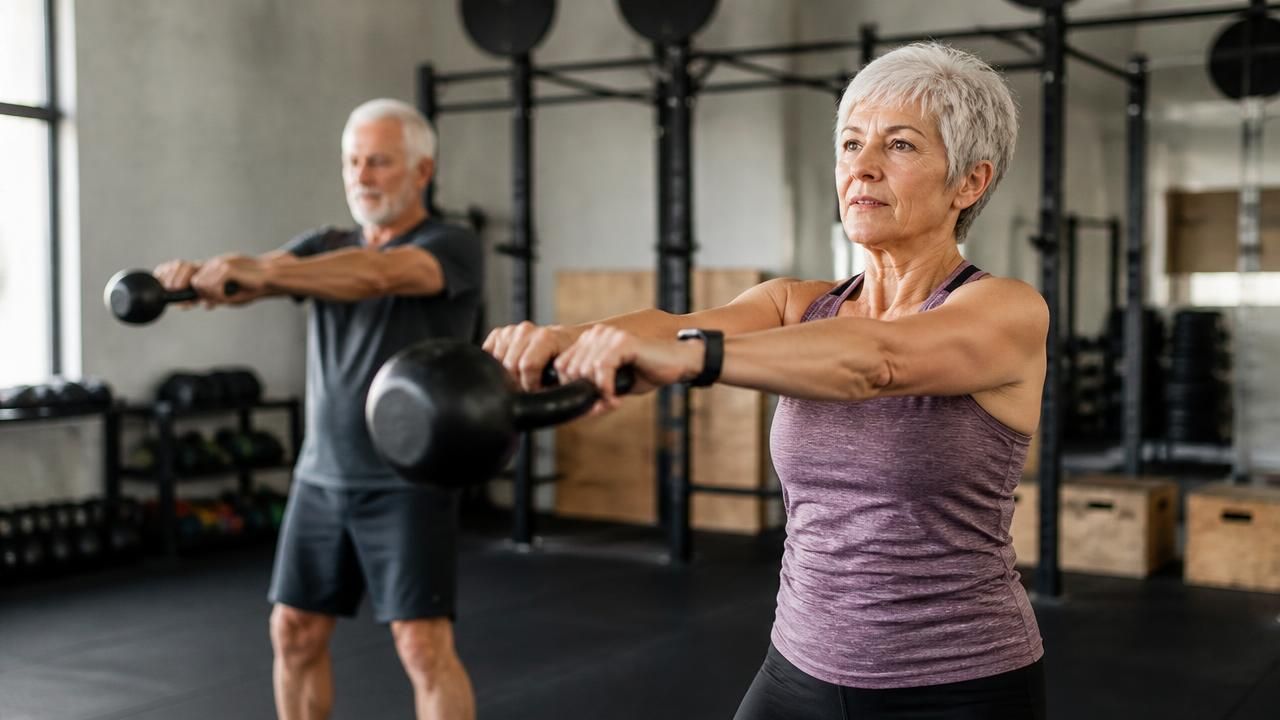
The research, reported by Science Daily, Medical News Today and MSN, compared high-intensity interval training (HIIT) with conventional moderate-intensity exercise in older adults over a six-month period. The headline finding: HIIT participants lost body fat while preserving their lean muscle mass. Those in the moderate-intensity group also lost fat, but shed a small amount of muscle along the way.
The difference in body composition around the waist was particularly notable. HIIT appeared to preferentially reduce abdominal fat — the visceral tissue linked to cardiovascular disease, type 2 diabetes and metabolic syndrome — while leaving lean tissue intact.
What the Study Actually Showed
Over six months, participants following the interval protocol improved their overall body composition: less fat, more functional muscle retained. The moderate-intensity group saw a modest decline in lean mass, an outcome researchers have long observed in older adults who lose weight through steady-state cardio or calorie restriction alone.
As Science Daily framed it, the result was stark:
"Only one workout helped older adults lose fat and keep muscle."
Medical News Today was more measured, reflecting the study's limits: "HIIT may help older adults lose fat while preserving muscle." MSN leaned into the practical appeal for readers, calling it a "surprising exercise" that burns fat in seniors "without loss of muscle mass."
That divergence in framing is instructive. Science Daily treated the finding as a decisive winner-take-all result; Medical News Today emphasized the uncertainty inherent in any single trial; MSN translated it into consumer-friendly terms. All three converge on the same underlying signal, but the confidence levels differ.
Why Muscle Becomes the Real Battle After 50
Adults lose roughly 3 to 8 percent of their muscle mass per decade after age 30, a process known as sarcopenia, with the decline accelerating after 60. Muscle isn't cosmetic — it drives resting metabolic rate, stabilizes joints, regulates blood sugar and underpins the strength needed to climb stairs, carry groceries and recover from illness.
That makes the moderate-intensity group's lean-mass loss more than a footnote. Traditional weight-loss approaches in older adults risk producing a smaller but frailer body — what researchers sometimes call sarcopenic obesity, where fat drops but function drops with it.
HIIT's apparent advantage likely comes down to signaling. Intense intervals stress muscle fibers in a way that triggers protein synthesis and mitochondrial adaptation, effectively telling the body to hold onto — or rebuild — contractile tissue even in a calorie deficit. Moderate, steady-state exercise is metabolically valuable but provides a weaker muscle-retention stimulus.
The Midlife Belly Problem
Men's Fitness approached the same territory from a different angle, asking why the fat-loss tactics that worked in a reader's twenties and thirties stop working in their forties. The outlet's framing points to a cluster of converging factors: declining testosterone and growth hormone, rising cortisol, years of accumulated visceral fat, reduced spontaneous daily movement, and chronically under-muscled bodies that burn fewer calories at rest.
The practical implication aligns with the study's findings. Aggressive calorie cutting and long, low-intensity cardio — the classic midlife playbook — tend to strip muscle first, slowing metabolism further and setting up the familiar cycle of weight regain. Strength-preserving training, adequate protein intake and shorter, sharper bouts of intensity are the levers that change the equation.
The Caveats Worth Heeding
None of this makes HIIT a universal prescription. The format is demanding, and older adults carry higher baseline risks of joint injury, cardiac events and musculoskeletal strain. Key considerations:
- Medical clearance matters. Anyone with cardiovascular disease, uncontrolled hypertension or joint disease should consult a physician before starting intervals.
- "High intensity" is relative. For a 70-year-old, it may mean brisk uphill walking or cycling, not sprinting.
- Volume isn't the goal. Typical protocols use short work bouts — often 30 seconds to four minutes — separated by recovery.
- Diet still counts. Without adequate protein and moderate calorie control, no training style preserves muscle indefinitely.
- One study isn't settled science. Six months is a meaningful window, but longer trials with larger, more diverse cohorts are needed.
The Bottom Line
The story emerging across these outlets is less about a miracle workout than about a corrected priority. For decades, weight loss was the singular metric; the new evidence argues that body composition — how much of the weight lost is fat versus muscle — determines whether older adults emerge from a diet fitter or simply smaller and weaker.
Moderate exercise retains real value for cardiovascular health, adherence and joint-friendliness, and many older adults will do best combining both approaches: a base of regular movement with a few short, intense sessions each week, paired with resistance training and sufficient protein. The study doesn't declare a single winner so much as expose the cost of ignoring muscle — the tissue that, past 50, is the whole point.