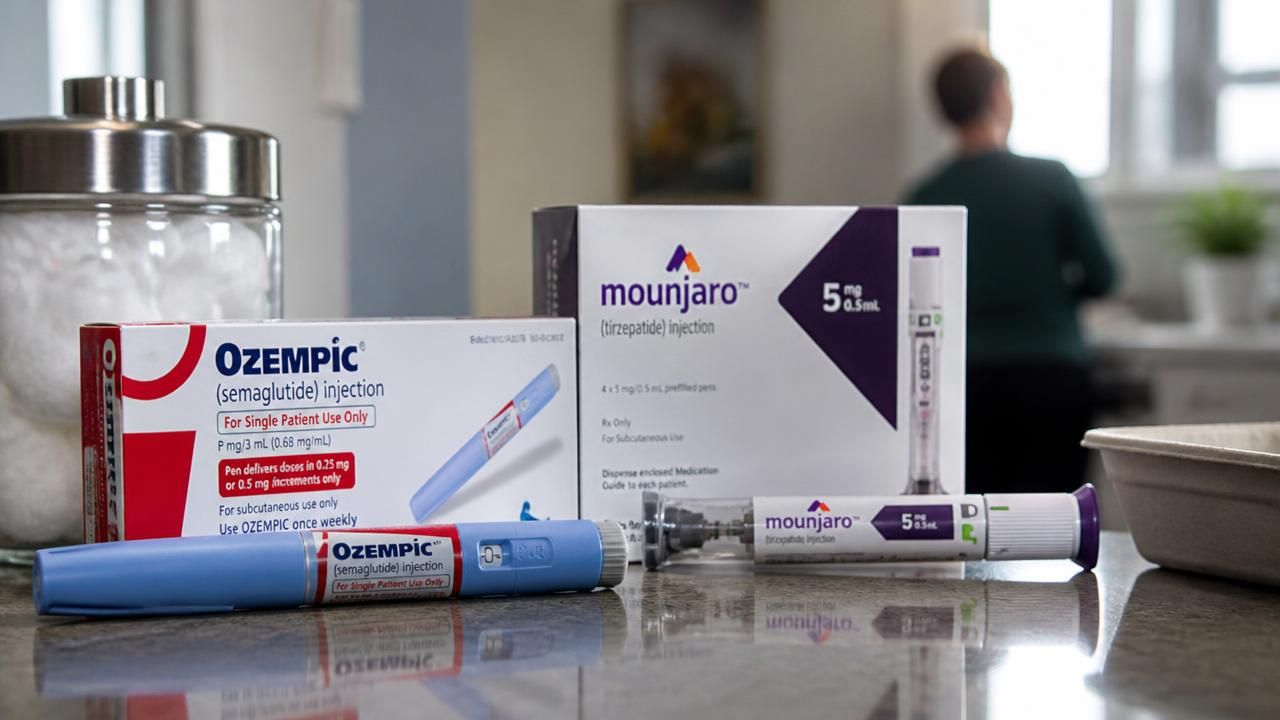
A blockbuster class of weight-loss and diabetes drugs is now at the center of one of the fastest-growing product-liability dockets in the United States, as hundreds of patients who say they were harmed by medications such as Ozempic, Wegovy, Mounjaro and Zepbound seek answers in court that the scientific record so far cannot fully provide.
The lawsuits allege a range of serious injuries — sudden vision loss, pancreatitis, gallbladder disease and severe gastrointestinal complications among them. But reporting from NPR, MSN and Hawaii Public Radio converges on a single, uncomfortable theme: nobody knows how often these harms actually occur, and the absence of reliable data is complicating both the medical and the legal questions at stake.
A blockbuster class of drugs meets a growing docket
GLP-1 receptor agonists — a family that includes semaglutide (Ozempic, Wegovy) and tirzepatide (Mounjaro, Zepbound) — have been prescribed to millions of people worldwide since their dramatic weight-loss results turned them into household names. Novo Nordisk and Eli Lilly, which dominate the market, have built multibillion-dollar franchises on the drugs' success.
That scale is precisely what makes the litigation significant. Even a complication that strikes a tiny fraction of users can translate into a substantial number of patients when the exposed population runs into the millions. Plaintiffs' attorneys argue the companies knew or should have known about the risks; the companies have generally maintained that their products are safe and effective when used as directed, and that their labels disclose known risks.
What patients say they experienced
The most striking allegations involve vision loss. Sources describe claims in which patients say their eyesight deteriorated rapidly — often called blindness in court filings — after starting the medication. Ophthalmologists have focused attention on non-arteritic anterior ischemic optic neuropathy, or NAION, a rare condition caused by reduced blood flow to the optic nerve.
"Scant data about serious adverse effects makes it harder to answer scientific and legal questions about how often the drugs might cause serious harm like blindness or pancreatitis."
Other complaints center on pancreatitis, gallbladder removal, gastroparesis and bowel obstruction. Behind the legal filings are individual families — NPR's reporting credits images to the Engel family, one of the households touched by an alleged injury — whose experiences have become the public face of a debate that is otherwise statistical.
The data problem at the heart of the story
Here is where the coverage becomes more cautionary than alarmist. Each of the sources emphasizes the same gap: there is no robust, population-level evidence establishing how frequently these complications occur among GLP-1 users.
- Clinical trials were designed to measure weight loss and metabolic outcomes, not rare events, and were often too small or too short to detect uncommon harms.
- Post-market surveillance systems such as the FDA's adverse-event reporting database are voluntary and subject to reporting bias, meaning they can signal a problem but cannot establish a rate.
- Electronic health records and insurance claims can suggest associations but struggle to prove that a drug, rather than an underlying condition such as diabetes or obesity, caused the injury.
Without a denominator — a reliable count of how many people took the drug and for how long — a case series of injured patients is a warning sign, not a verdict.
How different outlets frame the story
The framing across outlets varies in ways that reveal the tension inside the story. MSN's headlines lean into the human drama and the scale of litigation, foregrounding "hundreds of lawsuits" and the words "vision loss" and "blindness." Hawaii Public Radio's version, distributed to local audiences, emphasizes that serious side effects are real but that their frequency is "unclear" — a more measured, patient-facing posture. NPR splits the difference, leading with the legal claims but pivoting quickly to the evidentiary vacuum, and noting that the uncertainty cuts both ways.
Together, the accounts illustrate a familiar pattern in drug-safety coverage: advocacy-minded reporting highlights victims, industry-friendly framing highlights rarity, and the most useful reporting admits that the answer is genuinely unknown.
What regulators and companies say
Regulators on both sides of the Atlantic have taken incremental steps. European authorities added NAION as a very rare side effect to semaglutide's label following a review of case reports, while U.S. officials have continued to monitor the class. Drugmakers have pointed to the medicines' demonstrated benefits — including cardiovascular and kidney protection in some patient populations — and to the rarity of the reported complications.
For patients, the practical guidance remains conservative: report sudden vision changes, severe abdominal pain or persistent vomiting to a physician promptly, and do not stop a prescribed medication abruptly without medical advice.
The stakes going forward
The lawsuits now move into discovery, where internal company documents and expert testimony may begin to fill the evidentiary void. Epidemiology studies using large insurance databases are also underway and could supply the missing rates.
Whatever the courts decide, the deeper issue extends well beyond this drug class. The episode is a case study in how quickly a transformative therapy can outrun the surveillance systems meant to track its rarest harms — and how difficult it is, in the absence of that data, to tell a genuine safety signal apart from noise.