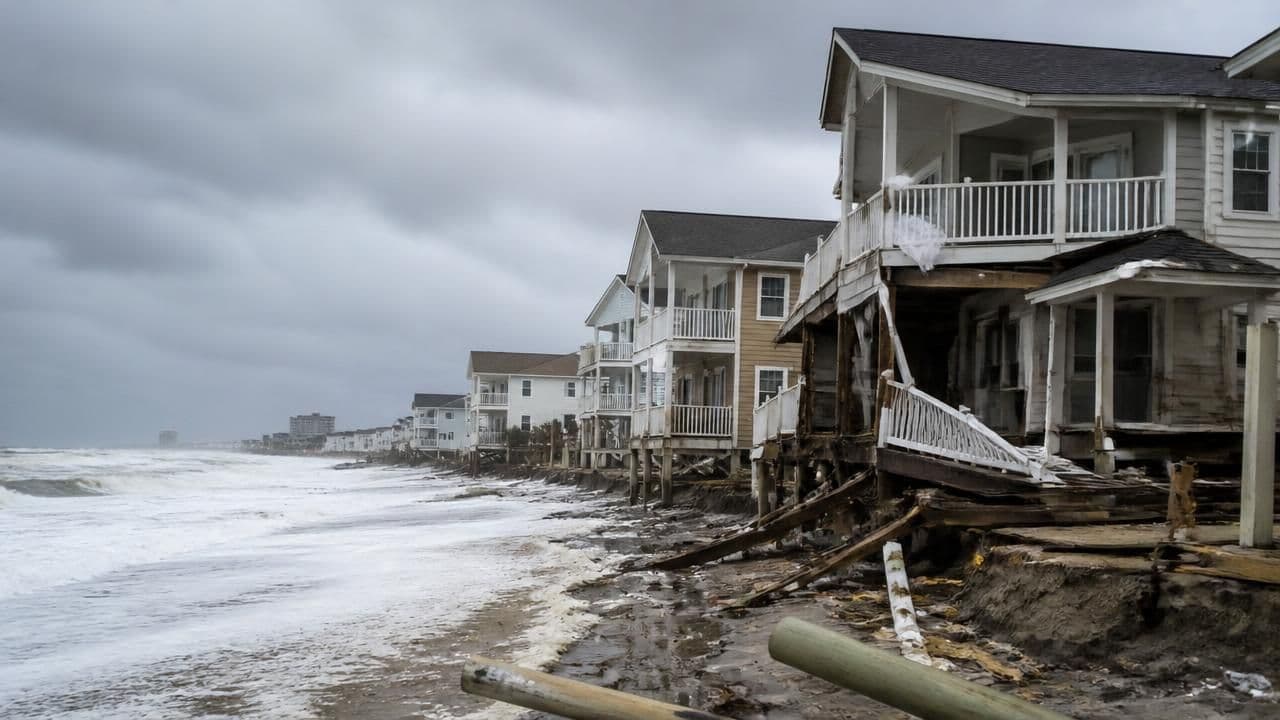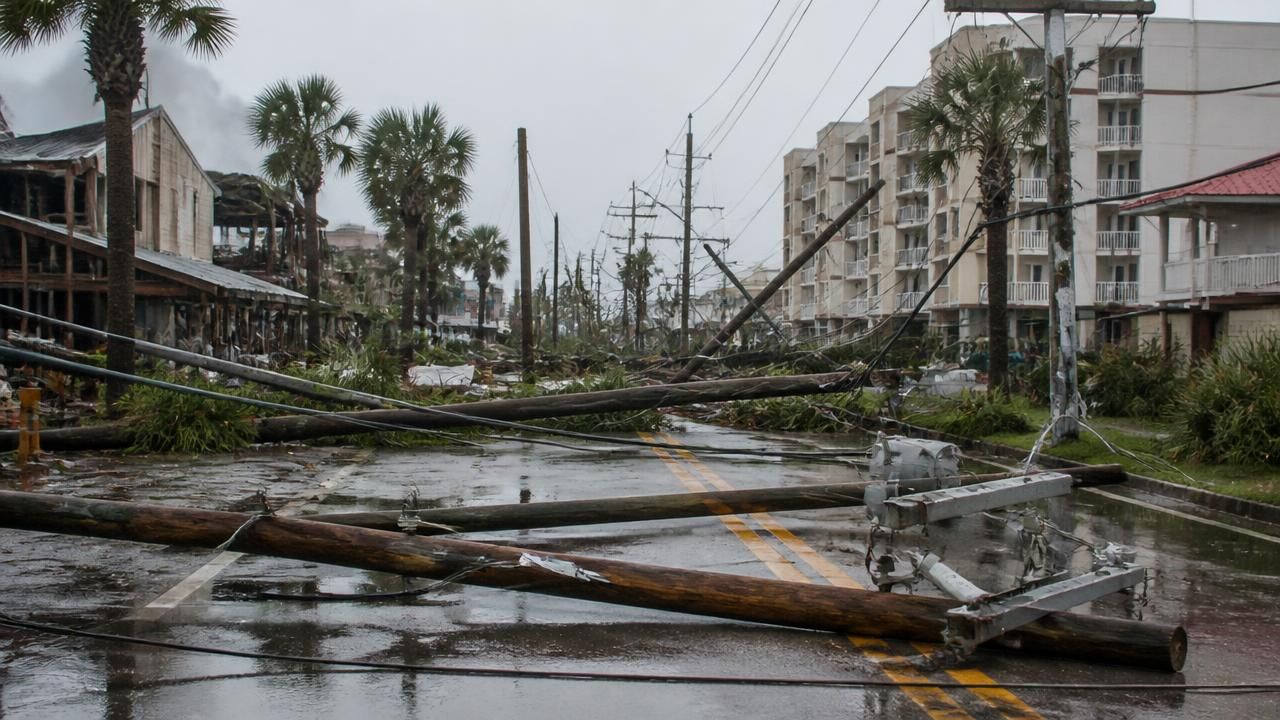
Hurricane Isaias carved a destructive path across the Gulf Coast on Tuesday, making landfall on the Florida coast before grinding inland through Alabama, where it left at least two people dead, hundreds of thousands without electricity and communities across two states picking through a landscape of downed trees and snapped power lines.
The storm, which has since weakened as it advances inland, has been blamed for fatalities in both Florida and Alabama, though the precise toll remained in dispute throughout the day as officials worked to confirm causes of death and news organizations reported figures that diverged sharply.
What Happened
Isaias came ashore along the Florida coastline near Destin, in the state's Panhandle, before tracking northward and sweeping through Alabama. NPR News reported that the hurricane is blamed for at least two deaths, alongside "numerous reports of downed trees, with hundreds of thousands of people without power."
At least one of those deaths involved a falling tree. MSN reported that one person was killed by a downed tree after the hurricane swept through the Florida Panhandle, citing officials. NBC New York, meanwhile, put the Florida death toll at a minimum of two people as the storm made landfall on the Gulf Coast.
A Death Toll That Kept Moving
The most consequential discrepancy between accounts concerned how many people died. While NPR and NBC New York both reported at least two deaths, NBC News's live coverage said the toll had reached at least four across Florida and Alabama as Isaias weakened inland.
Such gaps are common in the chaotic hours after a landfall. Deaths are initially attributed by local sheriffs, coroners and emergency management officials working independently across county lines, and storm-related fatalities — particularly those involving vehicles, generators or medical emergencies during an outage — are often reclassified days later once autopsies and damage assessments are complete. The competing figures from Tuesday should be treated as provisional.
"At least 2 dead after Hurricane Isaias slams Gulf Coast" — NBC New York
"Death toll reaches at least four across Florida and Alabama as weakening Isaias advances inland" — NBC News
Power, Trees and the Shape of the Damage
Beyond the fatalities, the defining feature of Isaias's aftermath was infrastructural. Hundreds of thousands of customers lost power as trees toppled onto distribution lines, a familiar failure mode in Gulf Coast hurricanes where mature, shallow-rooted pines and live oaks stand close to overhead cables.
Outages of that scale carry their own risks: loss of air conditioning in high heat and humidity, spoilage of food and medication, interruption of dialysis and home oxygen equipment, and carbon monoxide poisoning from improperly ventilated generators. Utility crews typically cannot begin full restoration until winds drop below safe thresholds, meaning the outage count often climbs for hours after the storm's peak.
The coverage itself reflected the difficulties of disaster reporting in real time. USA Today published both a photo gallery of damage in Florida and Alabama and a live-updates file headlined with the two-death, mass-outage framing, but both pages were inaccessible to readers Tuesday, displaying only a notice that access was restricted. That left readers of some of the largest national outlets dependent on wire copy and regional reporting to assemble a coherent picture.
How the Outlets Framed It
- NPR News led with human cost and scale — two deaths and hundreds of thousands without power — anchoring the story in the storm's immediate impact.
- NBC News chose a rolling live blog, emphasizing the rising toll and the storm's inland weakening.
- NBC New York, a regional station site, foregrounded the Gulf landfall itself and the two confirmed Florida deaths.
- MSN highlighted the single most visceral detail — one person killed by a falling tree — a framing that personalizes an otherwise abstract weather event.
- USA Today leaned visual, with a damage photo gallery from Destin.
Wider Context
Isaias is the latest in a run of storms to test Gulf Coast readiness, arriving in a season that forecasters had warned would be unusually active. Rapid intensification — storms strengthening sharply in the final hours before landfall — has made evacuation timing harder, while the geography of the Panhandle, a low-lying stretch of coastline with limited highway capacity, complicates large-scale movement of residents.
The storm also underscores a persistent gap in disaster data: early casualty figures are often the least reliable number in a hurricane story and the one most widely repeated. Researchers who study disaster mortality note that official counts can take months to finalize and frequently rise rather than fall, as deaths from heat, infection, heart attack and post-storm cleanup are linked back to the event.
What Comes Next
With Isaias weakening inland, attention now shifts to damage assessments, restoration timelines and the formal accounting of lives lost. Emergency management officials in Florida and Alabama are expected to release updated fatality figures as investigations conclude — figures that may settle, or further widen, the gap between the two-death and four-death accounts that competed for attention Tuesday.
For residents of the Panhandle and southern Alabama, the recovery has only begun: chainsaws, insurance adjusters and utility crews will define the next several weeks, long after the storm's winds have faded from the headlines.