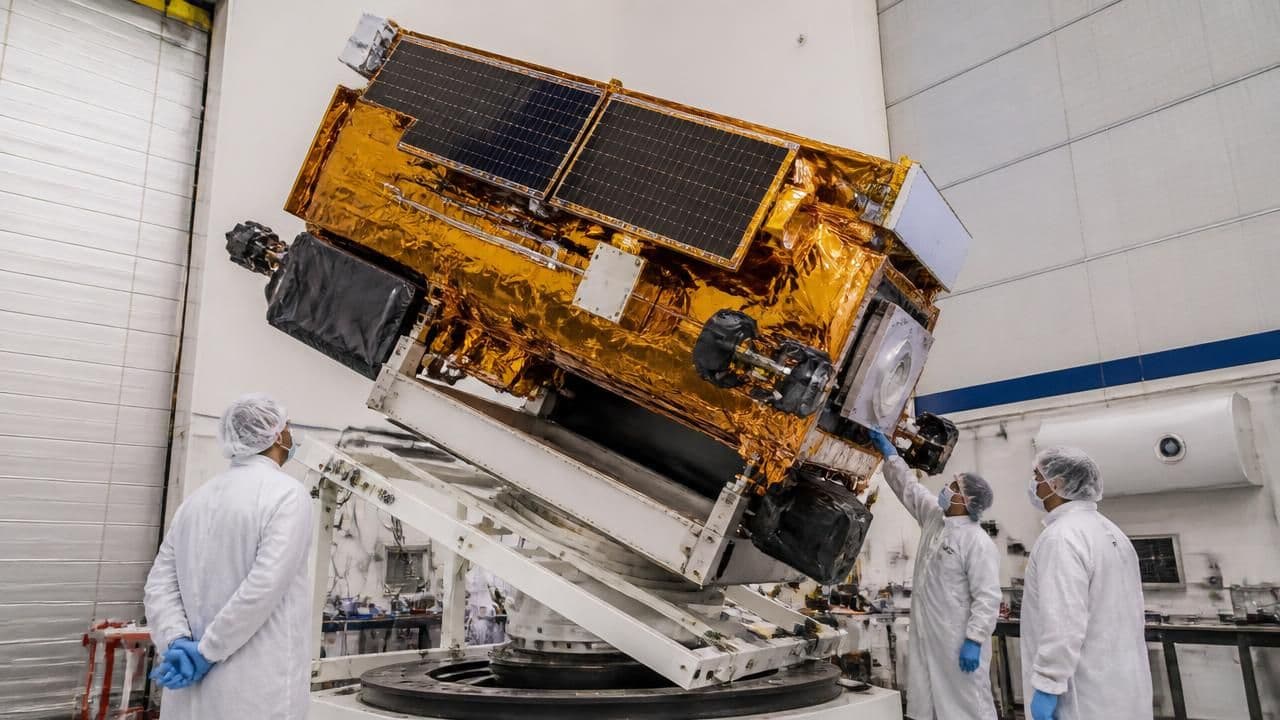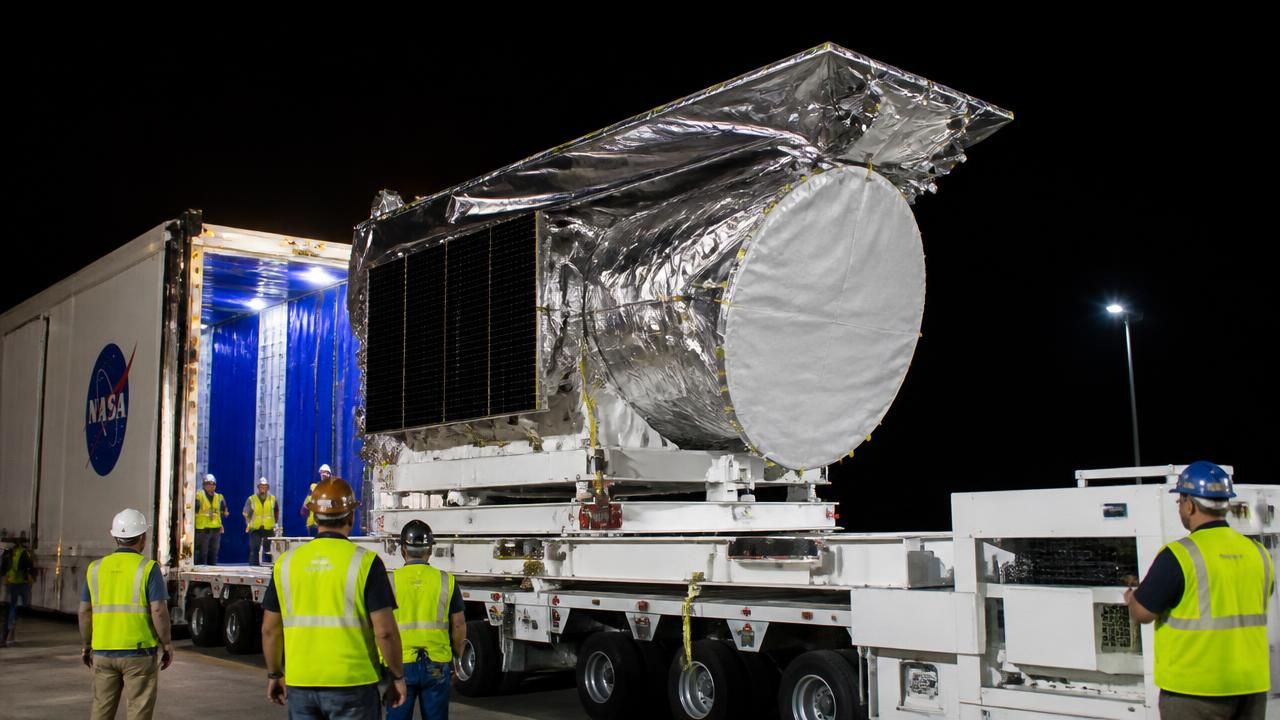
NASA's next flagship astrophysics observatory, the Nancy Grace Roman Space Telescope, has arrived at Kennedy Space Center in Florida, marking the final major milestone before its highly anticipated launch. Scheduled to lift off no earlier than August 30 aboard a SpaceX Falcon Heavy rocket, the $4.3 billion telescope promises to transform our understanding of the cosmos—from the nature of dark energy to the prevalence of planets beyond our solar system.
Named after Nancy Grace Roman, NASA's first chief astronomer and the visionary often called the "Mother of Hubble," the observatory carries a legacy of trailblazing discovery. Roman, who died in 2018, championed the idea of space-based telescopes capable of seeing beyond Earth's atmosphere. Now, her namesake telescope is poised to go far beyond the work of her earlier projects, with a wide-field view that astronomers say will be revolutionary.
A Wide-Eyed Observatory
The Roman Space Telescope is designed to capture enormous swaths of the sky in infrared light—a capability that sets it apart from its predecessors. According to NASA, Roman's field of view is 100 times larger than Hubble's, and its survey speed is 1,000 times faster. This means it can map the universe in a way that would take centuries with Hubble.
"It's going to do things that currently are impossible," said a NASA astrophysicist during a recent briefing. The telescope's primary mirror—2.4 meters across, the same size as Hubble's—is actually a surplus mirror originally built for a National Reconnaissance Office spy satellite. That classified hardware, donated to NASA, gave Roman its extraordinary light-collecting power and a head start on construction.
"Once a spy satellite, now a telescope with an eye on the cosmos," noted Penn Today, underlining a rare conversion from military to scientific use. The mirror, combined with a massive focal plane array of 18 detectors, enables Roman to capture ultra-wide, high-resolution panoramas of the universe in a single observation.
Unraveling Dark Energy and Dark Matter
Roman's primary science goal is to probe two of the deepest mysteries in physics: dark energy and dark matter. Dark energy is the unexplained force driving the acceleration of the universe's expansion, while dark matter acts as invisible "glue" holding galaxies together. By surveying hundreds of millions of galaxies and measuring their distances and motions, Roman will allow scientists to test theories about how dark energy has evolved over time.
"Roman will help astronomers answer questions about dark energy, dark matter, exoplanets, and more," reads a NASA educational article. The telescope will also create 3D maps of dark matter by measuring its gravitational lensing effect on light from distant galaxies.
Hunting Exoplanets and Invisible Stars
Beyond cosmology, Roman will be a powerful planet hunter. Its coronagraph instrument uses shape-shifting mirrors to block starlight, allowing the telescope to see giant exoplanets that resemble Jupiter—worlds that are bright in infrared and orbit far from their stars. MIT Technology Review highlighted how these adjustable mirrors could unveil "Jupiters like our own," providing direct images of planets that are currently invisible to most instruments.
Roman's infrared sensitivity also makes it ideal for detecting faint, cool objects across the galaxy. According to ScienceDaily, Roman could reveal "millions of invisible neutron stars"—the ultrafast spinning remnants of massive stars—and other dark stellar remnants that have eluded astronomers. This census of dead stars will help refine models of stellar evolution.
A Defense Against Killer Asteroids
An unexpected but highly practical benefit of Roman's wide-field survey is its ability to detect near-Earth asteroids. Its powerful infrared detectors can spot the heat signatures of rocky bodies that are difficult to see in visible light. MSN reports that while Roman was built to study dark matter, it can also help protect Earth from "killer asteroids" by cataloging close-approach objects and helping humanity anticipate impacts.
"Every observatory is a time machine," said a mission scientist, "but Roman will let us peer deeper and wider than ever before."
Ready Early, Under Budget
After years of development, the Roman telescope has defied the odds in large-scale space missions. Ars Technica reported that the observatory is "eight months early and under budget," a rare achievement for a flagship astrophysics project. The telescope's spacecraft bus and focal plane system were completed successfully, with the latter integrated following a series of ground tests at Goddard Space Flight Center.
The final leg of the journey saw Roman transported from Goddard in Maryland to Kennedy Space Center, where engineers will perform final checks before mated to the Falcon Heavy rocket. Florida Today captured the arrival, describing a moment of solemn pride at Cape Canaveral.
Why It Matters
With Hubble entering its twilight years and the James Webb Space Telescope only recently operational, Roman occupies a unique niche: a surveyor capable of scanning the sky rapidly and deeply. Its data will be made public to the global scientific community, enabling discoveries far beyond the mission's original scope.
"Roman could reveal one-in-a-million discoveries," said USA Today, noting that the sheer volume of imagery—billions of galaxies—will spark decades of follow-up research. From the nature of cosmic acceleration to the demographics of planetary systems, Roman's findings could reshape astronomy.
What's Next
Launch is scheduled for August 30, 2025, from Kennedy Space Center's Launch Complex 39A. The Falcon Heavy will place Roman into a halo orbit around the Sun-Earth L2 Lagrange point, a stable vantage point about one million miles from Earth. From there, the telescope will begin its survey mission, expected to last at least five years.
Nancy Grace Roman once said, "I hope the telescope will be a step forward in our understanding of the universe." With this mission finally at the pad, her hope is about to be realized.