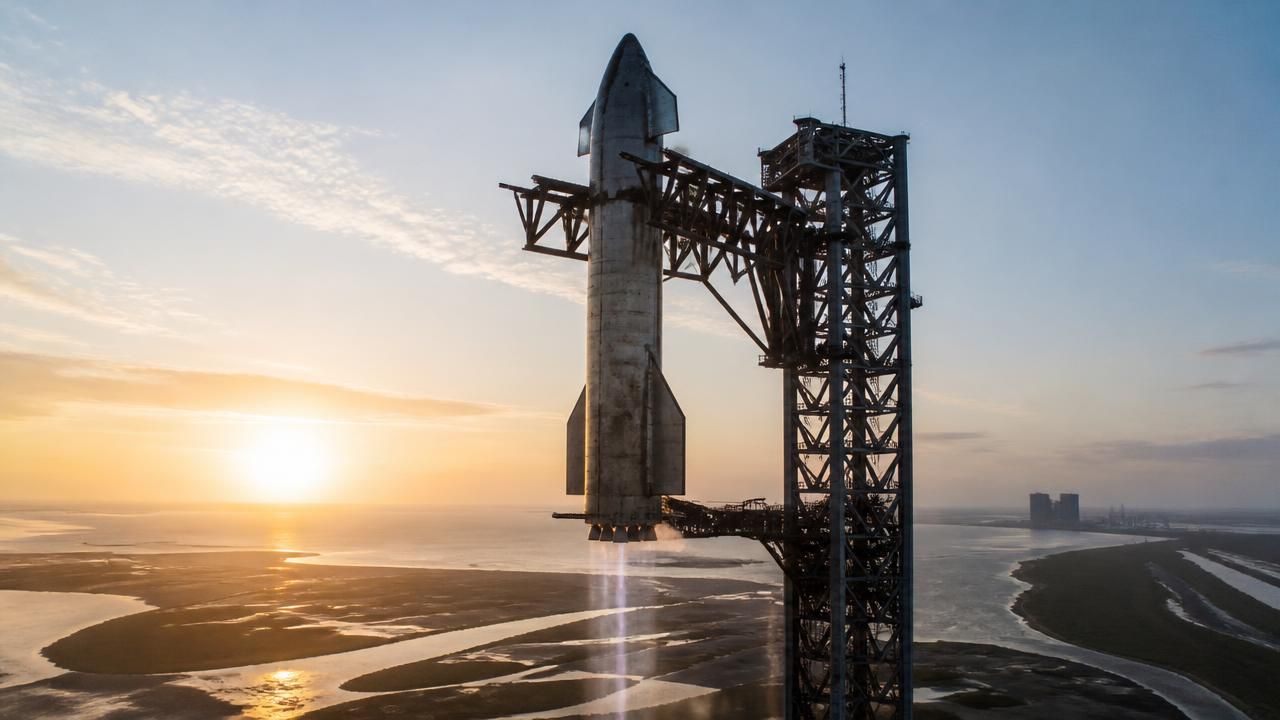
SpaceX brought its Starship vehicle back from near-orbital space and caught it at its launch site in South Texas, completing the most ambitious recovery attempt yet for the company's fully reusable rocket system and handing investors a long-awaited technical milestone.
The flight — the 15th in the Starship test campaign — saw the vehicle spend nearly a day in orbit before re-entering and steering itself back toward the pad, where the launch tower's arms attempted to snatch it out of the air. NBC News reported that SpaceX caught Starship at the Texas launch site after the extended orbital stint; The New York Times, running live updates, characterized the landing as history-making for the program. MSN's coverage emphasized the first-of-its-kind nature of the test, with earlier reports noting SpaceX "will try catching its massive Starship rocket for the first time" before the attempt shifted to the end-of-flight recovery.
Why the catch matters more than the launch
Getting a rocket off the pad has never been the hard part of the economics of spaceflight; getting it back in condition to fly again is. SpaceX's Falcon 9 proved that reusable first stages can reset the price of reaching orbit, and Starship is designed to extend that logic to the entire vehicle — booster and ship — with rapid turnaround as the ultimate goal.
Flight 15 tested the most demanding piece of that puzzle: recovering the ship itself, not just the booster, after a prolonged stay in space. A vehicle that survives a near-day orbital mission and still lands under control is a vehicle that can plausibly be refurbished rather than rebuilt — the difference between a rocket as a product and a rocket as an asset.
“The catch is the moment the economics change,” Space Network co-founder Ross Hamilton said on Bloomberg This Weekend, describing how more frequent and cheaper launches could accelerate Starlink's expansion, enable orbital data centers and feed SpaceX's broader ambitions in space.
Hamilton's framing captures why the test resonated well beyond Cape Canaveral and Boca Chica. Cheaper mass to orbit is not only a launch-market story; it is an infrastructure story. Starlink's constellation economics depend on deployment cost per satellite, and the next generation of heavier broadband spacecraft — along with speculative but increasingly discussed orbital compute facilities — becomes far more credible when the cost per kilogram falls.
The financial lens: from Starlink to AI
Wall Street has been treating Starship's progress as a valuation event rather than merely an engineering one. Yahoo Finance reported that SpaceX's third-quarter beat had analysts looking beyond Starlink toward AI and Starship, with Citi calling Flight 15 a "monumental" catalyst. That language reflects a shift in how the private company is being modeled: Starlink remains the cash engine, but the growth narrative increasingly rests on launch cadence, Starship's payload capacity and the prospect of space-based data infrastructure feeding demand for compute.
Citi's characterization also underlines how much of SpaceX's implied valuation is tied to milestones that have not yet been commercially proven. Each successful recovery narrows the gap between the company's stated roadmap and observable performance — a dynamic that matters to institutional investors who cannot buy the equity directly but can express the trade through suppliers, satellite operators and publicly listed launch partners.
Coverage splits along familiar lines
The story played differently across outlets. Broadcast and general-news desks — NBC News, MSN, The New York Times — focused on the spectacle and the first: a rocket caught in Texas after nearly a full day in orbit, with live updates tracking the descent. Bloomberg's coverage leaned into the industrial consequences, using the test as a hook for a wider discussion of launch frequency, Starlink capacity and orbital data centers. Financial outlets, meanwhile, treated the flight as an earnings-adjacent event, folding it into SpaceX's quarterly results and the analyst debate over whether the company's valuation belongs to the satellite business or to a future in space-based AI infrastructure.
Some coverage was harder to assess. Several aggregator and financial pages — including financial-world.org and wbal.com — returned access errors, and Yahoo Finance's report carried rate-limit warnings, leaving gaps in the public record even as the flight itself was widely documented.
What comes next
- Cadence: The core promise of reusability is frequency. The next test will be judged less on drama than on turnaround time between flights.
- Refurbishment data: Engineers will be inspecting heat-shield tiles and structural components to learn what an orbital round trip actually costs in maintenance.
- Commercial payloads: Starlink's next-generation satellites and external customers are waiting on a vehicle with a demonstrated, repeatable recovery record.
- Financing: Every milestone feeds the private-market valuation and the case for future capital raising — or, eventually, a public listing.
SpaceX has consistently treated failure as data and iteration as strategy, a philosophy that has compressed timelines but also produced spectacular setbacks. Flight 15's outcome will be read as evidence that the Starship program has crossed from demonstration into operational learning — the stage where the engineering questions begin to give way to questions about cost, competition and market structure.
For now, the company has done what it set out to do: brought a ship home from near-orbit and caught it. The harder, more consequential task — proving that this can happen again, cheaply, and often — begins with the next flight.