The Federal Communications Commission has approved a test mission for a California startup's plan to beam sunlight back to Earth using an orbiting mirror, green-lighting a technology that could one day provide solar power at night but which astronomers and environmental groups say threatens to permanently alter the night sky.
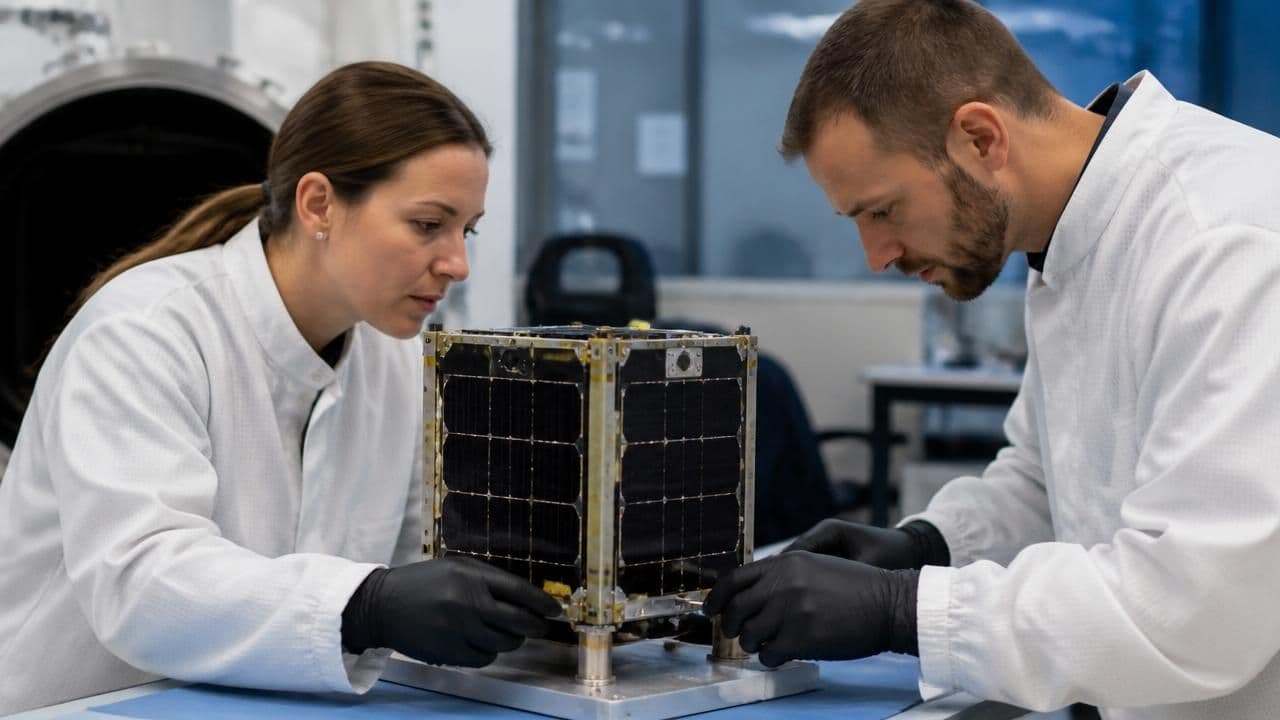
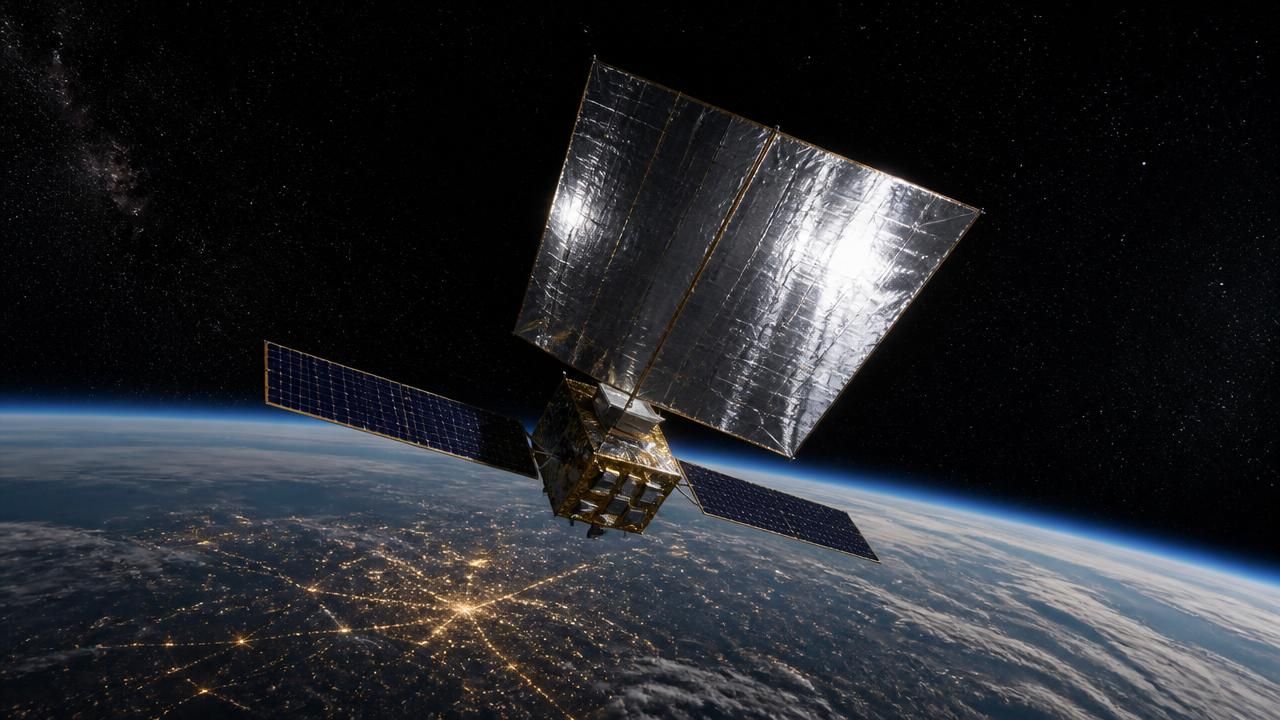
Reflect Orbital, a startup based in California, will launch a small satellite named Eärendil-1 — after the mariner in J.R.R. Tolkien's legendarium who sails the heavens with a shining jewel — as a precursor to a proposed fleet of space mirrors. The test satellite is designed to reflect sunlight onto a specific area of Earth's surface, demonstrating the feasibility of delivering on-demand illumination or solar energy after dark.
The concept is not new. For over a century, visionaries have imagined placing giant mirrors in orbit to light cities or extend daylight. In the 1990s, Russian scientists tested the Znamya project, a 20-meter space mirror intended to sweep a beam of reflected sunlight across the planet's night side. That experiment ultimately failed to deploy fully, but the idea never faded. Now, with advances in satellite miniaturization and an ambitious goal of 50,000 mirrors in low Earth orbit, Reflect Orbital intends to resurrect it.
According to The Verge, the company's long-term plan could involve a constellation of up to 50,000 mirrors, each capable of directing sunlight to ground-based solar farms or urban areas. Other sources put the initial phase at 4,000 mirrors, but the scale is staggering either way. The FCC's approval covers only the test satellite, but it signals regulatory openness to the broader concept.
Astronomers and Environmental Groups Push Back
That openness has alarmed astronomers and environmental advocates. A coalition that includes the Royal Astronomical Society, the European Southern Observatory, and the International Astronomical Union has sent letters to the FCC strongly opposing the plan. Their primary concern is the devastation it could wreak on ground-based astronomy. Even a single bright moving light source can ruin long-exposure observations, and thousands of mirrors would crisscross the night sky, leaving streaks and haze across astronomical images.
“One million satellites and mirrors in space pose a grave threat to the night sky,” ESO warned in a statement, echoing the title of its recent report.
The applause for the approval was equally strong from environmental groups, which filed challenges after the FCC gave its go-ahead. NBC News reported that these groups question the commission's review process, arguing that the potential consequences for the environment and human health were not adequately considered before authorizing the test.
Beyond the Limit: The Satellites Are Multiplying
The controversy over Reflect Orbital's mirrors is compounded by a separate, even more audacious proposal: SpaceX has submitted plans for a constellation of one million satellites to low Earth orbit. By comparison, the company's current Starlink system has only around 10,000 satellites, and astronomers have already complained about photobombing and radio interference. The combined impact of one million satellites and 50,000 mirrors would, in the words of Universe Today, “permanently scar the night sky.”
According to a report from AOL, the combined proposals could put 1.7 million artificial objects in orbit, a number that would dwarf the natural star population visible to the naked eye. Astronomers warn it could render ground-based optical astronomy nearly impossible at certain wavelengths, jeopardizing discoveries in dark energy, exoplanet research, and the search for life beyond Earth.
Remarkably, this comes at a moment when the astronomical community is investing heavily in next-generation ground-based telescopes, such as the Giant Magellan Telescope with its 119-ton mirror, designed to observe the universe in unprecedented detail. These instruments require pristine, dark skies — a resource that space mirrors and megaconstellations would rapidly deplete.
Risks to Human Eyes — and Safety
Beyond astronomy, there are immediate human safety hazards. A sufficiently bright beam of reflected sunlight could dazzle pilots, flash-blind drivers, or cause permanent eye damage if pointed directly at a populated area. The Verge noted the risk to unprotected eyes, and the space.com article on eclipse safety underscored how easily human vision can be harmed by concentrated sunlight.
Reflect Orbital's defenders argue that the mirrors will be precisely aimed and that the beam would be diffused over a wide area, reducing intensity. But critics point to the unpredictability of orbital mechanics, atmospheric scattering, and the potential for a mirror to lose orientation and sweep its beam across a city in seconds.
The Cultural Resonance of Eärendil
The name Eärendil is a poignant choice. In Tolkien's mythology, Eärendil carries a star across the sky, a symbol of hope and beauty. The satellite's namesake is the brightest star in the night sky, a metaphor for human aspiration. Yet for many astronomers, the satellite is a portent of the opposite: a future where the night sky is no longer a window to the cosmos but a canvas cluttered by commerce.
“Astronomers call it a nightmare,” wrote ECOticias, reflecting a sentiment echoed across the scientific community.
Even proponents of solar energy, who see space mirrors as a renewable breakthrough, acknowledge the need for rigorous safeguards and international agreement.
What Happens Next?
The FCC's approval is not the final word. Environmental groups are seeking reconsideration, and the international astronomical community continues to lobby for stricter review. The test launch date for Eärendil-1 has not been announced, but it is expected later this year or in 2026. If it succeeds, the company will push for a broader license, setting the stage for a global debate on the boundaries of innovation and the preservation of the night sky.
For now, one thing is clear: the fight over space mirrors has become a focal point for society's larger struggle to balance technological progress with the intangible, priceless resource of a dark and starry sky.