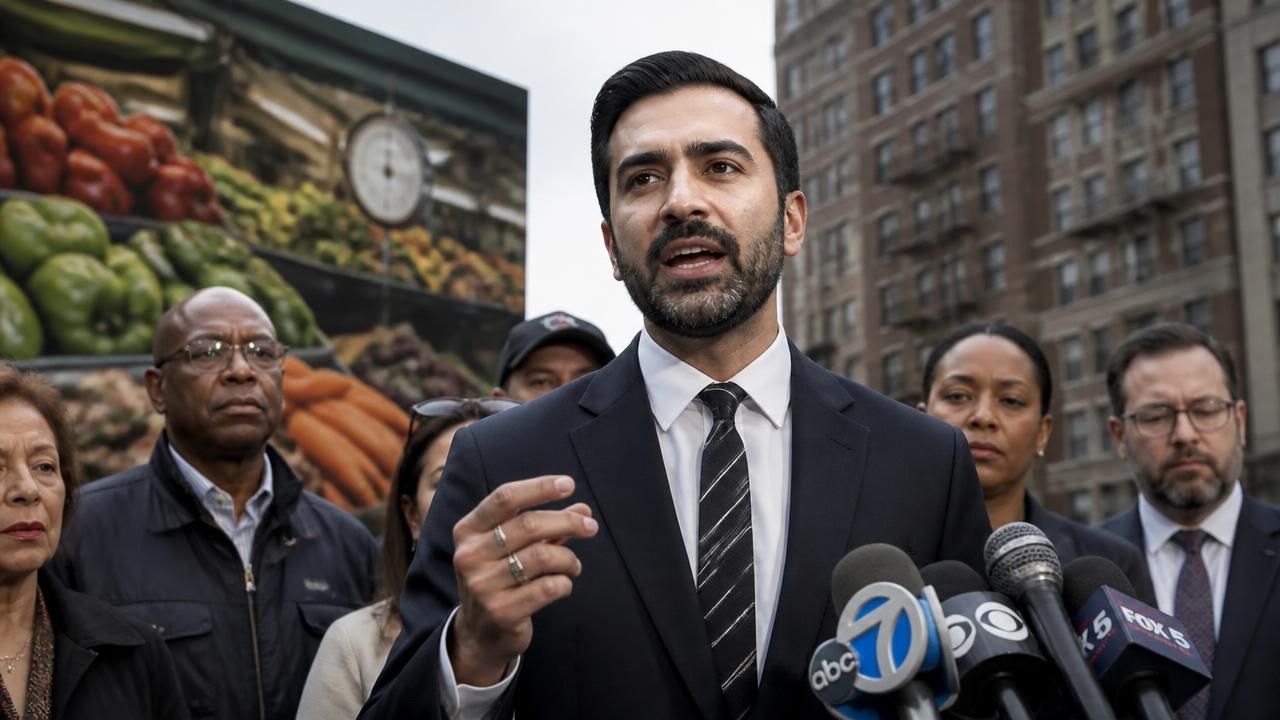
New York City Mayor Zohran Mamdani is moving forward with one of the boldest experiments in American municipal food policy: a $70 million plan to create five city-run grocery stores, offering 30 percent discounts on essentials such as produce, eggs, and milk. The first location is expected to open in the Bronx next year, and the administration has identified La Marqueta as an early site. The initiative has set off a fierce battle over government’s role in retail, pitting food-justice advocates against entrenched grocery interests and a business community increasingly wary of the mayor’s agenda.
A $70 million experiment in public groceries
According to the Mamdani administration, the city will own and operate five supermarkets, funded with $70 million in taxpayer money. Shoppers will see discounts of roughly 30% on staple goods, and reports suggest the stores may also sell an NYC private label to cut costs further. The first store is slated for the Bronx, a borough where food insecurity is among the highest in the city, while La Marqueta has been identified as another potential site.
- $70 million allocated for five government-run stores.
- 30% discounts on produce, eggs, milk, and other essentials.
- First store to open in the Bronx next year; La Marqueta named as an early site.
- No ID requirement — Mamdani’s office quickly walked back earlier suggestions.
- City will own and operate the stores, potentially with an exclusive private label.
The city’s Head of Economic Justice, Julie Su, has framed the project as economic development rather than simple retail. In a Bloomberg Markets interview, she said the plan is designed to address affordability and develop economic growth in underserved neighborhoods. Supporters argue that groceries are public infrastructure, much like libraries or parks, and that government-run supermarkets can stabilize prices and food access in areas abandoned by private chains.
“This is about treating groceries as public infrastructure,” said one advocate quoted by NationofChange. “If we can ensure everyone has access to affordable, healthy food, we are tackling food insecurity at its root.”
Grocers and bodegas push back
Opposition has been swift and unexpectedly well funded. Industry groups representing grocers and bodegas have launched a lobbying effort against the plan, meeting with City Council Speaker Julie Menin and building what the New York Post calls a $1 million war chest. An immigrant-led business coalition says it is “prepared to sue” if the city moves forward. Critics argue that the city-run stores will undercut independent supermarkets and bodegas that already operate on razor-thin margins, and they question the plan’s business model.
“This is a solution in search of a problem. There are already affordable supermarkets in the Bronx, and these city stores will compete directly with them using millions in taxpayer funds,” said a spokesperson for a local grocers’ association.
The New York Post has led the charge, publishing stories calling the plan “ridiculous” and noting that it “hasn’t been studied for small business impact.” Officials reportedly admitted that the city-owned stores “will lack key components,” and the first store alone could cost taxpayers an eight-figure sum — roughly $30 million. The paper also revealed that grocers and bodegas claim the city is demanding private business information as it prepares to launch the public supermarkets.
Beyond the aisles: business leaders worry about a broader agenda
The grocery fight is only one front in a larger battle between Mamdani and New York’s business establishment. The mayor has proposed pied-à-terre taxes on wealthy non-resident homeowners, pressured regulators to block a $500 million Western Union acquisition, and floated tax increases that critics warn could trigger a mass exodus of high earners. Reuters reported that small-business owners are torn, wanting Mamdani to focus on affordability while avoiding what they call “Trump saber-rattling.”
The Wall Street Journal and Gothamist have both noted that Mamdani has still not filled the city’s top economic development role, leaving executives nervous about the direction of his administration. The New York Times says he has eyed a McKinsey partner for the job and has tapped Anthony Shorris and Lina Khan for economic development teams, but business leaders remain skeptical. Meanwhile, a group of financial power brokers is reportedly building an “anti-Mamdani war chest,” according to the WSJ, and a separate immigrant-led group has amassed $1 million to fight the grocery plan in court.
Even the mayor’s transition has drawn scrutiny. The New York Post reported that a Mamdani-linked PAC allegedly offered a Hispanic business leader a job and a seat on the transition team in exchange for raising $1 million in three days — a charge the mayor’s team denies. These controversies have intensified the perception that Mamdani is hostile to commerce, a narrative his allies dismiss as exaggerated.
A national flashpoint, a political gamble
The grocery initiative has become a national talking point. CoStar notes that the plan “adds fuel to a national debate” over public ownership, while CNN Business points out that government-owned grocery stores are not new — they exist in various forms across the U.S. and internationally. Food & Wine similarly asks whether they could work today, noting historical public markets and cooperatives as precedents. The Guardian, in a balanced piece, asks whether Mamdani’s plan can actually deliver cheap food to New Yorkers.
But critics see a dangerous precedent. Vox warns of “the hidden cost” of cheap groceries, arguing that the program could distort local markets and burden taxpayers. A RealClearPolitics commentary by Glenn Beck said the plan “will kill the independent businesses.” Mamdani has even tried to turn Ronald Reagan’s famous line about government on its head to argue for city-run stores — a rhetorical move that opponents call cynical.
At its core, the debate is about whether a city of 8.5 million people can successfully operate grocery stores without wasting money or crushing small businesses. The first Bronx store is still months away, but the political shelf life of this fight may outlast the products on its shelves. If Mamdani succeeds, he may reshape not only New York’s food landscape but the national conversation about public enterprise. If he fails, the backlash could define his entire mayoralty.