South African police have launched a nationwide manhunt after two mass shootings in townships on opposite sides of the country killed at least 27 people and wounded more than two dozen others, jolting a nation already inured to extraordinary levels of gun violence.
The attacks, which took place roughly 1,400km apart, unfolded within hours of each other on Saturday night, according to the South African Police Service. No arrests had been reported by Sunday evening, and police said the motives in both cases remained under investigation.
What happened
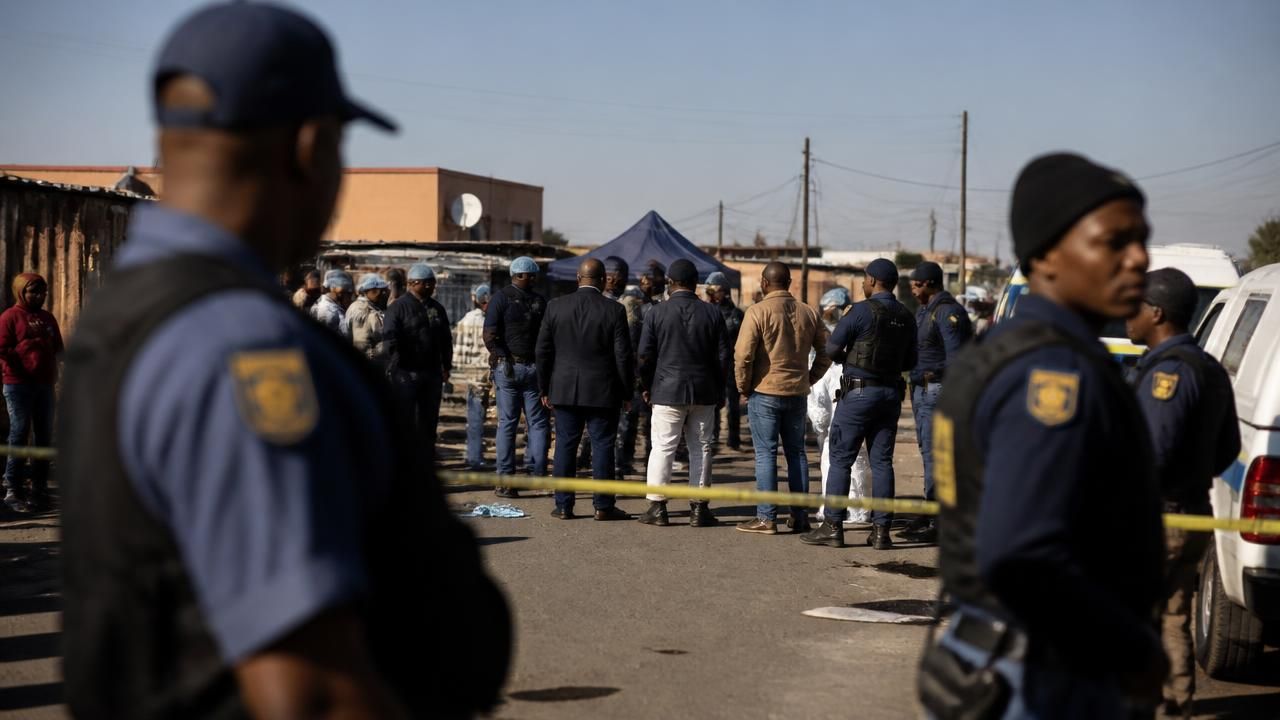
In Wedela township, south-west of Johannesburg, police said eight suspects armed with AK-47 assault rifles and pistols opened fire on patrons at a bar. Seventeen people were killed and at least 15 others sustained gunshot wounds — a toll that makes it one of the deadliest single shooting incidents in the country in recent memory.
In a separate attack near Cape Town, 10 people were killed at what accounts described as a gathering at a barbecue — or braai — venue. Reports diverged on the precise nature of the target, with several outlets describing it as a store; police have not fully reconciled those accounts. Across both incidents, at least 26 people were injured.
Seventeen people were killed when eight suspects armed with AK-47 assault rifles and pistols opened fire at a bar in Wedela township, south-west of Johannesburg; at least 15 others were wounded. — South African Police Service account of the first attack
The two locations — a township on the industrial West Rand and a community on the outskirts of Cape Town — sit in provinces that record some of the country's highest rates of violent crime, though for different reasons. Gauteng's township shootings are frequently linked to armed robbery, extortion and illicit liquor trade disputes; the Western Cape's Cape Flats has been consumed for years by turf wars between rival gangs.
A country accustomed to gun violence
South Africa consistently ranks among the most violent societies outside an active conflict zone. Police record roughly 27,000 murders a year across a population of about 62 million — a per capita rate many times higher than that of Western Europe or the United States. A substantial share of those killings are committed with firearms.
- At least 27 people killed across the two weekend attacks
- More than 26 people wounded, including at least 15 in the Wedela bar shooting
- Eight suspects sought in connection with the Johannesburg-area attack
- Both attacks carried out with high-powered rifles and handguns, according to police
Officials have long warned that large numbers of illegal firearms — many stolen from police stockpiles, private owners or lost in the security sector — circulate freely in townships and informal settlements, where dense housing and limited street lighting make mass shootings both easier to carry out and harder to investigate. Bars, shebeens and late-night gathering spots are recurring targets because they concentrate crowds in one place.
A manhunt under pressure
The police service said it had mobilised specialised units, including detectives and forensics teams, in both provinces. Criminologists and community leaders have repeatedly criticised the country's detective capacity, pointing to case backlogs and low conviction rates that they argue fuel impunity and retaliation cycles.
Local outlets such as IOL and Eyewitness News covered the shootings as a domestic crisis, focusing on the victims, the shattered communities and the failure of policing in township areas. International wires, including the Associated Press, Agence France-Presse and Al Jazeera, led with the death toll and the manhunt, framing the events as the latest in a grim pattern of mass casualty shootings in South Africa. Tabloids in the UK, such as The Sun, foregrounded the weaponry — 'AK-47s and pistols' — while outlets from India, South Korea and the Gulf carried the story as a short world-news bulletin, underscoring how quickly such incidents now travel globally.
The wider pattern
South Africa's mass shootings rarely fit the template familiar to American audiences of a lone attacker at a school or public venue. More often they involve groups of armed men, targeted communities and economic motives tied to extortion rackets, the taxi industry, illegal mining or organised crime. Government task forces have been deployed to hotspots in the Western Cape and Gauteng in recent years with mixed results, and the country's murder rate has remained stubbornly high despite successive national policing plans.
Parliament has debated tighter firearm controls repeatedly, but enforcement remains the central challenge: critics argue that legislation matters little when the existing register is incomplete and illegal weapons are readily available on the street.
What comes next
Police appealed for anyone with information to come forward and said they would release more details as the investigation progressed. For the families in Wedela and outside Cape Town, the immediate concern is the same as it has been after previous attacks: whether arrests will follow, whether anyone will be convicted, and whether the pattern will repeat.
Until those questions are answered, this weekend's shootings are likely to sharpen a debate South Africans have been having for years — about guns, about policing, and about how much safety the state can realistically guarantee in its poorest communities.