For more than a century, physicists have known that when two fluids slide past each other at different speeds, their boundary buckles, curls, and rolls into vortexes. Known as the Kelvin-Helmholtz instability, this phenomenon explains why wind ripples water and why clouds shear into rows of curves. For decades, scientists suspected the same thing happens on the Sun's surface, where plasma flows at different velocities — but no telescope could resolve the tiny whirlpools. Now, the world's largest solar telescope has finally captured them in breathtaking detail.
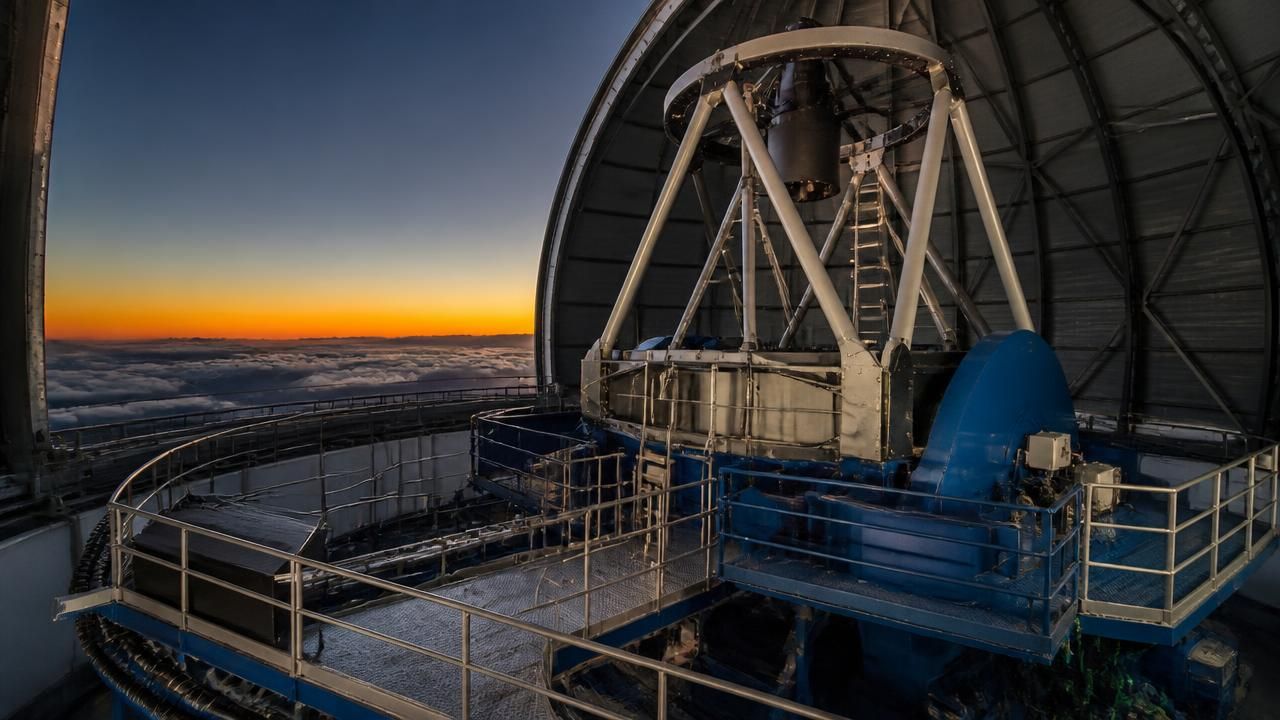
The Daniel K. Inouye Solar Telescope (DKIST), a 4-meter instrument perched atop Haleakalā in Hawaii, has produced the highest-resolution images of the Sun's surface ever recorded. The new observations, led by David Kuridze and Friedrich Wöger of the National Solar Observatory, reveal that Kelvin-Helmholtz instabilities are not merely present on the Sun — they are ubiquitous. The findings, reported across multiple outlets including Ars Technica, BBC, and The Guardian, could transform our understanding of how heat, mass, and magnetic energy move through the Sun's atmosphere, and may finally explain one of solar physics' greatest mysteries: why the corona is millions of degrees hotter than the surface below.
A New Window on the Sun
The Sun's surface is not a solid shell but a roiling, unstable sea of plasma heated to roughly 10,000 degrees Fahrenheit. Until recently, the tiny structures within that plasma were invisible to telescopes with mirrors smaller than 2 meters, which could not resolve scales below a certain limit. The NSF-funded Inouye Solar Telescope, which entered its operational phase in November 2021, shattered that barrier. Its 4-meter mirror allows scientists to see features as small as 30 kilometers across on the Sun — a remarkable leap forward.
The new images and videos, described by The Washington Post as capturing "turbulent, vortex-like structures in unprecedented detail," show the Sun's surface covered in small, swirling whirlpools. These are not the giant sunspots or prominences we are used to seeing; they are small-scale plasma vortices that flicker and dance across the solar surface. According to a study team member, the vortices are "not just visible on the Sun, but they're ubiquitous."
"Kelvin-Helmholtz instabilities are not just visible on the Sun, but they're ubiquitous." — David Kuridze and Friedrich Wöger, National Solar Observatory
The Physics of Vortexes
The Kelvin-Helmholtz instability is a fundamental fluid-dynamic phenomenon first described mathematically in the late 1860s. It occurs when two fluids move at different speeds, causing the interface between them to become unstable. On the Sun, plasma flows at varying velocities due to convection, magnetic fields, and differential rotation. Where these flows meet, the boundary can roll up into characteristic spiral shapes. The same physics is at work in ocean waves, atmospheric cloud formations, and even in the plasma of Earth's magnetosphere.
Observing these instabilities on the Sun, however, has been a long-standing challenge. The structures are incredibly small in solar terms — far below the resolution of previous telescopes. The Inouye Solar Telescope's 4-meter aperture changes that. Its images, featured in a video released by the NSF and widely shared on social media, show the solar surface boiling with these tiny vortexes. New Scientist called it the "most-detailed-ever image of sun revealing roiling waves for the first time," while other outlets emphasized the "swirling plasma patterns in never-before-seen detail."
Why It Matters: The Coronal Heating Mystery
The discovery is more than just a visual spectacle. The Sun's outer atmosphere, the corona, defies expectations: it is hundreds of times hotter than the surface, reaching temperatures of millions of degrees. The source of this heating has puzzled scientists for decades. One leading theory is that magnetohydrodynamic waves and turbulence in the lower atmosphere transport energy upward. The newly observed Kelvin-Helmholtz instabilities could be a key part of this process.
According to the researchers, the vortexes act as "tiny whirlpool-like structures" that may help store and release energy. They are likely sites where magnetic energy is converted into thermal energy, heating the plasma around them. This could explain not only the corona's extreme temperatures but also explosive solar activity such as flares and coronal mass ejections. IFLScience highlighted that the vortices "could explain explosive solar activity," while The Brighter Side of News emphasized their role in "how the Sun stores and releases energy."
Data in Focus: Key Findings
- Kelvin-Helmholtz instabilities are common across the Sun's surface, not rare occurrences.
- The vortices are small-scale, requiring a telescope of at least 4 meters to resolve.
- The structures may facilitate energy transfer from the Sun's surface to its atmosphere.
- This could help solve the coronal heating problem and improve predictions of space weather.
Different Perspectives
The story has been framed in remarkably varied ways across different outlets, reflecting both the visual appeal and the scientific significance. BBC News led with "See the Sun like never before with most detailed images yet," focusing on the aesthetic wonder. The Guardian, meanwhile, titled its coverage "Unprecedented images may explain one of greatest mysteries of the sun," foregrounding the coronal heating puzzle. CNN emphasized a "hidden process driving solar activity," while TechSpot reminded readers that these are "plasma whirlpools scientists have chased for decades."
Some outlets, like Sky & Telescope, placed the spotlight on the telescope itself — the Inouye Solar Telescope, which is part of a new generation of ground-based observatories that are transforming solar physics. The Honolulu Star-Advertiser, the telescope's local paper, highlighted the Hawaii connection: "Hawaii telescope captures swirling, vortex-like patterns on sun's surface." These differing angles illustrate how a single scientific breakthrough can resonate across disciplines, from plasma physics to space weather forecasting.
Looking Ahead
The study is still in its early stages, and many questions remain. How exactly do these vortices interact with the Sun's magnetic field? Do they contribute significantly to coronal heating, or are they just a byproduct of other processes? The team plans to continue observing with the Inouye telescope, which is now the most powerful solar observatory on Earth. Future observations, combined with data from space-based missions like the Parker Solar Probe, could provide a more complete picture.
For now, the images serve as a stunning reminder that our closest star still holds secrets. As the researchers note, the solar surface is not a placid ball of gas but a dynamic, churning arena of plasma waves and vortexes — and we are only just beginning to see them.