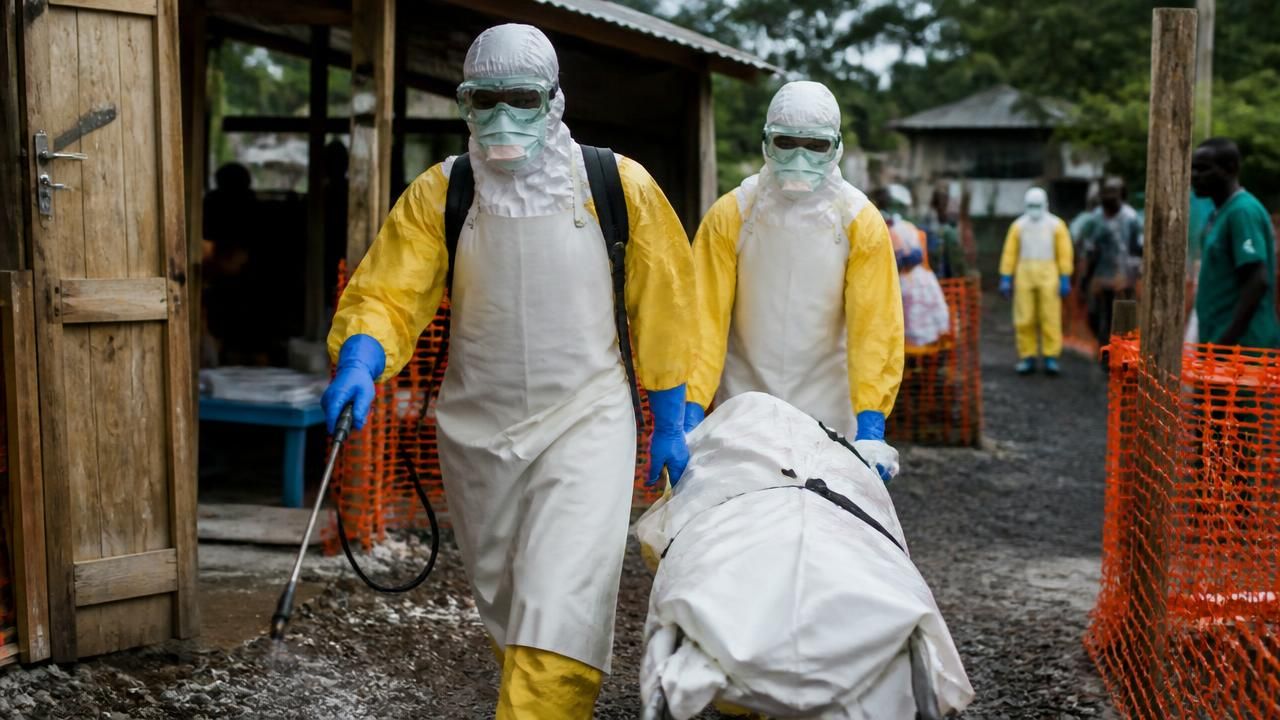
The Democratic Republic of Congo’s Ebola outbreak has passed another grim threshold, with the government reporting more than 11,000 cases and deaths exceeding 5,000. The figures, announced Wednesday, make it the deadliest Ebola outbreak in Congo’s history and the second-worst recorded anywhere, behind the 2014–2016 West African epidemic that killed more than 11,000 people.
Reports of the milestone varied slightly in detail. NPR said the government’s case count had topped 11,000, calling it “a stark figure that underscores the severity of the situation.” Other headlines focused on the death toll, saying more than 5,000 had died and roughly 10,300 had been infected. France 24 framed the event as “Africa’s Ebola outbreak” topping 10,000 cases, mainly in DR Congo, while the Dayton Daily News described authorities racing to slow the spread in African countries. The differences reflect the difficulty of tracking an active outbreak in real time, where suspected, probable and confirmed cases are counted on different schedules.
A regional emergency, centered in Congo
The outbreak remains concentrated in eastern DRC, where health workers have battled the virus amid armed conflict, population displacement and community mistrust. The epidemic was declared in August 2018 in North Kivu and Ituri, provinces that have been plagued by violence for decades. That insecurity has repeatedly disrupted contact tracing and vaccination campaigns, and attacks on health facilities have forced responders to suspend work for days at a time.
Still, the outbreak’s scale has alarmed neighboring countries and global health officials. Some coverage warned that cases had been reported in Kenya, Uganda and Nigeria, feeding fear of continent-wide spread. Other outlets were more cautious, emphasizing the risk of cross-border transmission rather than confirming a broad regional outbreak. Uganda, which shares a long and porous border with DRC, has repeatedly prepared for possible imported cases; Kenya and other countries have increased screening at ports and border crossings. The World Health Organization has urged against travel and trade restrictions, arguing that they can hamper response efforts and drive the outbreak underground.
Why the numbers matter
Ebola is a severe and often fatal illness spread through direct contact with bodily fluids. In this outbreak, the case fatality rate has hovered around 45%, according to the figures reported by outlets. That is lower than in some past outbreaks, partly because of improved supportive care and the use of experimental vaccines and treatments, but it remains extraordinarily high. More than 5,000 deaths is a measure not only of the virus’s lethality but of the gaps in reaching patients early enough.
Health authorities have deployed an experimental vaccine, rVSV-ZEBOV, in ring-vaccination campaigns—immunizing contacts of confirmed cases and their contacts. The strategy has been credited with slowing transmission in some areas, but it depends on trust, access and rapid case detection. In communities where Ebola responders have been attacked or where rumors have spread, those conditions are fragile. The result is an outbreak that has burned for more than a year, defying the usual arc of containment.
“Congo’s Ebola outbreak has topped 10,000 cases as authorities race to slow the spread in African countries.” — Dayton Daily News headline
Framing a slow-burning crisis
The story’s presentation across outlets reveals different emphases. NPR led with the case milestone, stressing the sheer scale of the epidemic. MSN headlines emphasized mortality and the specter of regional spread, with one report citing more than 5,000 dead and another warning of cases beyond DRC. France 24 placed the outbreak in a continental frame while keeping the focus on Congo, where the vast majority of cases have occurred. The Dayton Daily News highlighted the race to contain the virus, a framing that centers responders and the urgency of the moment.
Those frames are not contradictory so much as complementary. The case count captures the size of the challenge; the death toll captures its human cost; the regional lens captures the risk of spillover; and the containment frame captures the urgency. Together they describe an outbreak that is both a local catastrophe and a global health test.
What comes next
The immediate priorities are familiar: find and isolate cases, trace contacts, vaccinate rings, provide safe burials and engage communities. But the deeper challenge is political and operational. Eastern DRC’s conflict has made the response a security mission as much as a medical one. Health workers need safe access; communities need clear information and a reason to trust responders; and the international community needs to sustain funding and attention even when the outbreak slips from headlines.
The 11,000-case milestone is a warning. Ebola outbreaks can be stopped, but only when surveillance, vaccination, treatment and community trust work together. In Congo, each of those pillars has been tested. The coming weeks will show whether the response can bend the curve—or whether the outbreak will continue to set grim records.