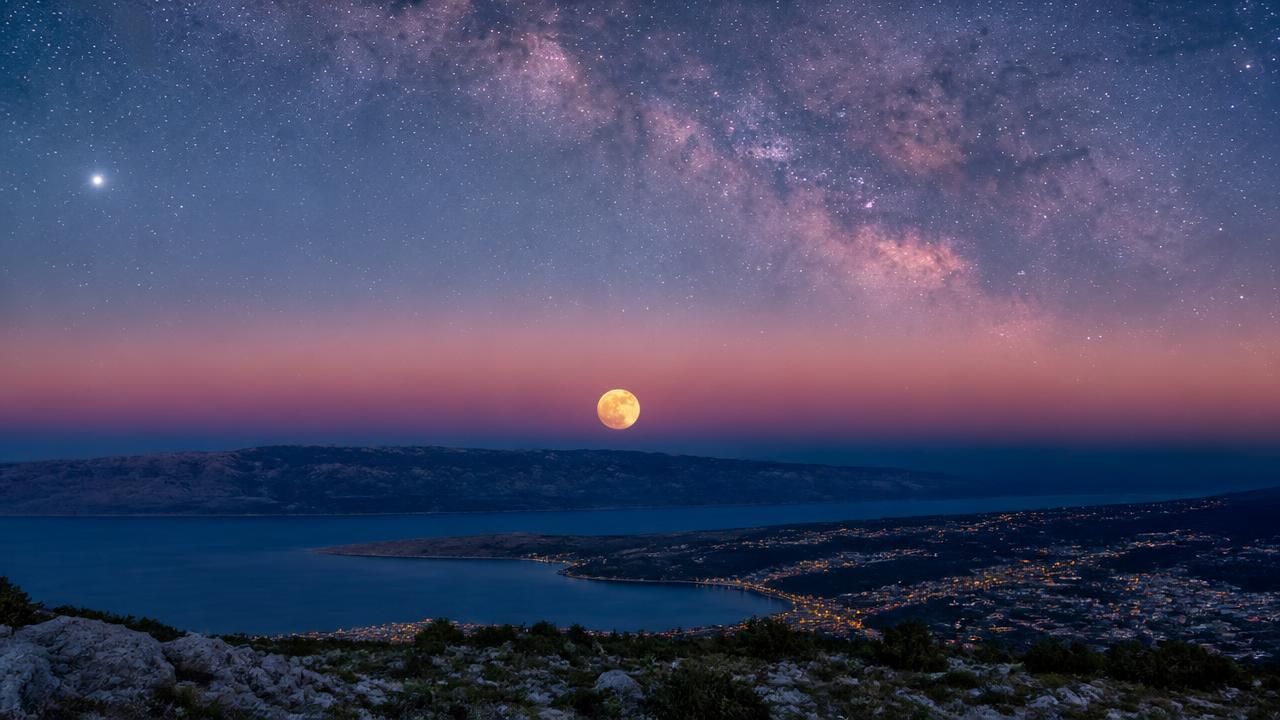
For stargazers, the night of July 28, 2026, will be one to remember. The full Buck Moon will rise over the eastern horizon as the sun sets, offering a stunning spectacle that pairs with the Belt of Venus, Earth's atmospheric shadow, and a shimmering Milky Way. But this is just the warm-up for a summer of celestial events that includes the first Perseid meteors and, on August 12, a total solar eclipse.
What Is the Buck Moon?
The name "Buck Moon" has a long tradition. According to the Old Farmer's Almanac, it was used by Native American tribes in what is now the northeastern United States because July is when male deer, or bucks, begin growing new antlers. The name has stuck, and it is widely used today to describe the full moon that falls in July.
While the moon will reach its full phase on July 28, it will appear large and bright for a day or two before and after. For the best view, find a location with a clear southeastern horizon and watch the moonrise just after sunset. The moon will be opposite the sun in the sky, so it will be up all night, reaching its highest point around midnight.
A Night of Cosmic Beauty
One of the most striking images of this event comes from NASA's Astronomy Picture of the Day, which featured a photograph taken from Krk Island in Croatia on July 28. The image shows the full Buck Moon rising over distant mountains, while a diffuse gray band – Earth's shadow – rises along with it. Above that shadow is the pinkish glow of the Belt of Venus, a subtle band of backscattered sunlight that often appears during twilight.
"Since a full moon rises as the sun sets, Earth's shadow also rises in the twilight scene, a diffuse gray band extending above the mountainous southeastern horizon." – NASA APOD
Forbes highlighted that July's night sky offers more than just the moon. The Milky Way is also visible in all its glory, especially from dark-sky sites, and Venus shines brightly in the west. This month provides a unique opportunity to see several celestial wonders in one evening.
Meteor Showers Add to the Show
As USA Today reported, the Buck Moon arrives amid a trio of meteor showers. The Southern Delta Aquariids and Alpha Capricornids are both active in July, and the famous Perseids – which peak in August – begin to make their presence known in late July. The bright moonlight will interfere with some fainter meteors, but observers can still expect to see several shooting stars, especially after moonset or in the early morning hours.
The Significance of the Buck Moon in 2026
This full moon holds special importance because it sets the stage for the New Moon on August 12, which will produce a total solar eclipse visible across a wide area. As NASA's APOD notes, "The New Moon of August 12 will cast its own shadow on planet Earth in a much anticipated total solar eclipse."
The lunar cycle that begins with the Buck Moon will end with a dramatic New Moon—the opposite phase—that will obscure the sun for lucky viewers. This cosmic rhythm reminds us of the moon's role in our skies.
How Different Outlets Covered the Story
Coverage of the Buck Moon varied by outlet. NASA's Astronomy Picture of the Day focused on the aesthetic and scientific aspects of the event, explaining the subtle atmospheric phenomena that accompany moonrise. Forbes took a practical approach, telling readers when and where to look for the moon, Milky Way, and Venus. Local outlets like the Desert Sun addressed regional audiences, advising Californians on how best to see the moon from the Golden State. Meanwhile, lifestyle pieces from Yahoo and MSN explained the folklore behind the moon's name and suggested ways to enjoy the night sky.
Regional Viewing Tips
- Find a location with a clear view of the eastern horizon.
- Go to a dark-sky site to minimize light pollution.
- Watch shortly after sunset as the moon begins to rise.
- Bring binoculars for a closer look at the moon's surface.
For those in California, a clear sky and a view toward the east are essential. As with most celestial events, city lights can wash out the view, so it's best to drive to a dark-sky location. Regardless of where you are, the moon will be visible all night, but the most dramatic sight is as it rises, appearing large and golden near the horizon.
Why This Matters
In an age of light pollution and busy schedules, full moons are a reminder to pause and look up. They have guided humanity for millennia, and their names are steeped in culture and history. The Buck Moon is also a chance to appreciate our planet's place in the solar system, and to anticipate the upcoming solar eclipse.
Whether you're an experienced astronomer or simply someone who enjoys the night sky, July 28 offers a moment of natural beauty and reflection. Mark your calendar, find a good spot, and let the Buck Moon light up your night.