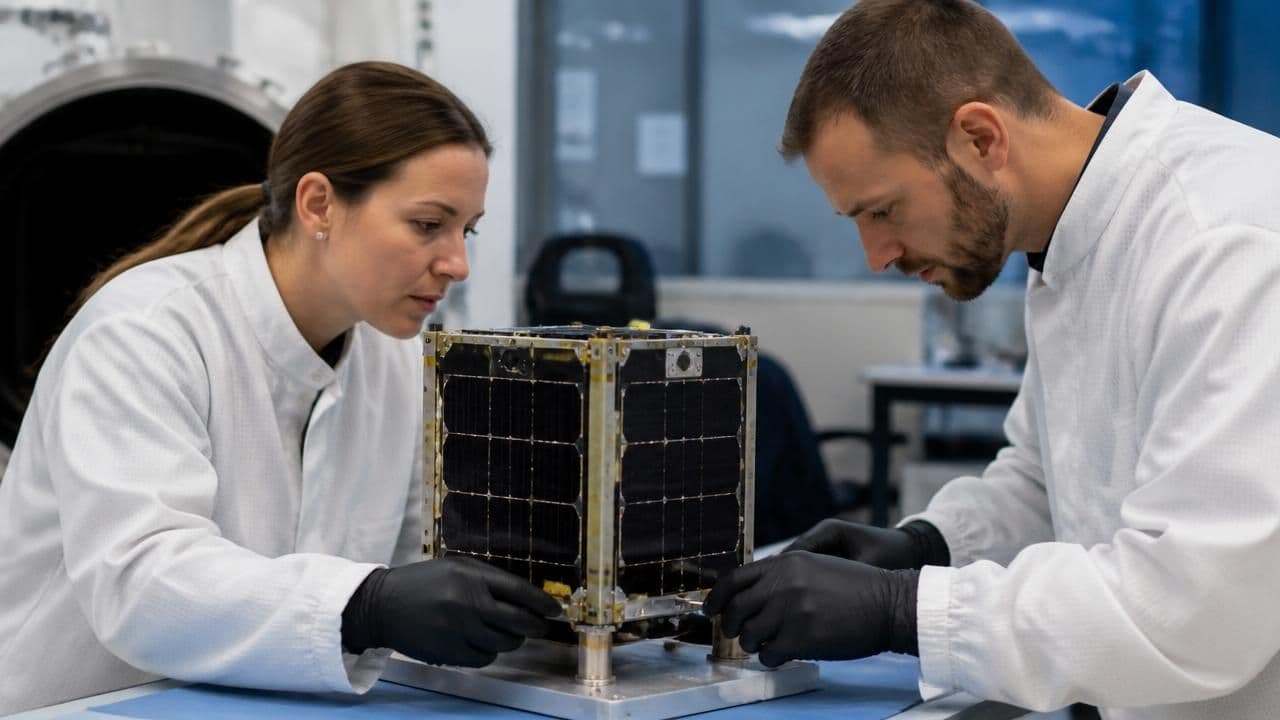
NASA's Johnson Space Center is once again proving that the future of space exploration lies in the hands of its interns. This year, a diverse cohort of students from across the country is working alongside seasoned engineers, scientists, and communicators on projects that directly support human spaceflight—including the ambitious Moon to Mars Artemis campaign. These interns are not just learning; they are contributing to real missions, gaining invaluable experience, and preparing to join the nation's highly skilled aerospace workforce.
Real-World Impact at Johnson Space Center
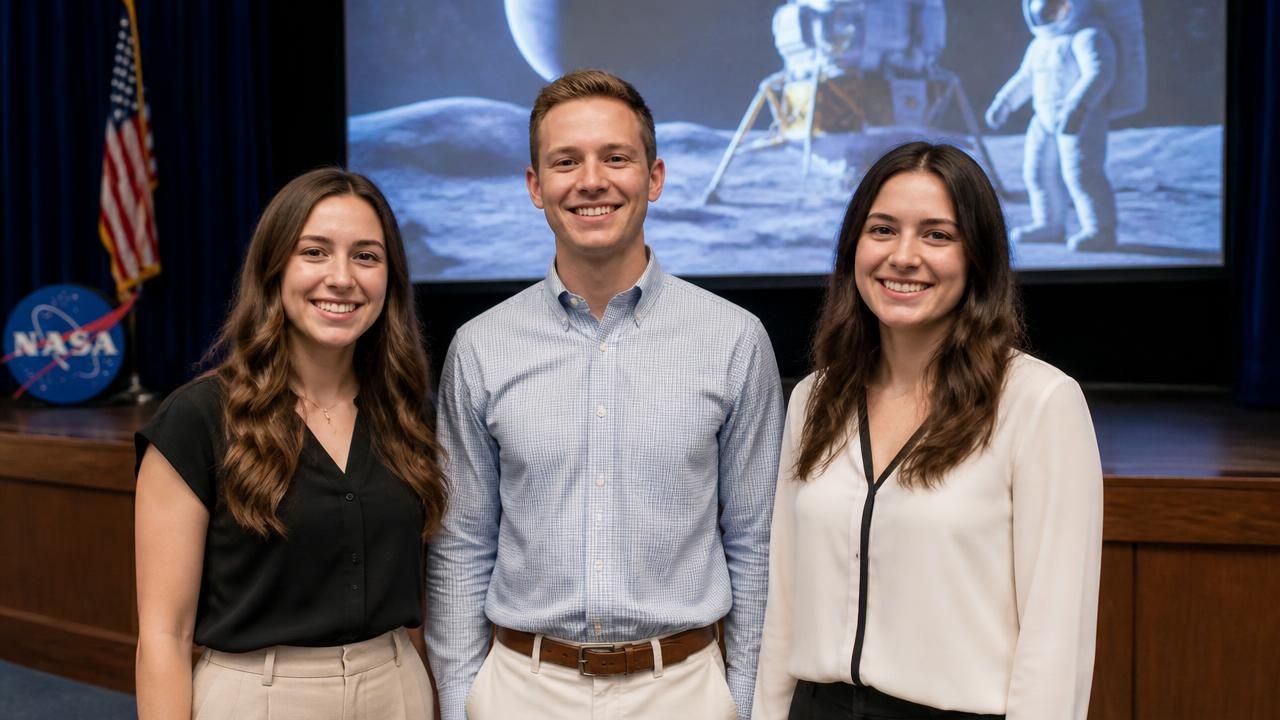
From left in a group photo at the Teague Auditorium, interns Macie Landon, John Graham Reynolds, and Morgan Gridley represent just a few of the talented individuals bringing fresh perspectives to NASA. The agency emphasizes that these students apply their talents to real-world projects while immersed in a culture of innovation. ‘Our interns are solving problems, communicating complex ideas, and inspiring the next generation,’ a NASA spokesperson noted.
Among them is Macie Landon, who serves as a Strategic Communications intern for the Moon Base Program. Her role involves translating complex scientific and engineering concepts into media that the public can understand and take inspiration from. ‘Being able to translate complex concepts into media that the public can understand and take inspiration from is hugely important,’ Landon said during a recent event at the FIFA Fan Festival in East Downtown Houston, where she shared information about NASA's lunar ambitions.
Diverse Paths to the Stars
While Landon focuses on storytelling, other interns bring their expertise to technical frontiers. Kelsey Prissel, a former intern at the Lunar and Planetary Institute (LPI)—which collaborates closely with NASA—has been spotlighted for her work in planetary science. Her journey reflects the agency's commitment to nurturing talent through partnerships with research institutions. Similarly, a University of Nebraska–Lincoln alumna (featured in Nebraska Today) has stepped into a role supporting lunar exploration, embodying the ‘Husker alumni reaching for the moon’ narrative.
At the University of Nevada, Reno, Manuel Retana is another example of the pipeline of talent feeding into NASA. Profiled in the Fall 2025 issue of Nevada Silver & Blue, Retana's work exemplifies how students from diverse academic backgrounds contribute to the agency's mission. Retana's story underscores that the path to NASA is not limited to elite institutions; it is open to determined students from all corners of the country.
The Artemis Generation
These interns are part of what NASA calls the ‘Artemis Generation’—a cohort of young professionals who will drive humanity's return to the Moon and eventual journey to Mars. NASA's Wyche, in a recent statement (as reported by Mirage News), emphasized that the Artemis program is revolutionizing space exploration by creating opportunities for a new workforce. The agency is also engaging students earlier through initiatives like the FIRST Robotics competition. For the 2025 season, NASA unveiled an exploration theme, challenging high school teams to design robots that could operate in lunar or Martian environments.
‘These students are not just learning about space; they are actively building it,’ said a NASA official. ‘Their work on robotics, communications, and science directly feeds into Artemis mission planning.’
Preparing the Next Generation
The internship program at Johnson Space Center is highly competitive, accepting only a fraction of applicants. Interns work on projects ranging from habitat design for the Moon to deep space communications protocols. They also participate in professional development workshops, networking events, and tours of facilities like the Neutral Buoyancy Laboratory and the Mission Control Center.
For many, the experience is transformative. Macie Landon noted that her internship has solidified her desire to pursue a career in space communications. ‘It's been incredible to see how my work fits into the bigger picture of human exploration,’ she said. Similarly, Kelsey Prissel has gone on to become a contributor to lunar science, while Manuel Retana continues to inspire peers at UNR.
Broader Implications
The investment in interns pays dividends for NASA as well. Many former interns return as full-time employees, bringing fresh ideas and a deep understanding of the agency's culture. With the Artemis missions aiming for a crewed lunar landing by 2026 and a sustained human presence on the Moon, the need for a skilled workforce has never been greater. Programs like these ensure that the next generation of explorers is ready to meet the challenge.
As the interns at Johnson Space Center demonstrate, the future of exploration is being shaped today—one project, one innovation, and one inspiring story at a time.