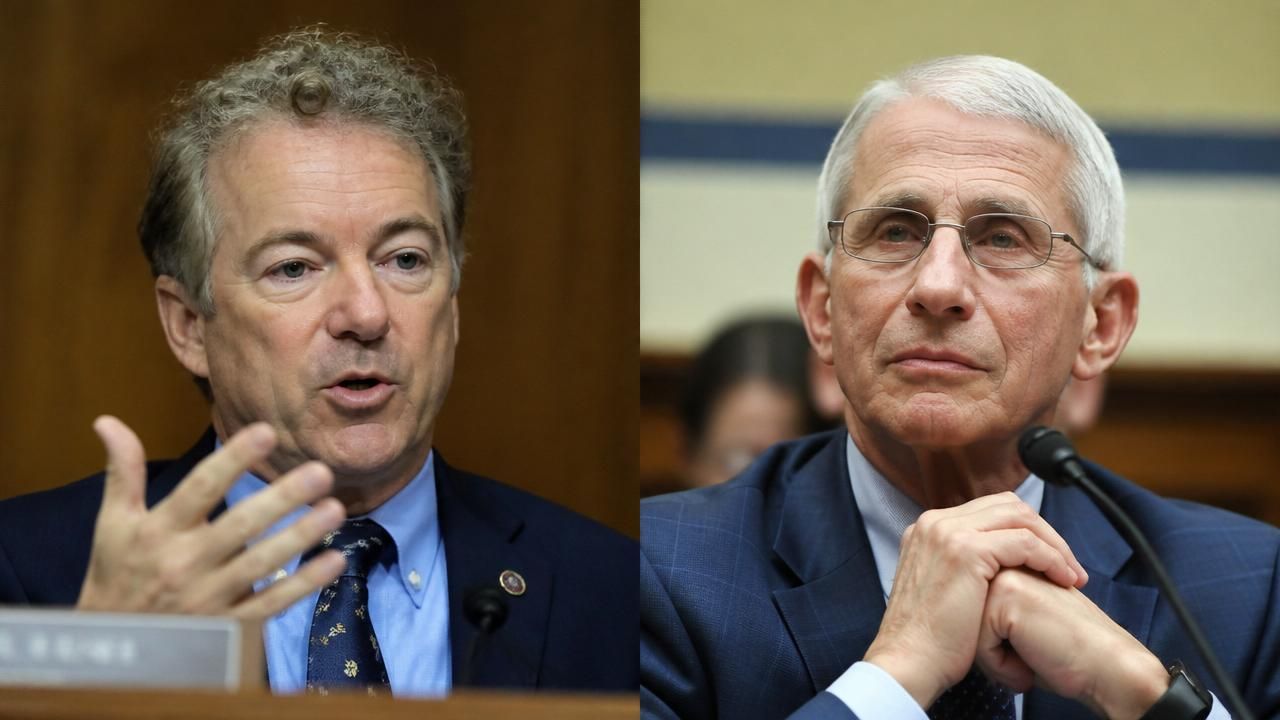
In a dramatic prelude to Dr. Anthony Fauci's upcoming Senate testimony on the origins of the coronavirus, Sen. Rand Paul (R-Ky.) has released a tranche of Fauci's pandemic-era diary entries. The documents, obtained and published by the senator, offer a rare glimpse into the private thoughts of the nation's top infectious disease expert during the height of the COVID-19 crisis. The release has ignited a firestorm of debate, with critics and supporters poring over the entries for insights into Fauci's decision-making and public statements.
What the Diaries Reveal
The diaries, covering key months of 2020 and 2021, show Fauci grappling with uncertainty, political pressure, and evolving scientific guidance. According to sources including NPR and The Wall Street Journal, the entries reveal a man deeply concerned about the trajectory of the pandemic, but also one who occasionally expressed frustration with public health messaging and policy decisions. Notably, the diaries suggest a divergence between Fauci's public optimism and private anxieties. For instance, while he publicly downplayed the need for widespread mask mandates early on, private entries indicate he harbored doubts about the administration's approach.
“It’s fascinating to see the juxtaposition between what he said in press briefings and what he jotted down at the end of the day,” said Dr. Leana Wen, a public health expert at George Washington University, in an interview with NPR. “These diaries humanize Fauci but also raise questions about transparency.”
The New York Post focused on what it called Fauci's “bizarre fame fixation,” noting entries where he seemed preoccupied with his media image and public adulation even as COVID deaths mounted. The tabloid cited passages where Fauci mentions television appearances and book deals, contrasting them with the grim toll of the pandemic. Todayville.com echoed this theme, headlining that “public statements and private thoughts differed widely.” In one entry, Fauci reportedly wrote about the difficulty of balancing scientific uncertainty with the need to project confidence, a struggle that often left him feeling isolated.
The Political Context
The release comes just as Fauci is set to testify before the Senate Health, Education, Labor, and Pensions Committee on Wednesday regarding the origins of SARS-CoV-2. Sen. Paul, a longtime critic of Fauci, has been at the forefront of efforts to scrutinize the doctor's role in pandemic response. By releasing the diaries, Paul aims to undercut Fauci's credibility, arguing that the entries show a pattern of misrepresentation. “The American people deserve to know the truth,” Paul said in a statement, as quoted by akses.co.id. “Dr. Fauci's private diaries paint a very different picture from his public persona.”
However, supporters of Fauci caution against cherry-picking entries. The Wall Street Journal, in its analysis, highlighted that many entries simply reflect the evolving nature of scientific knowledge. “Reading a diary in hindsight can make normal professional doubts look like hypocrisy,” wrote WSJ health reporter Betsy McKay. “Fauci was navigating uncharted waters, and his private notes often show him wrestling with the same questions the public had.”
Historical Background
Fauci, who served as director of the National Institute of Allergy and Infectious Diseases for nearly four decades, became a household name during the pandemic. His briefings and interviews made him both a trusted voice and a target for political attacks. The release of his diaries is unprecedented; no other senior public health official has had their private notes made public in such a manner. The move has drawn comparisons to the release of Hillary Clinton's emails, raising questions about privacy and the politicization of science.
The diaries were obtained by Sen. Paul's office through a subpoena or request—exact details remain murky. Fauci's legal team has protested the release, arguing that it violates doctor-patient confidentiality and could chill future officials from keeping candid notes. “This is a dangerous precedent,” said a former HHS official who spoke on condition of anonymity. “If every private thought of a public servant can be weaponized, we'll have fewer people willing to serve.”
Different Media Framings
The coverage of the diaries varies dramatically by outlet. NPR, as a public broadcaster, provided a balanced overview, quoting both critics and defenders, and emphasizing the context of Fauci's role. The Wall Street Journal focused on key takeaways, such as Fauci's early skepticism about the lab-leak theory versus his later public statements. The New York Post adopted a more sensational tone, zeroing in on Fauci's alleged vanity and disconnect from reality. Todayville.com, a smaller outlet, framed the story as evidence of a gulf between official messaging and internal doubts. Meanwhile, source 5 from ualrpublicradio.org was erroneously included in the bundle—it covered an unrelated MIT study on clean energy—highlighting the challenges of aggregating news from diverse sources.
Implications and Next Steps
The release of the diaries is likely to dominate Wednesday's Senate hearing. Allies of Fauci worry that the entries will be used to attack his integrity, while opponents see them as a long-overdue reckoning. The ultimate impact on Fauci's legacy and public trust in health agencies remains to be seen. For now, the diaries offer a raw, unfiltered look at one of the most consequential figures in modern public health—and a stark reminder of the immense pressures faced by those at the helm of a pandemic response.
As Senator Paul and others prepare to grill Fauci, the released journals will undoubtedly serve as fodder for both sides. But they also raise broader questions: Should public officials be allowed to keep private records without fear of exposure? And how much transparency is too much? These are questions that will linger long after the headlines fade.