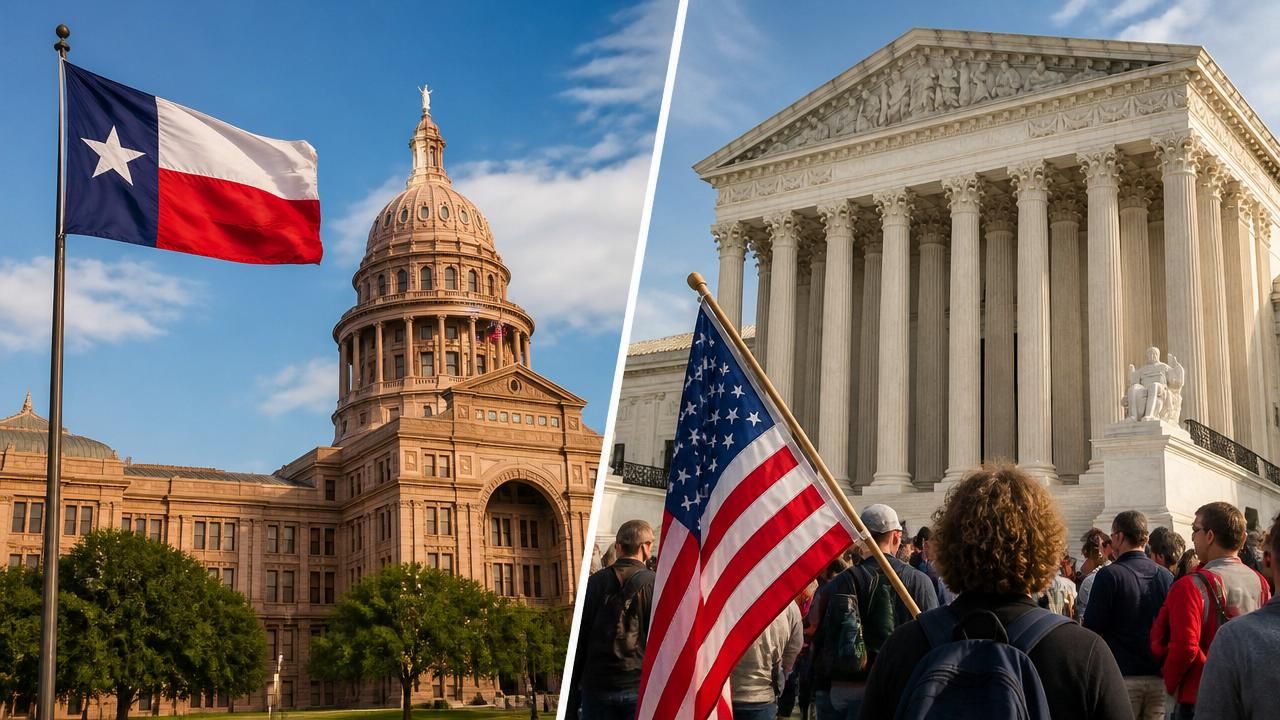
Texas has emerged as a battleground for online safety and free speech, with two major court rulings in recent weeks delivering contrasting outcomes. On Friday, the U.S. Court of Appeals for the 5th Circuit blocked enforcement of a key provision of the state's Securing Children Online through Parental Empowerment Act (SCOPE Act), which required certain digital service providers to monitor and filter content to protect minors from harmful speech. Days earlier, the U.S. Supreme Court declined to halt a separate Texas law mandating age verification for adult websites—a move that effectively upheld the measure after lower court challenges.
Two Laws, Two Legal Paths
The SCOPE Act: Content Filtering Struck Down
The SCOPE Act, signed into law in 2023, aimed to shield minors from a range of content deemed harmful, including material related to suicide, self-harm, substance abuse, and sexual exploitation. It required websites that collect personal information from users to implement age verification and to filter out such content for known minors. But in a 2-1 ruling, the 5th Circuit held that the law's monitoring and filtering requirements are preempted by Section 230 of the Communications Decency Act, which grants platforms immunity for third-party content and bars states from imposing liability based on content moderation decisions.
"The monitoring and filtering requirement is preempted by Section 230," the majority wrote, affirming a lower court's preliminary injunction that blocked enforcement pending trial. The Computer & Communications Industry Association and NetChoice, which challenged the law, praised the decision as a victory for free speech and innovation.
Texas Attorney General Ken Paxton, who appealed the injunction, argued that the law was necessary to protect children from online predators and harmful content. The dissenting judge contended that Section 230 does not bar all state regulation of content moderation and that the state has a compelling interest in child safety. The ruling leaves other parts of the SCOPE Act—such as its data privacy requirements—intact, but the filtering mandate is effectively dead unless the state appeals further or the full 5th Circuit rehears the case.
The Age-Verification Law: Supreme Court Lets It Stand
Separately, the Supreme Court on [date—shortly before the 5th Circuit ruling] refused to block Texas's HB 1181, which requires websites that publish material "harmful to minors"—primarily adult pornography—to verify users' ages using government-issued IDs or other methods. The law, challenged by the Free Speech Coalition and adult entertainment companies, was upheld by the 5th Circuit earlier this year. The Supreme Court's decision not to grant emergency relief means the law remains in effect while a broader constitutional challenge plays out.
"Today's order does not signal the Court's ultimate view on the constitutionality of age-verification laws," noted legal analysts. The case now returns to the lower courts for a full trial on First Amendment grounds.
Pornhub, owned by MindGeek, promptly blocked access for all Texas users, citing the law's requirements. Other adult sites followed suit. Supporters of the law, including Texas Governor Greg Abbott, hailed the Supreme Court's move as a win for parental control and child safety. Critics warn that the law sets a dangerous precedent for government surveillance of online speech and could lead to a patchwork of state-level internet regulations.
Differing Perspectives from the Sources
The two rulings underscore the tension between protecting minors and preserving First Amendment rights. Outlets like Ars Technica and the ACLU of Texas framed the SCOPE Act blocking as a crucial win for free speech and against government overreach. In contrast, Texas Scorecard and Religion Unplugged emphasized the Supreme Court's age-verification decision as a victory for family values. Some sources, like Reuters, provided neutral reporting, while Hoodline called the SCOPE Act ruling a "smackdown" of Texas's "online snooping rule."
Notably, several articles from MSN and Khou.com were inaccessible due to paywalls or error pages, but their headlines nevertheless contributed to the narrative. The Arizona Mirror reported that similar legislation is advancing in other states, indicating a broader trend. The Free Speech Project at Georgetown highlighted the constitutional stakes, noting that the Supreme Court's age-verification case could eventually shape the national standard for online age checks.
Context and Implications
Texas has been at the forefront of state-level internet regulation, with laws targeting social media moderation (SB 20, partly upheld), app store policies (HB 3099, pending Supreme Court review), and now age verification. The two rulings create a complex legal landscape: platforms must navigate conflicting obligations—some state laws require them to restrict content, while federal law and court rulings limit their ability to do so.
What's Next?
- SCOPE Act: The 5th Circuit's ruling is subject to appeal; the state may seek en banc review or petition the Supreme Court. The filtering provision is dead for now, but the data privacy sections remain.
- Age-Verification Law: The underlying constitutional challenge proceeds in district court. A final ruling could take years, but the law remains enforceable in the interim.
- National Impact: Other states are watching closely. Similar laws have been passed in Arkansas, Louisiana, and Utah, and the Supreme Court may ultimately have to reconcile Section 230 with state child-safety efforts.
Legal experts say the disparate outcomes reflect differing judicial philosophies. The 5th Circuit panel on the SCOPE Act strictly applied Section 230 preemption, while the same circuit's earlier ruling on HB 1181 found that age verification is a content-neutral regulation that passes intermediate scrutiny. The Supreme Court's refusal to intervene in the latter suggests a willingness to let states experiment—at least for now.
Stakeholder Reactions
Tech trade groups, including the Computer & Communications Industry Association (CCIA), celebrated the SCOPE Act ruling as affirming that "Section 230 protects platforms from state mandates to police speech." Conversely, free-speech advocates remain concerned about the age-verification law. The Free Speech Coalition called it "a blunt instrument that chills lawful adult speech." Texas Attorney General Ken Paxton defended both laws, vowing to "continue fighting to protect Texas children."
As the legal battles continue, the fundamental question remains: how far can states go to protect minors online without infringing on constitutional rights? The Texas experiment promises to provide answers—and new controversies—for years to come.