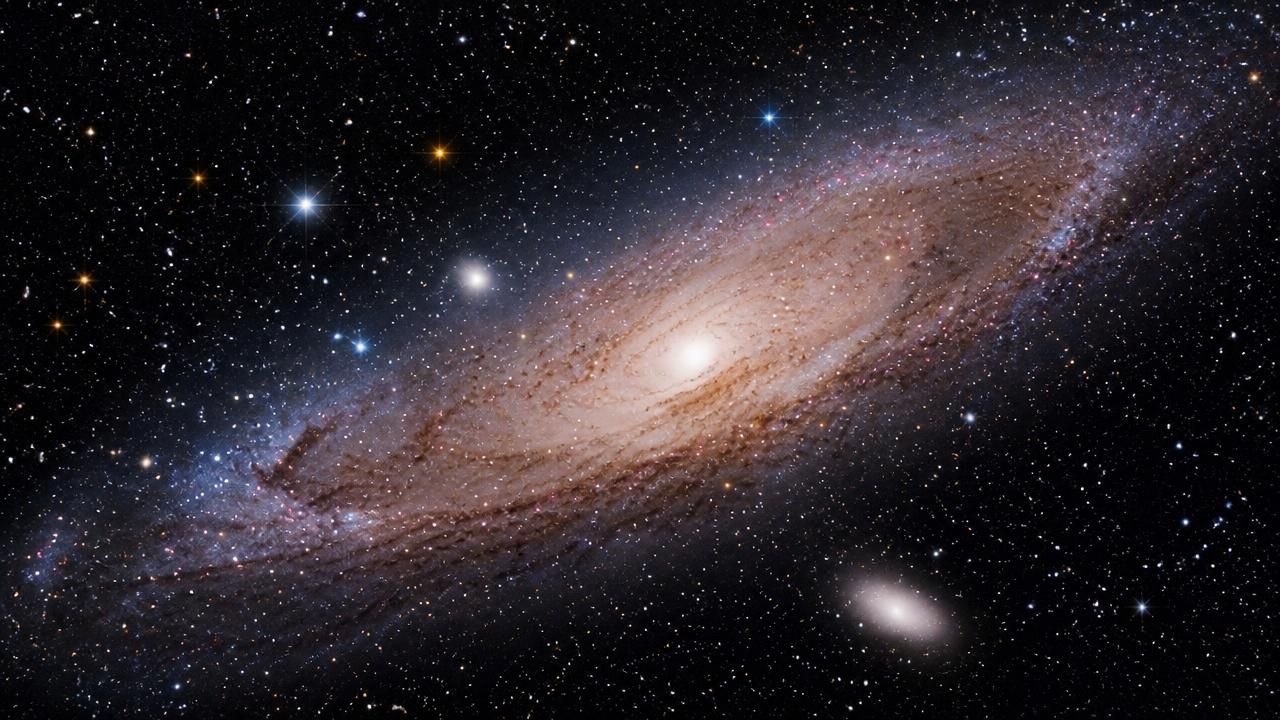
A new study using data from NASA's Hubble Space Telescope has revealed that star formation in the Andromeda galaxy, our closest galactic neighbor, has been winding down over the past 500 million years. The findings, published by a team of astronomers, provide a detailed look at the lifecycle of a spiral galaxy and offer insights into the future of our own Milky Way.
What the Hubble Data Shows
The study analyzed ultraviolet and visible light observations from Hubble to map the star formation history across Andromeda's disc. The data show a steady decline in the rate of new star birth, with the most active period occurring roughly 500 million years ago. Since then, star formation has dropped by about a factor of five. The team, led by Benjamin Williams of the University of Washington and Zhuo Chen, also from UW, used Hubble's sharp resolution to resolve individual stars and clusters, allowing them to date stellar populations with unprecedented accuracy.
“Andromeda is a massive spiral galaxy with a rich history of star formation, but we are seeing that it is slowly fading,” said Williams. “This study gives us a comprehensive timeline of how the galaxy has changed over the last half-billion years.”
Comparing Andromeda and the Milky Way
Andromeda, also known as M31, is similar in size and structure to the Milky Way. The galaxy's decline in star formation mirrors what astronomers expect for our own galaxy, which is also believed to be in a relatively quiescent phase. The study suggests that both galaxies may be transitioning from active star-forming systems to more sedentary ones, possibly due to depletion of gas and dust or interactions with neighboring galaxies.
The findings also align with theoretical models that predict a gradual slowdown as galaxies consume their interstellar medium. Andromeda's relatively quiet existence may be a precursor to a future merger with the Milky Way, expected in about 4.5 billion years.
Other Hubble Observations: A Garden of Galactic Roses
In addition to the Andromeda study, Hubble has captured stunning images of other spiral galaxies, including what some observers have poetically described as a “garden of galactic roses.” These images, showcased in various media outlets, highlight the telescope's ability to reveal intricate structures like star-forming regions, dust lanes, and clusters of young stars. While not directly part of the Andromeda study, these visuals underscore Hubble's ongoing contributions to understanding galaxy evolution.
Other recent Hubble targets include the Whirlpool Galaxy (M51), a classic spiral with prominent arms, and observations related to gamma-ray bubbles in the sky, though details on those are still emerging from separate research.
Implications for Galactic Evolution
The Andromeda study provides one of the most detailed records of star formation decline in a major galaxy. By understanding how and why star formation slows, astronomers can better predict the future of galaxies like the Milky Way. The results also have implications for theories of galaxy formation, suggesting that even large spirals may have a limited lifespan of intense star formation.
“This is a fascinating glimpse into the life cycle of a galaxy,” said L. Clifton Johnson of Northwestern University, a co-author of the study. “Andromeda is telling us that the era of star formation is ending, and that has profound consequences for how we understand galactic evolution.”
What's Next?
Future observations with the James Webb Space Telescope and ground-based observatories will allow astronomers to study Andromeda's star-forming regions in even greater detail, particularly in infrared wavelengths that can pierce dust clouds. The Hubble data, however, remain critical for establishing a baseline of stellar ages across the galaxy.
As the debate continues over the exact mechanisms driving the decline—whether internal processes or external interactions—this study serves as a key piece of evidence in the puzzle of galaxy evolution.