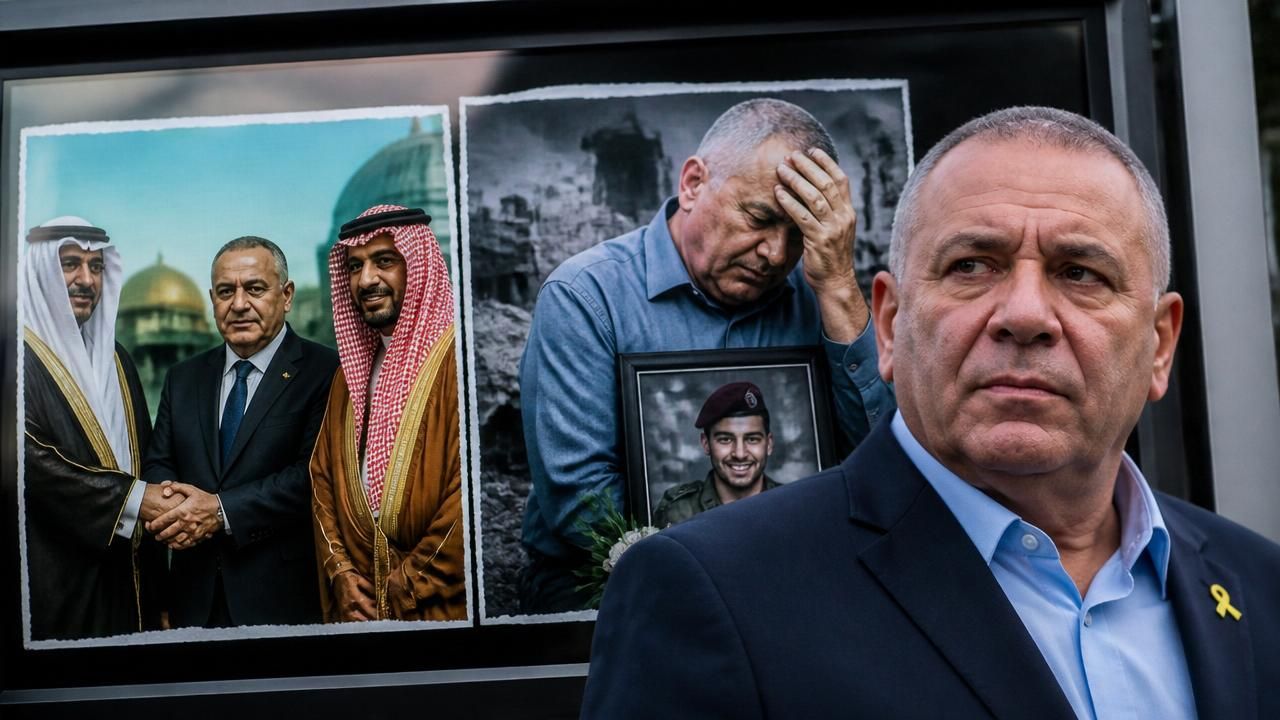
In a contentious turn in Israel's election campaign, Prime Minister Benjamin Netanyahu's Likud party has released an attack advertisement using artificial intelligence-generated images to target his main rival, Gadi Eisenkot. The ad, which critics say exploits anti-Arab sentiments and disrespects Eisenkot's son who was killed in the Gaza war, has ignited a firestorm of controversy. This development comes amid stalled ceasefire negotiations in Gaza and Netanyahu's ongoing push to overhaul the judiciary, raising questions about the intersection of technology, politics, and grief.
The AI-Powered Attack Ad
The advertisement, first reported by The New York Times, features AI-generated images that depict Eisenkot in a negative light, playing on anti-Arab fears. One image shows Eisenkot alongside Arab leaders, while another uses a visual that critics say mocks his son's death. Eisenkot's son, a soldier, was killed during the recent conflict in Gaza. The ad has been condemned by opposition figures and media watchdogs as a new low in Israeli political campaigning, leveraging cutting-edge AI technology to spread disinformation and inflame ethnic tensions.
“This is not just a political attack; it's a desecration of a family's grief and a dangerous use of AI to manipulate voters,” said a spokesperson for the Eisenkot campaign.
Netanyahu's camp has defended the ad, arguing that it highlights Eisenkot's alleged connections to anti-Israel elements. However, fact-checkers have noted that the AI-generated images are misleading and lack context. The controversy underscores the growing role of AI in political campaigns worldwide, raising ethical questions about its use in elections.
Gaza Ceasefire Talks Halted
Meanwhile, the ad's release coincides with a critical juncture in Israel-Gaza relations. Negotiations for a ceasefire and the release of hostages have stalled, partly due to disagreements over a corridor separating Gaza and Egypt. According to sources, Israel insists on maintaining control over the Philadelphi Corridor, a narrow buffer zone along the border, to prevent arms smuggling. Hamas has rejected this, demanding a full withdrawal. The impasse has left families of hostages in anguish and the region on edge.
The corridor dispute is a key obstacle in U.S.-brokered talks, with Egypt also playing a mediating role. The issue is deeply tied to broader security concerns and the future of Gaza's governance. As Netanyahu faces domestic pressure over the war's handling, the ceasefire negotiations remain a central campaign issue.
Judicial Overhaul Adds to Turmoil
Adding to the political turbulence is Netanyahu's controversial plan to overhaul Israel's judiciary. The proposed reforms would give the government greater control over judicial appointments and limit the Supreme Court's power to strike down legislation. Critics, including legal experts and opposition leaders, argue the plan threatens Israel's democratic checks and balances. Protests have erupted across the country, with tens of thousands taking to the streets.
The judicial overhaul has also drawn international concern, with the Biden administration urging caution. Netanyahu, however, frames it as a necessary correction to an overreaching judiciary. The issue has become a defining fault line in Israeli politics, with Eisenkot and other rivals vowing to block the reforms if elected.
Historical Context and Implications
The use of AI in political ads is not new, but its application in a conflict-sensitive region like Israel raises unique concerns. In the past, political campaigns have used manipulated images, but AI now allows for more sophisticated and harder-to-detect fakes. This ad could set a precedent for future elections, both in Israel and abroad, as technology outpaces regulation.
The personal attack on Eisenkot is particularly striking given his son's sacrifice. Eisenkot, a former chief of staff of the Israel Defense Forces, has campaigned on a platform of unity and security. His son's death in Gaza has made him a sympathetic figure, and the ad's perceived disrespect could backfire on Netanyahu.
Analysts suggest that the ad reflects a broader strategy by Netanyahu to rally his base by painting rivals as weak on security and Arab relations. However, it risks alienating moderate voters and further polarizing an already divided electorate.
Expert Views and Data Points
Dr. Yael Mizrahi, a political scientist at Tel Aviv University, commented: “This ad is a dangerous escalation. It weaponizes AI for political gain while trivializing the trauma of war. It could erode public trust in both the electoral process and the integrity of information.”
Polls show a tight race between Netanyahu's Likud and Eisenkot's National Unity party, with neither likely to secure a clear majority. The election, scheduled for later this year, will determine the direction of Israel's policies on Gaza, the judiciary, and its international relations.
Conclusion
The AI-generated ad against Gadi Eisenkot is more than a campaign tactic; it is a symptom of the deep divisions and high stakes in Israeli politics. As ceasefire talks falter and judicial reforms loom, the election will be a referendum on Netanyahu's leadership and vision for the country. The controversy also highlights the urgent need for regulations on AI in political advertising, a challenge democracies worldwide are grappling with.