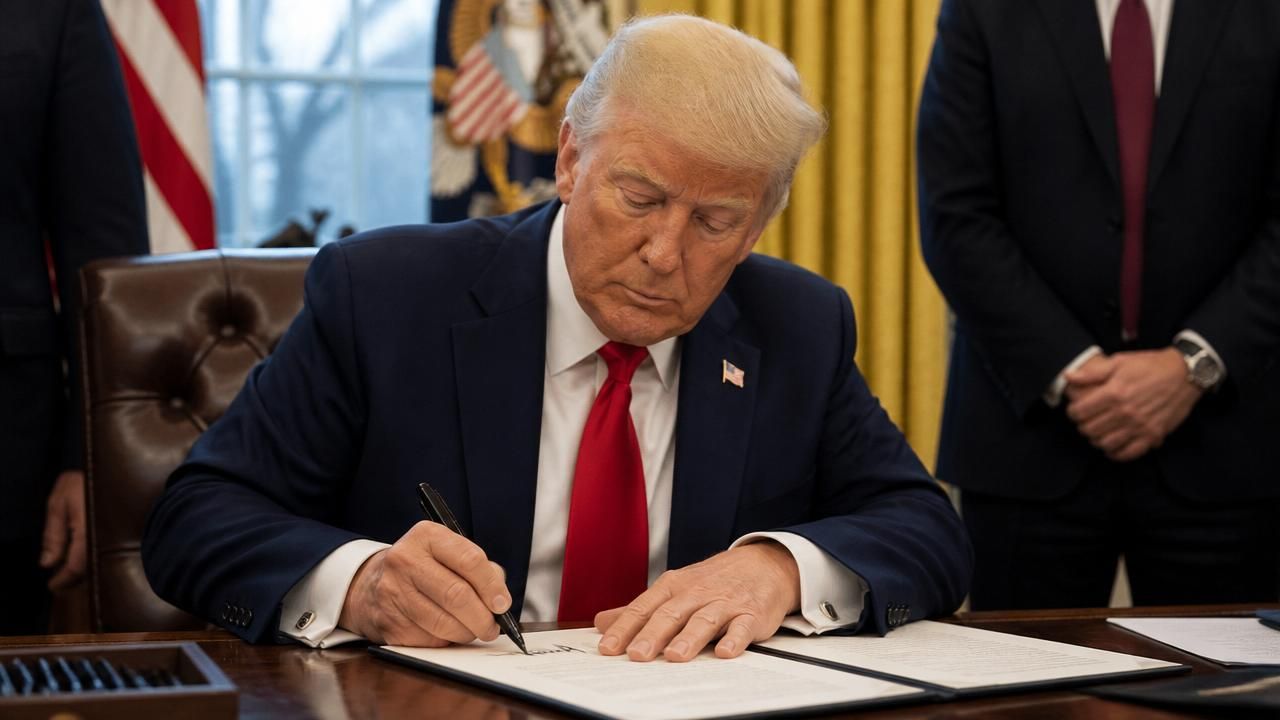
President Donald Trump on Monday imposed sweeping 50% tariffs on a wide range of Canadian goods, marking a dramatic escalation in the ongoing trade dispute between the United States and its northern neighbor. The tariffs, which cover approximately $20 billion worth of Canadian products annually, target key sectors including automobiles, dairy, alcohol, plastics, lumber, and even hockey sticks. The move has drawn sharp condemnation from Canadian Prime Minister Mark Carney, who vowed to retaliate while keeping the door open for negotiations.
What’s Covered and Why?
The executive order, signed by Trump on Monday, imposes a 50% ad valorem tariff on most Canadian goods, with particular emphasis on industries where the U.S. claims Canada engages in unfair trade practices. According to the White House, the tariffs are a response to Canada’s “continued discrimination” against American products, especially in the dairy and automotive sectors. The action invokes Section 338 of the Tariff Act of 1930, a Depression-era law rarely used in modern trade disputes.
Among the goods affected:
- Automobiles and auto parts: A key target, as the U.S. argues Canada’s auto sector benefits from unfair subsidies and market access restrictions.
- Dairy products: Canada’s supply management system for dairy has long been a point of contention, with U.S. farmers claiming they are locked out of the Canadian market.
- Alcohol: Beer, wine, and spirits from Canada will face the new tariff, impacting major exporters like Ontario and Quebec.
- Plastics and lumber: These industrial goods are also included, with potential ripple effects on construction and manufacturing supply chains.
- Hockey sticks and other sporting goods: A symbolic inclusion that underscores the breadth of the tariff order.
“Canada has unfairly discriminated against American autos, alcohol, and dairy products,” Trump said in a statement, as reported by NPR and other outlets. “This is about fairness and reciprocity.”
Canada’s Response: Retaliation and Negotiation
Canadian Prime Minister Mark Carney responded swiftly, calling the tariffs “unjustified and harmful to both our economies.” In a televised address, Carney announced that Canada would impose retaliatory tariffs on a proportionate list of U.S. goods, though he did not specify the exact products or timeline. “We will not stand idly by while American protectionism threatens Canadian jobs and industries,” Carney said, as quoted by BBC and other sources.
However, Carney also left the door open for diplomacy, stating that he would “intensify” trade talks with the Trump administration. “We are prepared to negotiate in good faith, but we will not be bullied,” he added. The dual approach reflects Canada’s delicate balancing act: retaliating to protect its economic interests while seeking to de-escalate a conflict that could damage both nations.
Trade lawyers and analysts have warned that the tariffs could lead to a prolonged trade war. “Don’t bet on talks to avert them,” one trade lawyer told Yahoo Finance, noting that the Trump administration has shown little willingness to back down. The legal basis for the tariffs, under Section 338, is considered shaky by some experts, who argue it may violate World Trade Organization rules. “The legal basis is shaky,” InvestmentNews reported, suggesting that Canada could challenge the tariffs at the WTO.
Economic and Market Implications
The tariffs are expected to raise consumer prices in the U.S. and disrupt supply chains across North America. Analysts at Bloomberg and Reuters estimate that the 50% levy could add hundreds of dollars to the cost of a new car and increase prices for dairy, alcohol, and building materials. “Markets are accustomed to Trump’s ‘heavy hand’ tactics,” noted Yahoo Finance, but the scale of this escalation has caught some investors off guard. Despite initial volatility, markets remained relatively calm on Monday, with the Dow Jones Industrial Average dipping only modestly.
“Trump’s 50% tariff on Canada is a warning to the rest of the world,” CNN reported, framing the move as part of a broader protectionist agenda. The Financial Times echoed this sentiment, describing the tariffs as a “nuclear option” that could reshape global trade dynamics. The tariffs also complicate ongoing negotiations for a new North American trade agreement, with some experts predicting that the dispute could spill over into other sectors.
Historical Context and Differing Perspectives
The U.S.-Canada trade relationship has been fraught with tensions over dairy, lumber, and auto rules for decades. The United States-Mexico-Canada Agreement (USMCA), which replaced NAFTA in 2020, was intended to resolve many of these disputes, but Trump has repeatedly criticized Canada for not adhering to its terms. The new tariffs represent a significant departure from the cooperative spirit of the USMCA, raising questions about the future of North American economic integration.
Coverage of the tariffs has varied across outlets. Conservative-leaning media like Fox Business have framed the move as a necessary step to protect American workers, while liberal outlets like The Guardian and The Independent have emphasized the potential harm to consumers and the risk of a trade war. Canadian media, such as the Toronto Star and CBC, have focused on the impact on Canadian industries and the government’s response. International outlets like France 24 and the Japan Times have highlighted the global implications, noting that the tariffs could set a precedent for other trade disputes.
“Trump’s 50% tariffs on Canada risk igniting a fresh trade war,” CNN warned, while the Wall Street Journal noted that the move “deepens the North America trade war.” The Axios headline captured the sentiment: “U.S. to slap 50% tariffs on Canadian goods, deepening North America trade war.”
What’s Next?
The immediate future remains uncertain. Canada is expected to announce its retaliatory measures within days, potentially targeting U.S. agricultural products, steel, and aluminum. Meanwhile, trade negotiations are set to continue, though the Trump administration has given no indication of backing down. “This is a warning to the rest of the world,” CNN concluded, suggesting that the tariffs could be a template for dealing with other trading partners.
For now, businesses on both sides of the border are bracing for impact. The plastics industry, for example, faces supply chain disruptions, as reported by Plastics Today. Consumers may see higher prices for Canadian cheese, wine, and hockey sticks in the coming weeks. As the trade war heats up, the stakes for North American economic cooperation have never been higher.