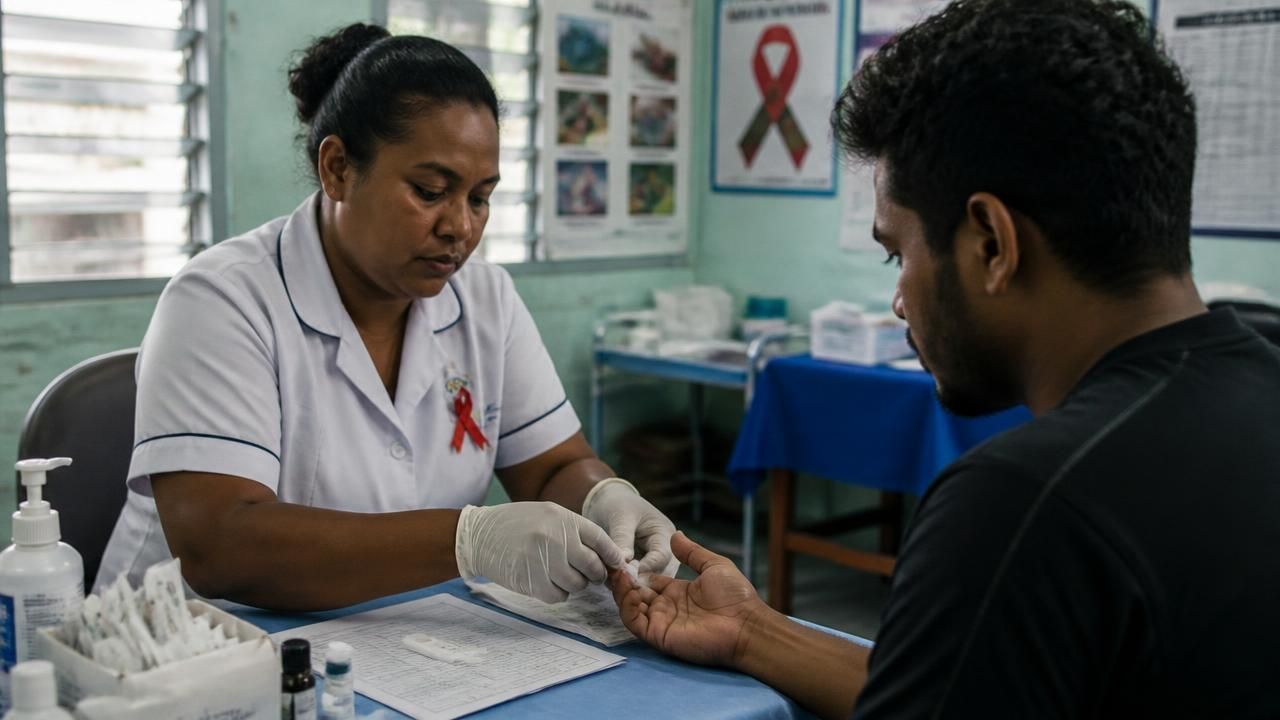
Fiji's government has declared a national emergency in response to a startling rise in HIV infections, a move that public health advocates say reflects a deepening dual crisis: the rapid spread of HIV and an unchecked crystal methamphetamine epidemic. The declaration, issued in mid-September, was reported by NPR, which noted that the country's meth crisis is a strong contributing factor.
Yahoo News framed the move as 'Fiji declares national crisis as HIV epidemic escalates,' while MSN described an 'island paradise' facing a 'fast-growing HIV outbreak fueled by meth epidemic.' The Detroit News put it starkly: 'On a paradise island in the Pacific, meth and HIV epidemics rage.' Together, the headlines tell a story of a tropical nation grappling with a health emergency that threatens to undo years of progress.
A national emergency in the Pacific
Fiji is an archipelago of more than 300 islands with a population of roughly 900,000. For years, it had a relatively low HIV burden compared with many other countries. But the combination of a growing meth market and gaps in prevention and treatment has allowed the virus to spread rapidly. NPR reported that one in 60 adults in Fiji are affected—a prevalence rate that, if confirmed, would be exceptionally high by global standards.
The emergency declaration signals that the government recognizes the scale of the threat. It could unlock emergency funding, allow faster procurement of tests and medicines, and mobilize government agencies. But declarations alone do not stop epidemics.
Meth is a key driver in Fiji's fast-growing HIV epidemic: 1 in 60 adults are affected. — NPR News
The meth connection
At the center of the crisis is crystal meth. NPR reported that Fiji's meth epidemic is a strong contributing factor to the HIV surge. The two epidemics are interacting in ways that public health experts have observed elsewhere: meth use can lead to impaired judgment, increased sexual risk-taking, and the sharing of needles, all of which accelerate HIV transmission. It also complicates treatment and prevention, as addiction can make it harder for people to access testing, adhere to antiretroviral therapy, or engage with health services.
The link between methamphetamine and HIV is well documented. Meth can be injected, smoked, or swallowed. When injected, sharing needles and syringes can transmit HIV directly. When used sexually, meth can lower inhibitions and lead to condomless sex, multiple partners, or transactional sex—all factors that increase exposure. In Fiji, where stigma around drug use and HIV remains significant, many people may avoid seeking care until they are already seriously ill.
The scale of the outbreak
Yahoo News emphasized the regional significance, calling Fiji 'the island paradise with the world's fastest growing HIV epidemic.' That framing captures the sharp contrast between Fiji's image as a tourist destination—renowned for its coral reefs, resorts, and hospitality—and the unfolding public health emergency. The outbreak threatens not only individual lives but also the country's health system, economy, and social fabric.
MSN and Detroit News used similar language, with Detroit News describing 'meth and HIV epidemics' raging on a 'paradise island.' The different framings reflect broader tensions in how global health stories are told: some emphasize the exotic locale and the shock value of an outbreak in a tourist haven, while others center the epidemiology and the root causes.
How meth fuels HIV
Public health experts say that addressing the dual epidemics requires a comprehensive approach: expanded HIV testing, access to antiretroviral treatment, pre-exposure prophylaxis (PrEP), needle and syringe programs, and substance use treatment. It also requires tackling the criminal networks that supply meth. But in a small island nation with limited resources, scaling up these services is a formidable challenge.
The Pacific has become a transit route for methamphetamine produced in Asia and the Americas, with Fiji increasingly a destination market. As meth use has risen, so have associated health harms, including HIV. The region has seen similar patterns. In parts of Southeast Asia and the Pacific, methamphetamine use has been linked to HIV outbreaks among people who inject drugs and other key populations. Fiji's experience is a warning that no country is immune, even one separated by thousands of miles of ocean.
Differing headlines, one crisis
Coverage of the crisis has varied. NPR focused on the meth-HIV connection and the staggering statistic of one in 60 adults affected. Yahoo News highlighted the national crisis and the 'paradise' contrast. MSN and Detroit News used similar language, with Detroit News describing 'meth and HIV epidemics' raging on a 'paradise island.' Several syndicated versions of the story were inaccessible when this article was compiled, but their headlines alone show a consistent narrative: Fiji is facing a fast-moving HIV outbreak, and meth is a primary driver.
The government's emergency declaration is a recognition that the crisis can no longer be ignored. It will need international partners, civil society, and community health workers to reach people at risk. It will also need to confront stigma, which can drive people underground and undermine prevention efforts.
What comes next
The coming months will determine whether Fiji can turn the tide—or whether the twin epidemics of meth and HIV continue to grow. As one headline put it, these are epidemics that 'rage.' The response will need to be equally urgent. For now, the world's attention is on a Pacific paradise facing a stark reality.