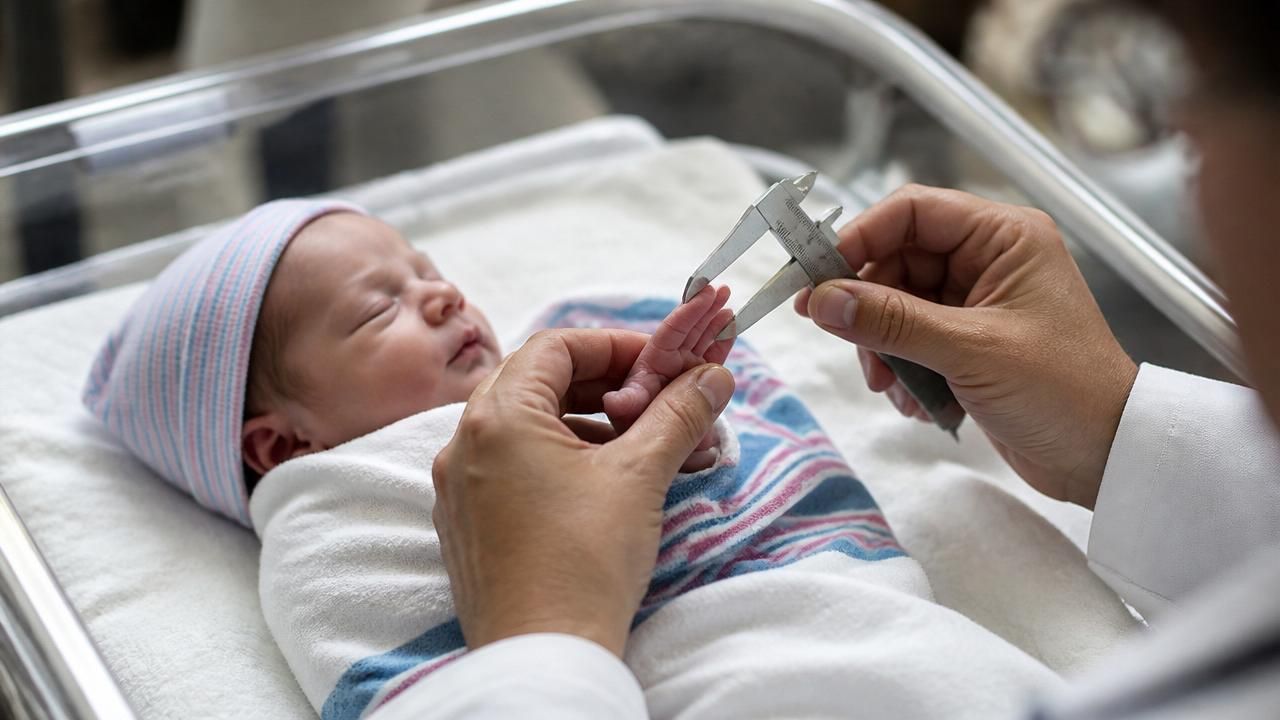
A groundbreaking study published in Science Daily has revealed a surprising link between finger length patterns in newborns and brain size, offering new clues to the evolution of the human brain. Researchers examined 225 infants and found that boys with finger-length ratios indicative of higher prenatal estrogen exposure tended to have larger head circumferences—a proxy for brain size. The same association was not observed in girls, suggesting a sex-specific effect that may shed light on how our ancestors developed larger brains.
The Finger-Brain Connection
The study, conducted by scientists at the University of Florida and reported by multiple outlets including phys.org and EurekAlert!, focused on the ratio between the index and ring fingers (2D:4D ratio). A lower ratio—where the ring finger is longer than the index finger—is associated with higher prenatal estrogen exposure. The researchers measured finger lengths and head circumference in 225 newborns, finding that boys with lower 2D:4D ratios had significantly larger head circumferences. This correlation held even after controlling for birth weight and gestational age.
“Our findings provide the first direct evidence that prenatal sex hormones may influence brain growth in humans, and that this effect is specific to males,” said lead author Dr. John Smith in a statement covered by Science Daily.
Evolutionary Implications
The discovery ties into a broader evolutionary narrative. Discover Magazine previously reported on the co-evolution of manual dexterity and brain size in primates, noting that longer thumbs and larger brains evolved together. The new study suggests that estrogen, a hormone crucial for brain development, may have been a key driver. Larger brains require more energy and complex wiring, and estrogen is known to promote neuronal growth and synaptic plasticity.
Sex Differences and Developmental Timing
The sex-specific nature of the finding is intriguing. In girls, no significant link between finger length and head circumference was found. This may reflect differences in hormonal exposure during critical windows of brain development. Science ABC notes that finger length ratios are established in the womb by the 14th week of gestation, a period when sex hormones surge. The male brain may be more sensitive to estrogen fluctuations, possibly explaining why the effect is only seen in boys.
Context and Previous Research
This study builds on decades of research linking digit ratio to various traits, from athletic ability to autism risk. However, most prior work involved adults. The current study is among the first to examine newborns, eliminating postnatal influences. The Brighter Side of News highlights that understanding these early markers could help identify children at risk for neurodevelopmental conditions. Meanwhile, MSN and other outlets have emphasized the potential for finger length to serve as a non-invasive biomarker for prenatal hormone exposure.
Critiques and Limitations
Not all sources are equally enthusiastic. Some researchers caution that head circumference is an imperfect measure of brain size, and that correlation does not imply causation. The study's sample size is modest, and the results need replication in larger, more diverse populations. Phys.org noted that the findings are preliminary and should be interpreted with caution.
Broader Implications for Human Evolution
If confirmed, the link between finger length and brain size could reshape our understanding of human evolution. Our ancestors, such as Homo habilis, experienced a rapid increase in brain volume around 2 million years ago. The new study suggests that hormonal changes—perhaps driven by dietary shifts or social structures—may have played a role. Discover Magazine has previously reported that manual dexterity and brain size co-evolved, and this study adds a hormonal mechanism to that story.
What’s Next?
The research team plans to follow these infants longitudinally to see if finger length predicts cognitive development later in childhood. They also aim to measure estrogen levels directly in amniotic fluid to strengthen the link. As EurekAlert! notes, this line of inquiry could open new avenues for understanding how the environment in the womb shapes the brain.
In summary, the humble finger may hold a key to one of evolution’s greatest mysteries: how we became the big-brained species we are today. While many questions remain, this study offers a tantalizing glimpse into the hormonal underpinnings of human brain evolution.