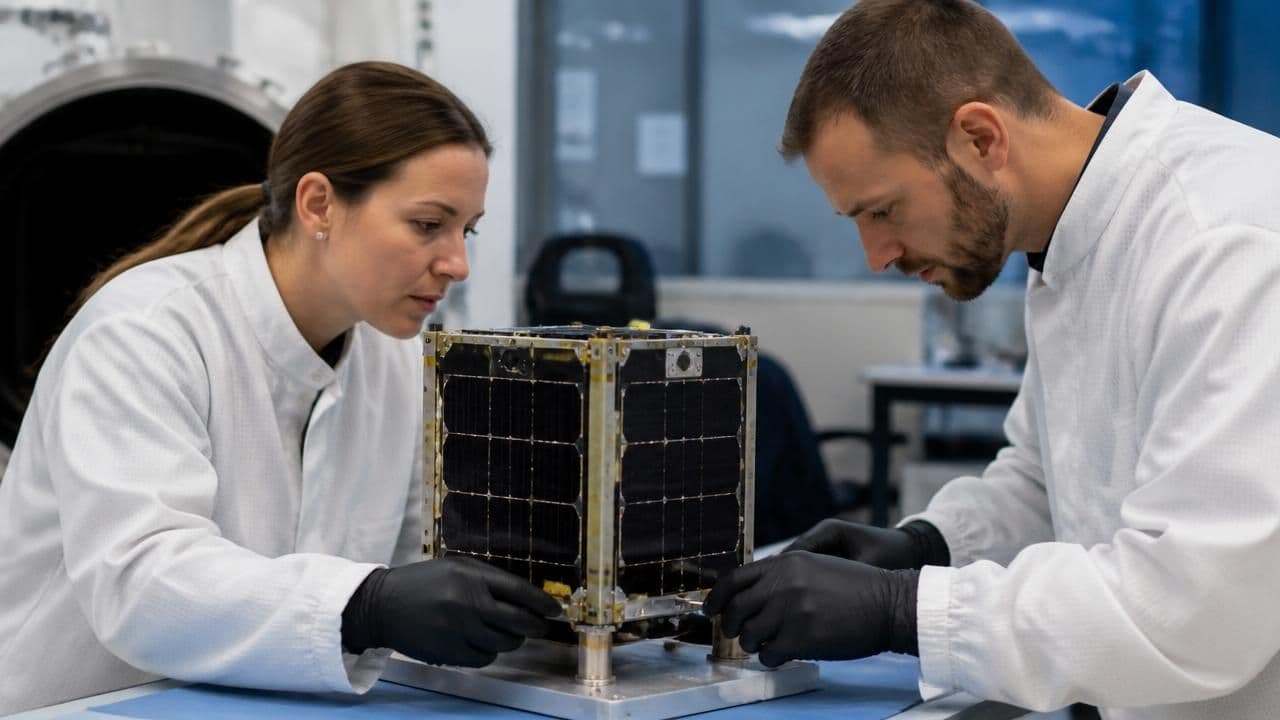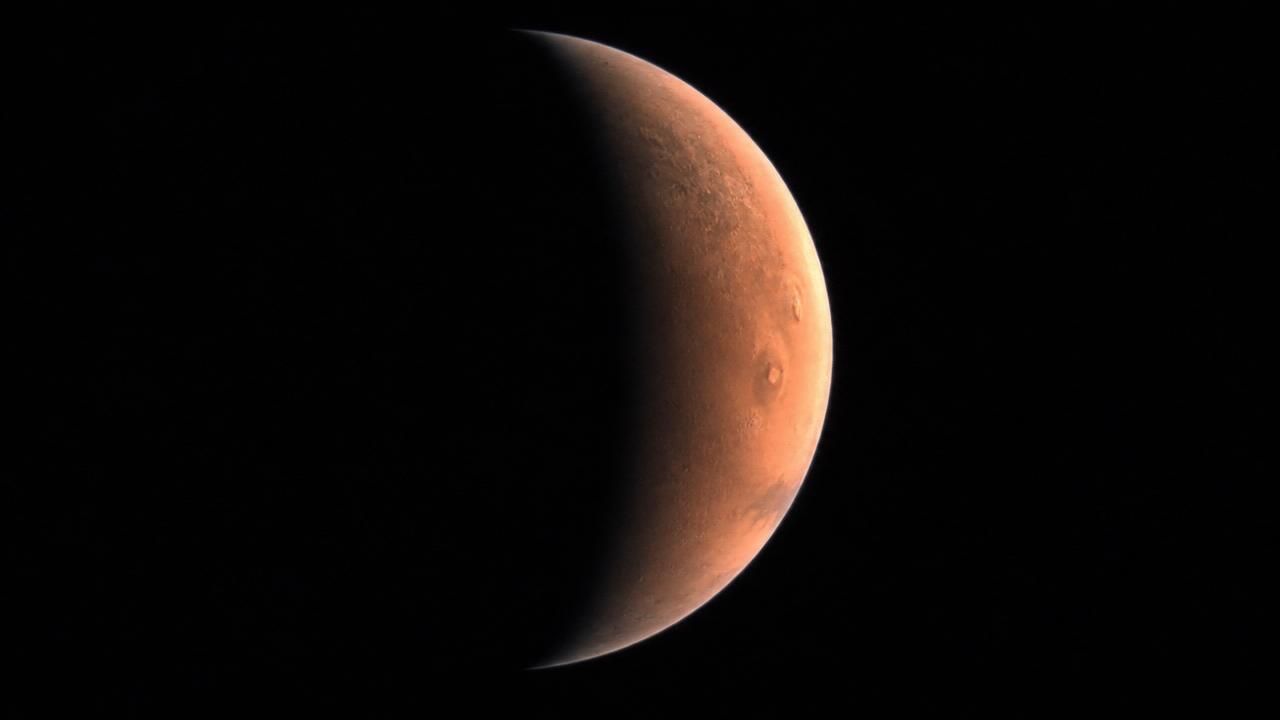
NASA's Psyche spacecraft, en route to a rare metal-rich asteroid, has sent back breathtaking images of Mars as it performed a critical gravity assist maneuver in May 2026. The spacecraft's multispectral imager captured a series of crescent views of Mars from May 2 to May 15, showing the planet growing larger as Psyche approached. The images, released by NASA's Jet Propulsion Laboratory (JPL) and Arizona State University (ASU), offer a unique perspective of the Red Planet from a high phase angle, where only a thin crescent is illuminated by sunlight.
A Slingshot Toward a Metal World
Psyche launched in October 2023 and is headed to the asteroid 16 Psyche, a 140-mile-wide body thought to be the exposed core of a protoplanet, made largely of iron and nickel. The Mars flyby on May 15, 2026, was designed to use the planet's gravity to accelerate the spacecraft and adjust its trajectory, saving fuel and time. According to JPL, the gravity assist increased Psyche's velocity by about 6.5 km/s, setting it on course for arrival at the asteroid in 2029.
The maneuver was a critical milestone. “Without Mars, we wouldn't have enough propellant to get to Psyche,” said a mission engineer. The spacecraft came within about 500 kilometers of Mars's surface, closer than many previous flybys, allowing for high-resolution imaging of the planet's surface features.
Rare Crescent Perspective
Because Psyche approached Mars from a high phase angle—with the Sun behind the spacecraft—the planet appeared as a thin crescent. This is a view rarely captured by missions, as most orbiters and landers see Mars from lower angles. The crescent series, compiled into a time-lapse by the Psyche team, shows the planet's disk growing from a sliver to a half-moon as the spacecraft drew nearer.
“These images are not only beautiful but scientifically valuable,” said a planetary scientist at ASU. “They help us understand how light scatters off Mars's atmosphere and surface at extreme angles.” The images also captured dust storms and cloud formations along the terminator, the line between day and night.
Context and Significance
Mars gravity assists are not new—NASA's MAVEN and ESA's ExoMars have used them—but Psyche's flyby is notable for its scientific imaging opportunity. The spacecraft's Multispectral Imager, designed primarily for asteroid observations, was repurposed to study Mars during the flyby. The team also used the Gamma Ray and Neutron Spectrometer to map the elemental composition of Mars's surface, providing data that complements ongoing Mars missions like the Mars Reconnaissance Orbiter.
“This is a bonus science opportunity,” said a NASA spokesperson. “We're getting data that could help future missions understand Mars's geology and radiation environment.”
Differing Perspectives
While NASA emphasized the engineering success and scientific bonus, news outlets like Sky & Telescope highlighted the rarity of the crescent view. “It's a perspective we rarely see, reminding us that Mars is a planet, not just a target,” wrote an astronomy journalist. Meanwhile, popular media like MSN and Yahoo focused on the stunning visuals, with headlines like “See the gorgeous crescent Mars photo captured by NASA's Psyche spacecraft.”
Some outlets noted the challenges: the spacecraft had to autonomously track Mars during the flyby, as communication delays made real-time control impossible. The flyby occurred on the far side of Mars, briefly cutting off contact, but the spacecraft emerged on schedule, sending back data within hours.
What's Next for Psyche?
With the gravity assist complete, Psyche is now on a direct trajectory to the asteroid belt. The spacecraft will spend the next three years cruising, with occasional instrument calibrations and deep space maneuvers. Arrival at 16 Psyche is expected in August 2029, where it will spend 21 months mapping and studying the asteroid's composition, topography, and magnetic field.
Scientists hope the mission will reveal clues about how planetary cores form, and whether the asteroid is truly a metallic remnant or something else. “Psyche could be a window into the early solar system,” said the principal investigator. “Every image and measurement we get brings us closer to understanding the building blocks of planets.”
The Mars flyby images are just the beginning. As the spacecraft continues its journey, it will periodically send back images of the asteroid belt and, eventually, the first close-up views of a metal world.