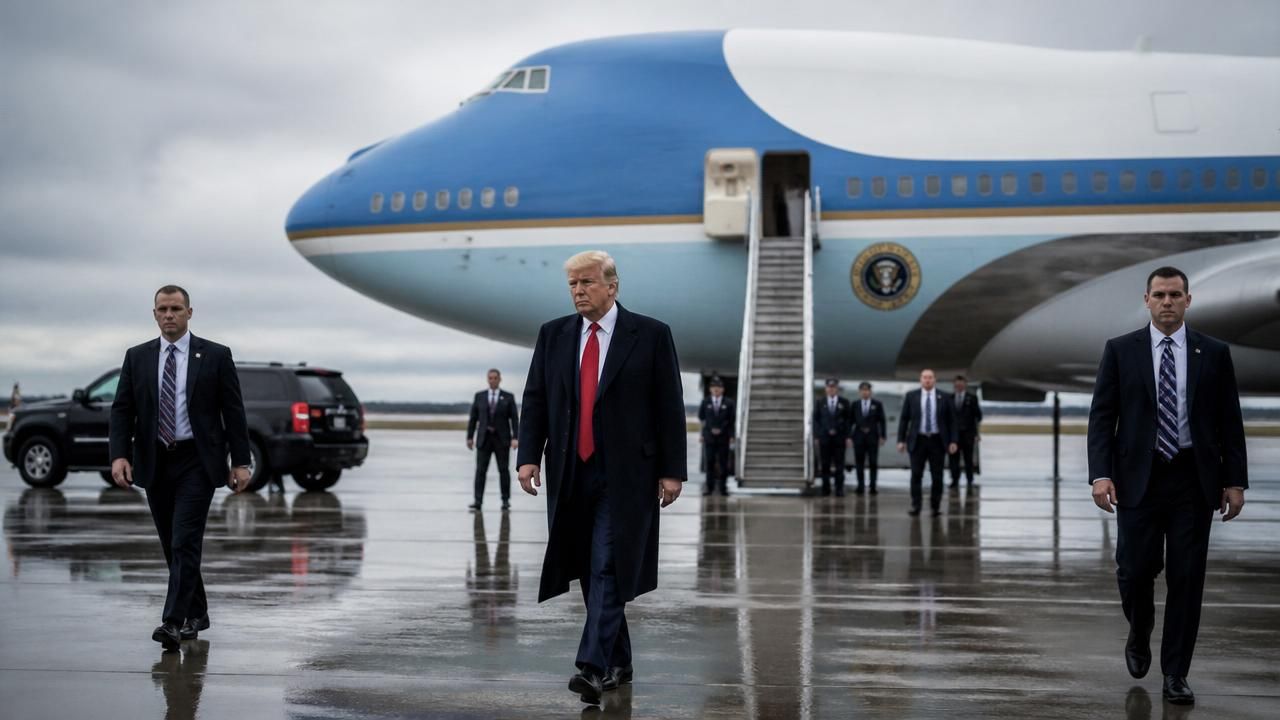
The White House has launched a sweeping leak investigation after The New York Times published a report detailing security concerns about the Qatari-donated jet used as Air Force One, leading the FBI to request phones and interviews from multiple government officials who flew with President Trump last week. The probe, overseen by White House counsel and former director of national intelligence John Ratcliffe, has already resulted in officials being asked to turn over their mobile devices, according to exclusive reporting by CNN and MSNBC.
The Leak and Its Fallout
The controversy centers on a New York Times story that revealed potential vulnerabilities in the Boeing 747-8i, which was gifted by Qatar and modified for presidential use. The report, which cited unnamed sources, sparked immediate backlash from the Trump administration, with officials decrying the disclosure as a national security risk. The White House quickly moved to identify the leaker, with the FBI joining the investigation at the request of the White House.
According to sources familiar with the matter, FBI agents have sought to speak with several individuals who were aboard the plane during a recent trip, including senior aides and security personnel. Phones have been requested for forensic analysis, raising concerns about privacy and the scope of the probe. The investigation is being led by FBI Director Kash Patel, who has been publicly sparring with senators over his conduct in previous leak cases.
Framing the Investigation
Different outlets have framed the story with varying emphases. The New York Times, which broke the original leak story, has reported that the White House directed Patel to oversee the investigation, suggesting a politicized approach. CNN, in its exclusive, highlighted the intensity of the probe, noting that officials were asked to turn over phones at the White House itself, a rare and aggressive step. MSNBC, meanwhile, referred to the operation as a "furious hunt" led by Trump's "Ice Maiden" — a reference to White House press secretary Karoline Leavitt, who has been vocal about punishing leakers.
Reuters, in a broader analysis, placed this leak investigation within Trump's larger "campaign of retribution," counting at least 470 targets of administration retaliation across government agencies. The nonprofit Project on Government Oversight (POGO) has warned of the chilling effect on whistleblowers, noting that employees are being caught between conscience and career.
Historical Context
Leak investigations are not new, but the tactics employed in this case are drawing comparisons to past administrations. The FBI's involvement in requesting phones from White House staff echoes the Obama-era investigations into leaks to the press, which led to the prosecution of several officials. However, the current probe is notable for its speed and the high-level involvement of the White House counsel's office.
The aircraft at the center of the controversy, the Boeing 747-8i, was donated by Qatar in 2023 as part of a broader diplomatic gesture. The plane was intended to replace the aging 747-200s that have served as Air Force One for decades. However, the Times report raised questions about the security of the aircraft's communications systems and potential backdoors that could be exploited by foreign intelligence. The White House has denied any specific threats but acknowledged the need for a thorough investigation.
Expert Views and Implications
National security experts are divided on the significance of the leak. Some argue that the disclosure of security vulnerabilities, even if accurate, could endanger the president and should be investigated. Others contend that the administration's aggressive response is an attempt to intimidate the press and whistleblowers. "The chilling effect is real," said a former FBI official who spoke on condition of anonymity. "When you start demanding phones and threatening prosecution, people think twice before talking to reporters, even about legitimate concerns."
The investigation also raises questions about the relationship between the White House and the FBI. Critics worry that Patel, a Trump loyalist, may be using the bureau to target political enemies. In a recent Senate hearing, Patel sparred with Senator Dick Durbin, who questioned his conduct in previous leak cases. Durbin accused Patel of politicizing the FBI, while Patel defended his record of protecting national security.
What Happens Next
The investigation is ongoing, with no arrests or charges announced so far. Officials say the FBI is analyzing the collected phones and conducting interviews. The White House has vowed to "leave no stone unturned" in finding the leaker, while press freedom advocates are monitoring the case closely. The outcome could set a precedent for how future administrations handle leaks, especially those involving the president's security.
Meanwhile, the Qatari government has declined to comment on the matter, and the Pentagon has remained silent on the status of the donated aircraft. The Times has stood by its reporting, stating that it "accurately reported on matters of public interest." As the investigation unfolds, the tension between national security and press freedom remains at the forefront.