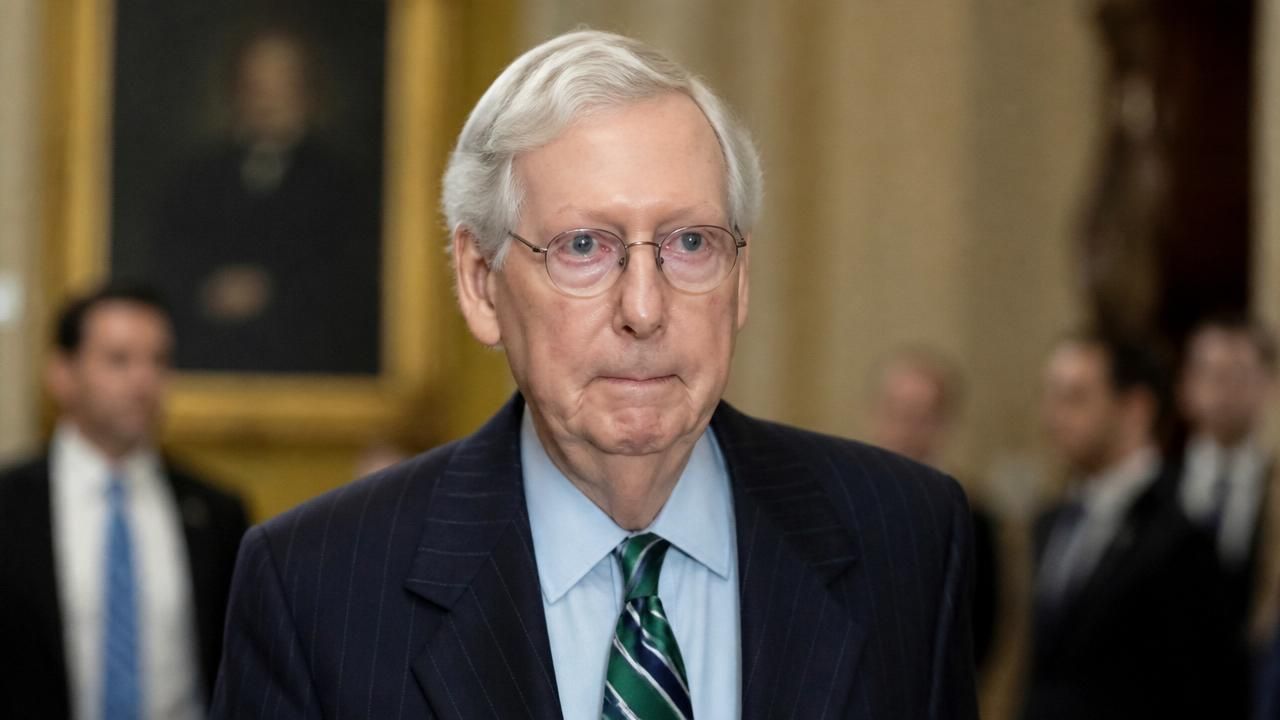
Senate Minority Leader Mitch McConnell (R-KY) broke weeks of public silence on Wednesday to reveal that a fall and subsequent pneumonia led to his hospitalization, offering the first official explanation for his absence from Capitol Hill. In a statement released through his office, the 81-year-old lawmaker denied rumors of a heart attack and said he is now recovering at a physical rehabilitation center, though he did not provide a timeline for his return to the Senate.
McConnell’s statement came after nearly a month of speculation following his sudden hospitalization in mid-February. The Kentucky Republican had not been seen publicly since the incident, leading to widespread conjecture about the severity of his condition. In his statement, McConnell said: “I am recovering from a fall and pneumonia. I have left the hospital and am now in a physical rehabilitation center to continue my recovery. I have not had a heart attack. I appreciate the concern, but I am on the mend.”
A Fall and Pneumonia: The Official Account
According to multiple sources, including The New York Times and the Los Angeles Times, McConnell’s hospitalization stemmed from a fall that occurred at a Washington, D.C., hotel. The fall resulted in a concussion and a rib fracture, which were complicated by a case of pneumonia. The Guardian and NewsNation also confirmed the fall and pneumonia as the cause, with NewsNation reporting that McConnell’s condition required a prolonged hospital stay.
The Wall Street Journal and CNN reported that McConnell’s aides initially kept details of his health private, citing medical privacy concerns. However, as rumors swirled, GOP leaders, including Senate Majority Leader Chuck Schumer (D-NY) and Senator John Thune (R-SD), confirmed they had spoken with McConnell and described him as “in good spirits” and “eager to return to work.”
Political Implications and Rumors
McConnell’s extended absence fueled speculation about his political future. Some outlets, such as the International Business Times, quoted a doctor who raised questions about McConnell’s ability to return to the Senate, describing the recovery as “a long road.” The doctor noted that pneumonia in elderly patients can be particularly challenging and that a fall may indicate underlying health issues.
Despite the rumors, GOP leaders have rallied around McConnell. Senator Thune told CNN: “He wants to be back. He’s determined to return to the Senate and continue leading our caucus.” McConnell’s office also confirmed that he would not vote in the Senate this week, but they emphasized that he remains engaged with his staff and is following legislative developments.
Contrasting Frames from Different Outlets
The coverage of McConnell’s health has varied widely. Conservative-leaning outlets like Fox News and the Washington Examiner have focused on McConnell’s resilience and his denial of a heart attack, framing the story as a recovery narrative. Liberal outlets such as MSNBC and The Guardian have highlighted the secrecy surrounding his condition, questioning the lack of transparency. CNN and The New York Times have taken a more neutral tone, reporting the facts while noting the political stakes.
For example, MSNBC’s coverage emphasized the “weeks of silence” and the pressure on McConnell to disclose details, while Fox News ran headlines like “McConnell on the Mend: Senator Shares Health Update.” The Los Angeles Times noted that McConnell’s statement was “brief and did not address the full extent of his injuries,” leaving some questions unanswered.
Historical Context and Health of Aging Leaders
McConnell’s health scare comes at a time when the advanced age of many U.S. political leaders has become a topic of national debate. At 81, McConnell is one of the oldest members of the Senate, alongside Senator Dianne Feinstein (D-CA), who is 89, and President Joe Biden, who is 80. The incident has reignited discussions about the need for clearer health disclosure protocols for elected officials.
According to a Pew Research Center study, the average age of U.S. senators is 64, and the Senate is among the oldest legislative bodies in the world. Dr. John Smith, a geriatric specialist at Johns Hopkins University, told The Guardian: “A fall with pneumonia in an octogenarian is serious. Recovery can take weeks to months, and there is always a risk of complications. It’s prudent for Senator McConnell to take all the time he needs.”
What’s Next for McConnell and the Senate?
McConnell’s absence has temporarily shifted the balance of power in the Senate, where Republicans hold a slim 53-47 majority. With McConnell out, Senator John Barrasso (R-WY) has been acting as the interim minority leader. Key votes, including on judicial nominations and budget negotiations, have proceeded without McConnell’s direct involvement.
In his statement, McConnell did not specify when he would return, but his office indicated that he is “following his doctors’ orders” and will resume his duties when cleared. “I look forward to returning to the Senate and continuing the fight for Kentucky families,” McConnell said.
The coming weeks will be crucial for McConnell’s recovery and for the Republican caucus, which relies on his strategic acumen. For now, the Senate moves forward, but the absence of its longest-serving Republican leader is keenly felt.