Engineers at NASA's Jet Propulsion Laboratory have cleared a commercial lunar lander for flight after subjecting it to some of the harshest conditions a spacecraft can face on Earth. Voyager Technologies' Griffin Mission One (Griffin-1) spacecraft completed a series of rigorous environmental tests at the Southern California facility, simulating the vacuum of space, extreme temperature swings, the violent shaking of launch and the ear-splitting roar of rocket engines, according to NASA.
The agency said the results confirm the lander is ready to survive the rigors of exploration beyond Earth. The spacecraft is now scheduled to launch to the Moon later this year, carrying payloads under NASA's CLPS (Commercial Lunar Payload Services) initiative, a program that sits within the agency's broader Moon Base effort.
A Spacecraft Put Through the Wringer
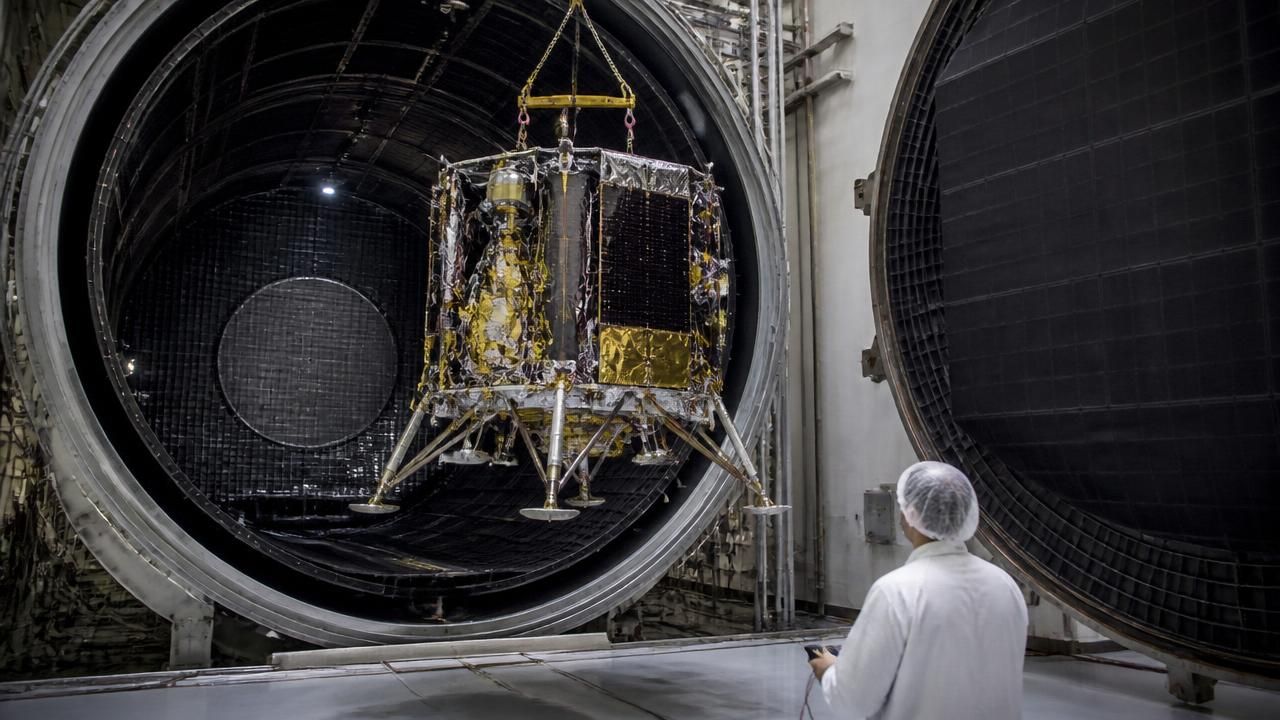
The centerpiece of the campaign was JPL's 25-Foot Space Simulator, a cavernous thermal-vacuum chamber that has tested spacecraft since the 1960s. On Aug. 31, engineers and technicians used a crane to lower Griffin-1 into the chamber, an operation documented in images released by the agency.
Inside the simulator, the lander was exposed to the airless, deep-freeze environment it will encounter during its lunar cruise and descent. Separate vibration and acoustic testing battered the vehicle with the mechanical forces and sound pressure of a rocket liftoff — the two events most likely to reveal structural weaknesses in a flight vehicle before it ever leaves the ground.
Results show that Voyager Technologies' Griffin Mission One (Griffin-1) spacecraft is ready to survive the rigors of space exploration.
The milestone was characterized in trade and financial coverage as the completion of "acceptance testing" — the formal gate between a finished spacecraft and a launch pad. A spacecraft can pass design reviews and component-level checks and still fail at this stage; acceptance testing is where engineering assumptions meet physical reality.
Why It Matters: CLPS and the Moon Base
Griffin-1 is described by NASA as being "at the forefront" of the agency's push to establish a Moon Base — humanity's first lunar outpost. That framing reflects a strategic shift in how the United States is approaching the lunar surface.
Rather than building and operating every lander itself, NASA's CLPS model contracts with private companies to deliver scientific instruments, technology demonstrations and eventual infrastructure to the Moon. The approach is intended to lower costs, increase flight frequency and cultivate a commercial lunar economy in which NASA is a major customer rather than the sole operator.
The scale of that ambition is considerable. Reporting on the agency's plans has pointed to a manifest of more than 20 lunar landings envisioned under the program's umbrella, a cadence that would dwarf the handful of robotic soft landings achieved in the entire history of spaceflight. Each successful mission adds to a supply chain of landers, payloads and ground systems that a permanent outpost would depend on.
How Different Outlets Framed the Story
- NASA's own channels emphasized institutional progress, positioning the test campaign as a step toward a lunar outpost and highlighting the JPL facilities and personnel involved.
- Financial and trade newswires treated the news as a corporate milestone, framing it around acceptance testing and the credibility it confers on Voyager Technologies ahead of launch.
- General-interest aggregators framed the completion of testing as evidence of "major progress" toward a Moon Base, tying a single spacecraft's tests to the larger architecture.
- Science-focused outlets zoomed out, leading with the scale of the program — the 20-plus planned landings — rather than the individual vehicle.
The differing emphases reveal how the same event serves multiple audiences: an engineering milestone for NASA, a de-risking moment for a private company, and a signal of momentum for a program whose success is measured across dozens of missions.
A Facility Steeped in History
There is a symbolic weight to where the testing occurred. The corridor leading to the 25-Foot Space Simulator is lined with photographs of spacecraft tested there since the 1960s, from the Ranger program — the hard-luck early attempts to image the Moon — through NASA's Europa Clipper, which departed for the Jupiter system after its own trials in the same facility.
That lineage matters because the challenges of lunar landing are unforgiving. The Moon has no atmosphere to slow a descending craft, so propulsion, guidance and structural integrity must all work perfectly. Surface temperatures swing by hundreds of degrees, and abrasive regolith poses risks to optics, seals and solar arrays.
What Comes Next
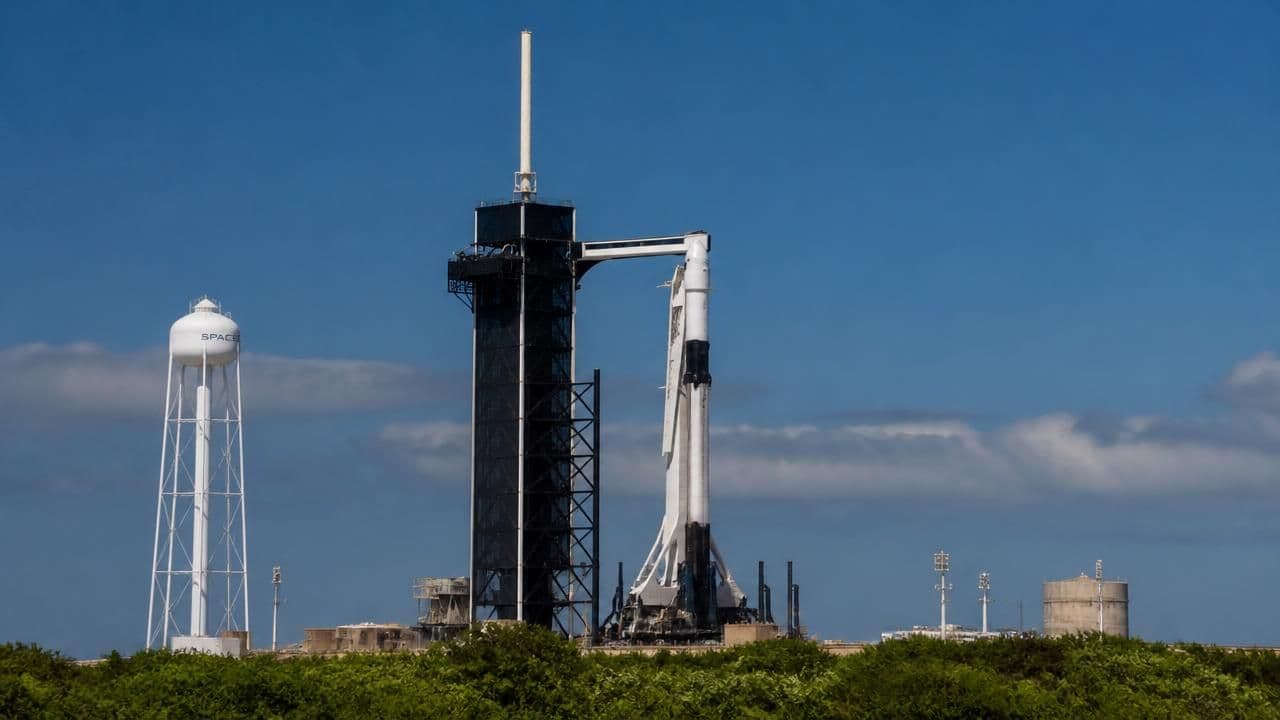
With environmental testing behind it, Griffin-1 faces a launch campaign: final integration, fueling, encapsulation and a ride to the Moon aboard a commercial rocket. NASA has not disclosed a precise launch date beyond the expectation of a flight later this year.
If successful, the mission would add another data point to a program still proving that private industry can reliably deliver payloads to the lunar surface — a prerequisite for the sustained presence NASA envisions. For Voyager Technologies, the payoff is a flight heritage record that could attract future contracts. For NASA, it is one more brick in a Moon Base that remains, for now, more roadmap than reality.