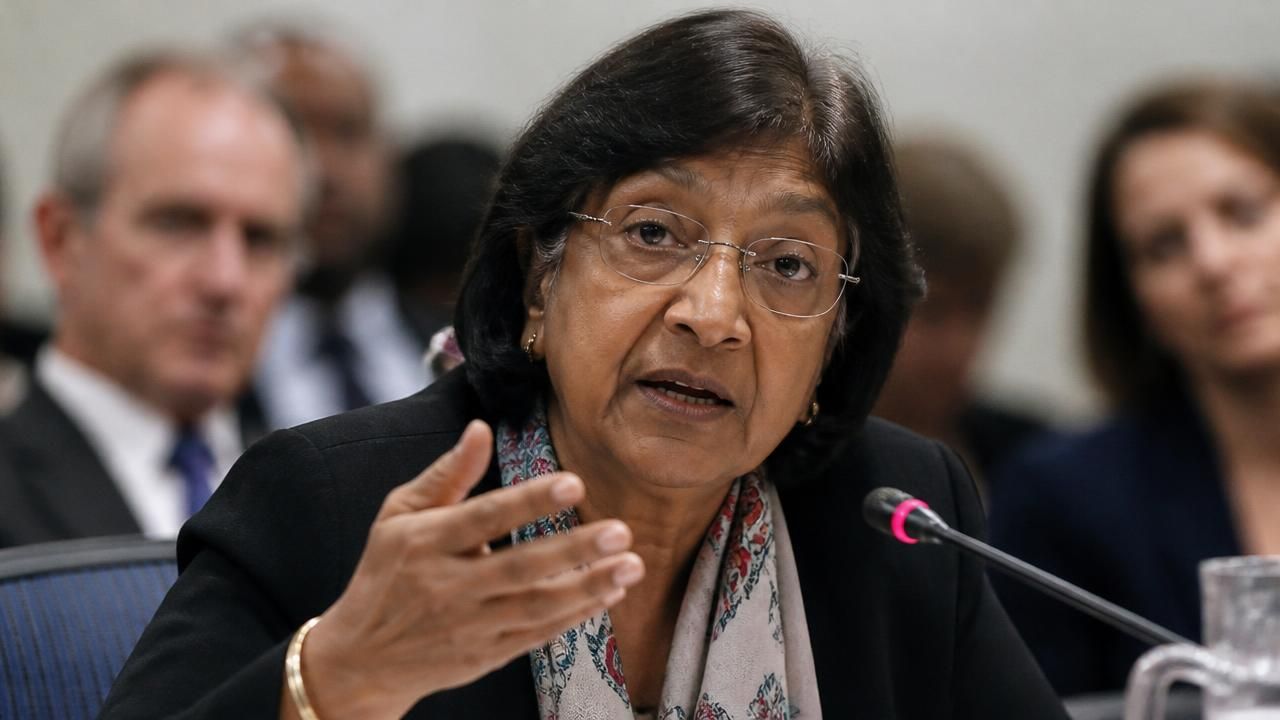
OSLO — Navanethem "Navi" Pillay, the South African jurist who defended opponents of apartheid, judged international war crimes tribunals and later led the United Nations' human rights office, was named the winner of the 2026 Nobel Peace Prize on Friday, the Norwegian Nobel Committee announced.
The committee cited her decades-long push to strengthen international law and hold states accountable for mass atrocities. The prize carries a cash award of 11 million Swedish kronor, roughly $1.05 million, and will be presented at a ceremony in Oslo on Dec. 10, the anniversary of Alfred Nobel's death.
Pillay, 85, becomes one of a small group of South Africans to receive the honor, joining Albert Lutuli, Desmond Tutu, and Nelson Mandela and F.W. de Klerk. She is also among the comparatively few laureates recognized primarily for jurisprudence rather than diplomacy or activism.
"For her lifelong efforts to promote international law and the protection of human rights and human dignity." — the Norwegian Nobel Committee's citation
From a Durban law office to The Hague
Born in 1941 in Durban to a Tamil family of modest means — her father drove a bus — Pillay studied law at a time when racial segregation sharply limited the opportunities available to non-white South Africans. In 1967 she opened a practice in Natal province, becoming the first woman to do so, and took on cases that many lawyers avoided: representing anti-apartheid activists, detainees and trade unionists, often at considerable personal risk.
After South Africa's first democratic elections in 1994, she was appointed to the High Court the following year, the first woman of colour to sit on that bench. That same year she was elected to the International Criminal Tribunal for Rwanda, where she heard cases arising from the 1994 genocide and later served as the court's president. She went on to serve as a judge at the International Criminal Court in The Hague before being appointed UN High Commissioner for Human Rights in 2008, a post she held until 2014, pressing for accountability in Sri Lanka, Syria and beyond.
The Gaza commission that defined her later career
In 2022, Pillay was named chair of the UN Human Rights Council's Independent International Commission of Inquiry on the Occupied Palestinian Territory. In 2025 the panel concluded that Israel had committed genocide against Palestinians in Gaza — the first such determination by a UN body. Israel's government emphatically rejected the finding, calling it false, politically motivated and the product of a predetermined agenda.
That finding shaped how the award was covered around the world. The Times of Israel led with the accusation itself — "Navi Pillay, head of UN commission that accused Israel of genocide, wins Nobel Peace Prize." The New York Times, running live coverage, paired her career history with the note that the Israeli government had rejected the panel's conclusion. Indian outlets foregrounded her ancestry: the Indian Express described her as the "bus driver's daughter who took on apartheid," while CNBC-TV18 headlined her as an "Indian-origin jurist." South African and US public-radio coverage stressed her roots as a Mandela-era lawyer who carried human rights advocacy into the UN system.
A prize that lands in contested terrain
Human rights organizations broadly welcomed the award, describing it as recognition of a career spent insisting that international law applies equally to powerful states. Critics, including Israeli officials and some legal scholars, argued that the committee had effectively endorsed a contested legal conclusion and politicized the prize.
The Nobel Peace Prize has a long history of contentious selections — Henry Kissinger in 1973, Aung San Suu Kyi in 1991, Abiy Ahmed in 2019 — and the committee has rarely shied from provocation. But the choice of a sitting chair of a UN inquiry into an active war marks an unusually direct intervention in a live geopolitical dispute.
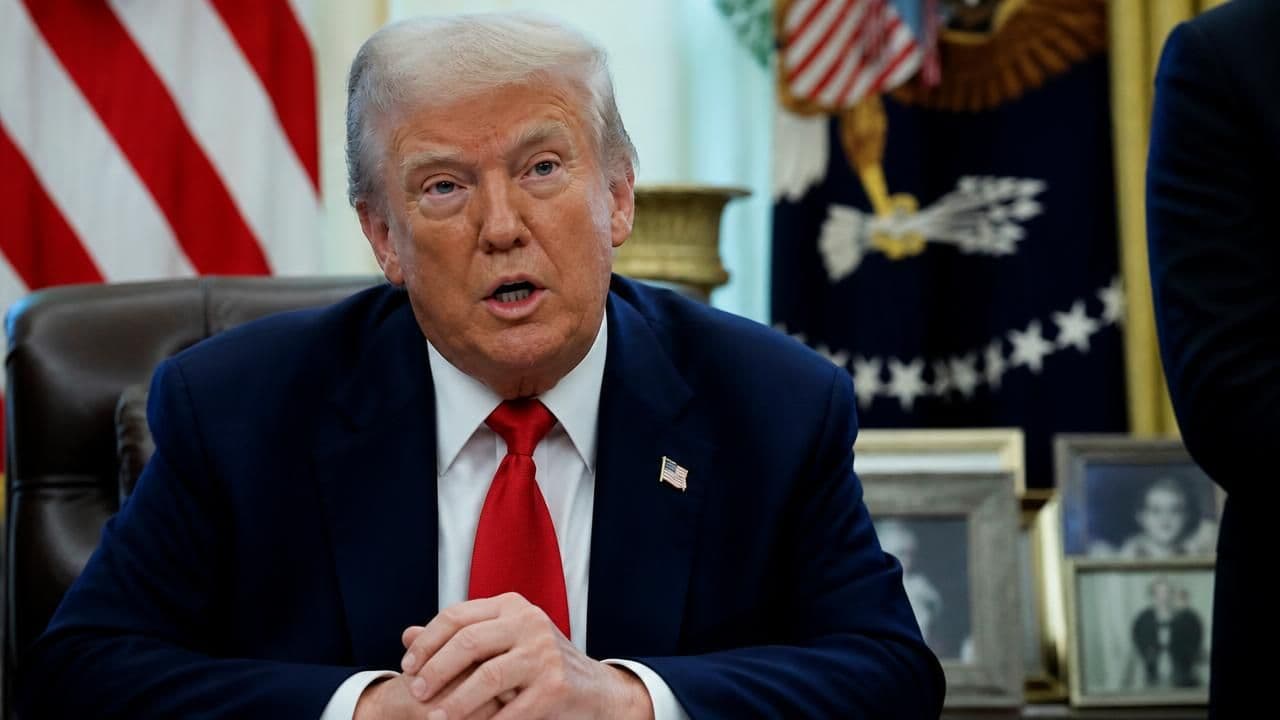
Trump misses out
The award also settles, for another year, one of the more closely watched questions in international politics. President Donald Trump had campaigned openly for the prize, and allies in several governments had nominated him, citing his role in brokering ceasefires and normalization agreements in the Middle East. Some MSN aggregations framed Friday's result bluntly: "Donald Trump misses out on Nobel Peace Prize to human rights campaigner."
Whether the committee's choice should be read as a rebuke to that campaign is a matter of interpretation. The committee does not discuss runners-up, and its citation made no reference to any head of state.
What comes next
The practical effect of the prize is likely to be twofold. First, it will raise the international profile of Pillay's commission and its findings at a moment when the war in Gaza remains a central fault line in global diplomacy. Second, it will intensify the debate over whether international legal institutions can operate credibly when their conclusions cut against the interests of major powers and their allies.
Pillay is expected to deliver her Nobel lecture in Oslo in December, an address that will be scrutinized as much for what she says about Gaza as for what she says about the state of international law. For a lawyer who began her career defending clients with little prospect of a fair hearing, the platform is, by any measure, the largest she has ever had.