Across the United States, the mechanics of voting have become the story. As election offices in Los Angeles County and the San Francisco Bay Area begin mailing ballots for the November 2026 midterm elections, officials are delivering an unusually blunt message to voters: if you wait until the final days, don’t rely on the mailbox.
The convergence of local election administration and national politics has thrust mail-in voting — its deadlines, its postmarks, and its drop boxes — to the center of the 2026 midterm conversation. NBC Los Angeles reported that Los Angeles County has started mailing ballots to voters. The Mercury News reported that Bay Area ballots begin going out Monday, and published a guide to the deadlines residents need to know. USA Today is tracking how Californians can vote as mail-in ballots arrive and where to find the state’s drop boxes. Further east, absentee ballots are already available in Michigan.
The postmark problem
The single biggest source of confusion—and disenfranchisement—is the postmark. NPR and its member stations, including KACU in Abilene, Texas, warned in matching reports that mailing a ballot close to Election Day may get it rejected for a late postmark. Their advice is specific: officials recommend taking the ballot to a post office and getting it postmarked by hand, rather than dropping it in a street collection box where it may be caught up in mail processing changes.
The underlying issue is timing. A ballot that is postmarked on time but arrives after a state’s receipt deadline can be thrown out; a ballot placed in a mailbox on the eve of Election Day may not receive a legible postmark at all. Because postal processing schedules and sorting facilities have changed in recent years, the margin for error has narrowed for voters who treat the mailbox as a last resort.
Drop boxes versus mailboxes
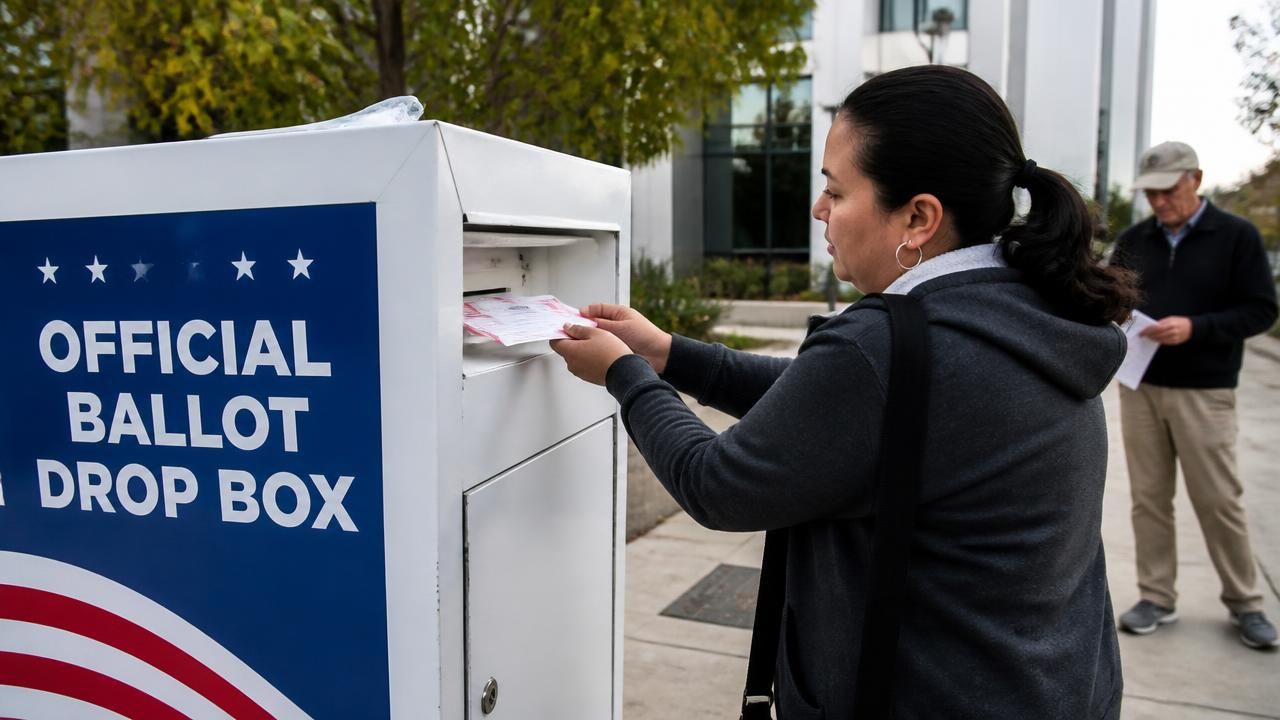
That is why election administrators have settled on a simple slogan, one CNN captured in its own headline on the subject: “Use the drop box rather than the mailbox.”
“Use the drop box rather than the mailbox.” — the guidance election officials have distilled for voters casting ballots close to Election Day.
Drop boxes bypass the postal system entirely. A ballot deposited in a secure, county-monitored box is in the hands of election officials the same day, with no postmark requirement and no sorting machinery in between. Ballotpedia’s election news desk has published a parallel guide on what voters should know about casting an absentee or mail-in ballot in the November election, emphasizing that the rules differ dramatically from state to state and even county to county.
Deadlines, state by state
The practical upshot is that there is no single national rule. Some states require ballots to be received by polls closing on Election Day; others count ballots postmarked on or before Election Day but received days later. Some require a witness or a notary signature; others do not. In California, ballots postmarked by Election Day are generally counted if they arrive within a short window afterward, while Michigan voters face their own receipt deadline for absentee ballots.
That patchwork is why local coverage has become a public service in its own right. The Mercury News framed its Bay Area report around deadlines; USA Today structured its California coverage around finding a drop box; MSN aggregated answers to reader questions about voting in the 2026 midterms. Each outlet is responding to the same underlying anxiety: voters want to know whether their ballot will count.
How the story is being framed
The framing varies by outlet and audience. National broadcasters such as NPR stress the systemic risk—postal processing changes that could invalidate ballots—and treat the story as one about infrastructure and access. CNN emphasizes the official guidance and the institutional preference for drop boxes. Regional outlets, including NBC Los Angeles, the Mercury News, and USA Today’s California desk, focus on logistics: when ballots arrive, where to return them, and what deadlines apply. Ballotpedia approaches it as civic instruction, and MSN as aggregated reader service.
Taken together, the coverage reflects a broader shift in how American elections are reported. Two decades ago, campaign journalism was dominated by horse-race storytelling—the day-to-day theater of the trail, as chronicled in outlets such as Wikinews during the 2016 presidential campaign, or explored in long-form interviews like Wikinews’ conversation with journalist Gay Talese about the state of the profession. That tradition still exists, including interviews with long-shot independent candidates such as Joe Schriner, but it now competes with a genre of reporting that treats election administration itself as the news.
The wider political backdrop
The mechanics are unfolding against a restive political environment. The Associated Press reported that the White House is highlighting Trump Accounts for kids amid voter frustrations over rising prices—a reminder that the midterm campaign will be fought over pocketbook concerns as much as procedure. Voting rules, in that light, are not a technical footnote but a live political question: who gets to vote, how easily, and whether their ballot is counted.
What voters should do
- Return your ballot early. The earlier it is cast, the less any deadline or postmark rule matters.
- Use an official drop box whenever possible, especially in the final week before Election Day.
- If you must mail it late, hand it to a postal clerk and ask for a postmark rather than dropping it in a collection box.
- Check your county’s receipt deadline and signature requirements—rules vary widely by state.
- Track your ballot if your state offers online verification, and contact your election office if it is not marked received.
The through-line across all of the coverage is straightforward: the ballot is only as good as its arrival. With millions of mail ballots now moving through the system, election officials are asking voters to treat the final days before the election as a deadline to plan around, not a window to gamble on.