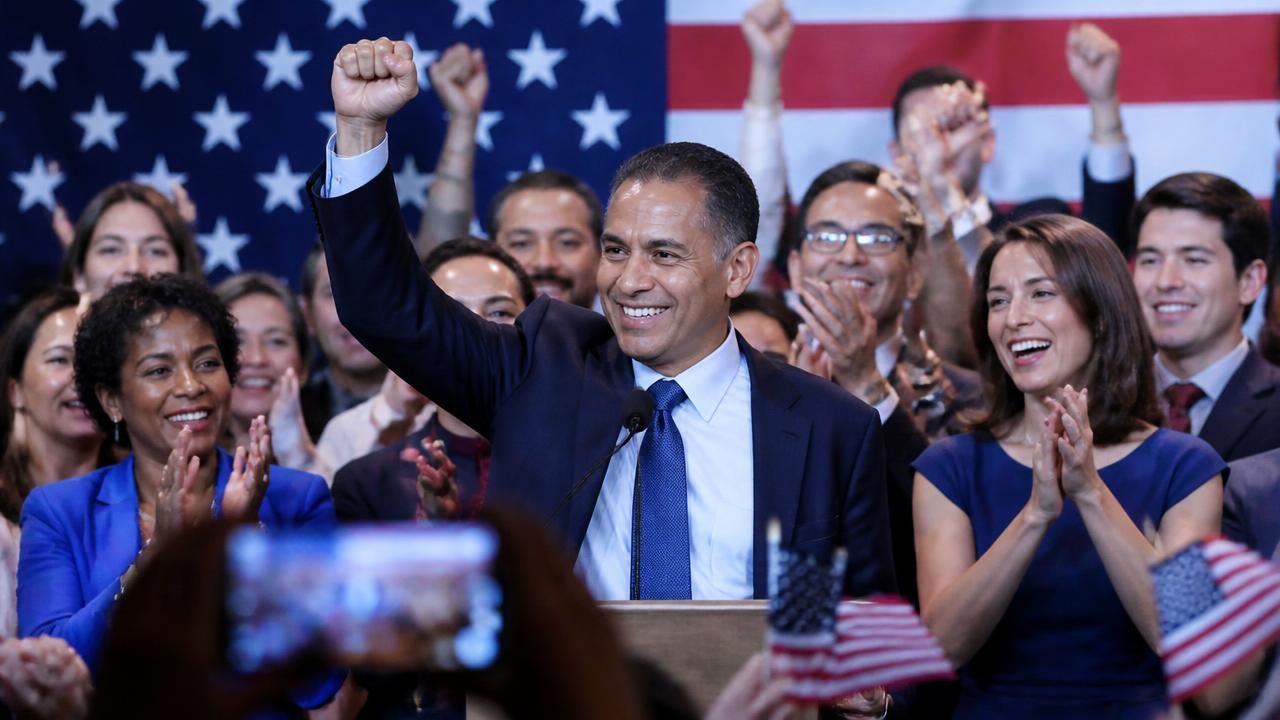
Democrats have won control of the U.S. House of Representatives in a midterm performance that news organizations across the political spectrum are describing in superlatives — the party's largest House majority since 1992 and, by several measures, the biggest wave election in half a century.
According to tallies compiled in the days since Election Day, Democrats have flipped at least 47 Republican-held seats, with two more still potentially in reach, giving the party 258 seats in the 435-member chamber — comfortably past the 218 needed for a majority. CBS News and MSN both called the result a “historic” majority “not seen since 1992,” while The New York Times framed it as “an election-year record this century,” reporting that Democrats had clinched 258 seats. NPR put the swing in the starkest terms of all: Democrats won the House “by the largest margin in 50 years.”
A wave measured in decades
The scale of the victory is the story's central fact, and each outlet has approached it from a slightly different angle. Where NPR emphasizes the 50-year frame — reaching back to the post-Watergate landslide of 1974 — CBS News and MSN anchor the comparison to 1992, the last time Democrats won a House majority this large. The Times splits the difference by emphasizing the modern era, calling it a record for this century.
The numbers themselves are still moving. NPR reported that Democrats had “currently flipped 47 House seats and could flip 49 total,” a reminder that the final margin will not be fixed until every remaining contest is certified. MSN's data-driven companion piece, “The biggest blue wave in 50 years, explained in 7 charts,” suggests the party's gains were broad-based rather than concentrated in a single region — a pattern that typically signals a nationalized election in which voters deliver a verdict on the party in power.
CBS News has been tracking the district-by-district anatomy of the swing, publishing a running list of every seat that changed control in the midterms. That granular accounting matters for the next two years: a majority built on dozens of flipped suburban and swing districts produces a very different Democratic caucus — and a very different set of legislative priorities — than one padded by a handful of lucky breaks.
Arizona: a trifecta six decades in the making
Perhaps the most striking state-level result came from Arizona, where, according to Newsday, Democrats won the state House, the state Senate and the governor's office for the first time since 1966. A trifecta that has eluded the party for nearly 60 years hands Democrats unified control over a fast-growing, demographically shifting Sun Belt state — and gives national Democrats a potential laboratory for policy on water, housing and elections administration.
The count is not finished
More than a week after Election Day, the picture is still incomplete. MSN reported that “more than a dozen key races remain too early to call,” a consequence of the slow, methodical tabulation of mail and provisional ballots that has become routine in many states. The lag has become its own political story in recent cycles, fueling disputes over when results should be considered final.
- Seats flipped: at least 47, possibly 49
- Democratic total: 258 House seats (218 needed for control)
- Benchmark: largest majority since 1992; biggest wave in roughly 50 years
- State highlight: Arizona's first Democratic trifecta since 1966
- Outstanding: more than a dozen races still uncalled a week after voting
“The biggest blue wave in 50 years.” — MSN's framing of the midterm results
Broadcast outlets including KTVU have been running rolling “balance of power” updates as control of Congress was confirmed, with the network describing Democrats as having “won control of Congress in the 2026 midterm elections.” The convergence of so many outlets on the same conclusion — a decisive Democratic House majority — has narrowed the space for competing interpretations of the result, even as the final seat count remains unresolved.
The other headline: COP31 ends without a deal
The same news cycle delivered an awkward counterpoint abroad. NPR reported that the COP31 climate summit “ran two days longer than expected, becoming the longest conference in the summit's history” — and ended with no deal.
The juxtaposition is difficult to ignore. Democrats are heading into a new Congress with an electoral mandate that many in the party will read as a mandate for action on climate, while the multilateral process meant to coordinate global emissions reductions has just recorded its longest session and its least conclusive outcome. For activists, the takeaway is likely to be that domestic power matters more than international summits; for diplomats, the reverse.
What happens next
A 258-seat majority is large enough to move legislation without relying on the most vulnerable members of the caucus, and large enough to sustain presidential vetoes — though the practical reach of the majority will depend heavily on the Senate and the White House. The Democratic caucus that arrives in January will include dozens of lawmakers who won in districts the party lost two years ago, an internal dynamic that historically pushes leadership toward the center on fiscal questions and toward confrontation on oversight.
The unresolved dozen races will determine the final shape of that caucus, but not the fundamental outcome. The wave of 2026 has already been measured in the only terms that matter for control of Congress: seats won, and the decades it takes to match them.