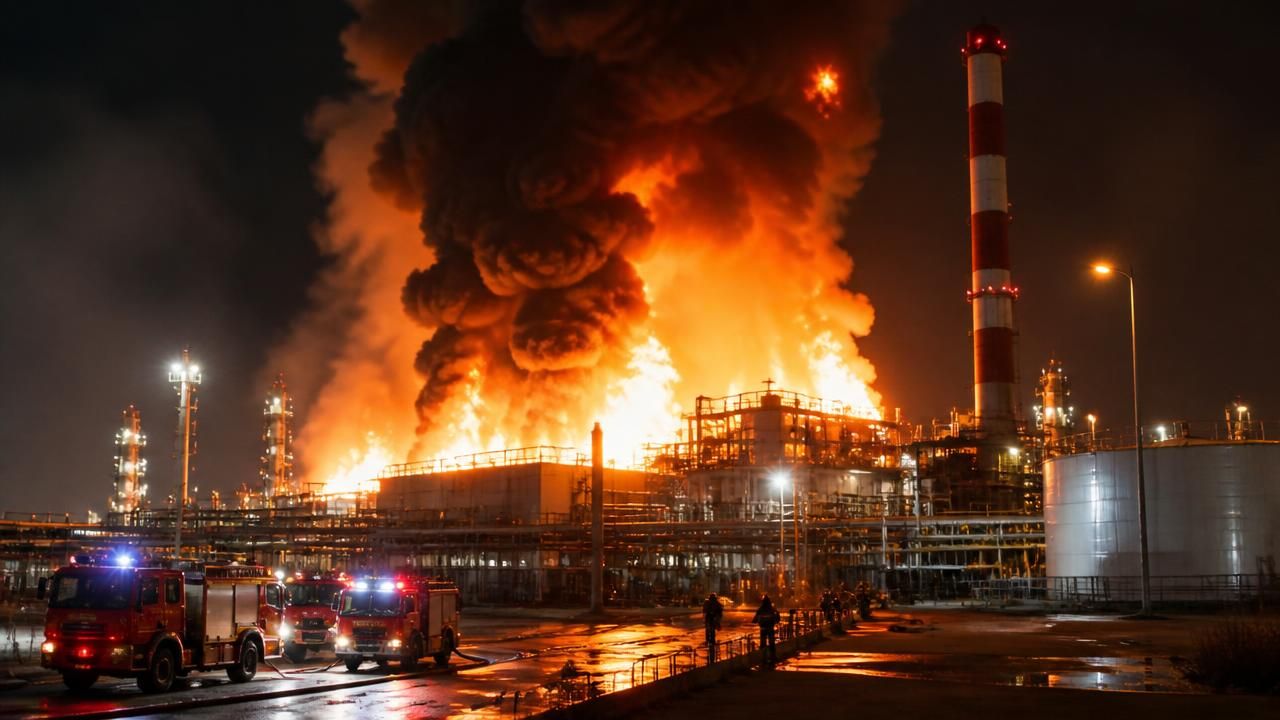
Ukrainian long-range drones struck at least two more Russian oil refineries overnight — including a major fuel-producing plant in the Perm region capable of processing roughly 6.6 million tons of crude a year — as Kyiv abandoned a Trump-brokered pause on energy strikes and sharply escalated its campaign against Russia's petroleum infrastructure.
The attacks also hit the Novoshakhtinsk refinery and the Ilsky refinery in Russia's southern Rostov region, plus a major plant in Yaroslavl, according to Ukrainian and Russian accounts. Novoshakhtinsk reportedly halted operations entirely. Ukrainian officials say the month-long blitz has now damaged or knocked out 15 Russian refineries — a figure first reported by the New York Post — and inflicted an estimated $23.2 billion in damage.
The targets: from Rostov to Perm
The geographic spread is the story. Earlier phases of Ukraine's deep-strike campaign concentrated on refineries and depots near the border, where short-range drones could reach. The Perm strike, deep in the Urals foothills some 1,500 kilometers from Ukrainian territory, signals a materially longer reach — a point President Volodymyr Zelenskyy has repeatedly underlined by praising domestically manufactured drones and missiles rather than Western-supplied systems.
Bloomberg Markets framed the Perm strike as part of a continuing exchange of blows on energy infrastructure, noting that Ukraine said it hit "yet another Russian refinery" as the two countries traded attacks. Ukrainian media outlet UNITED24 was more granular, reporting that two refineries were hit in a single night across Rostov and Perm and that one — Novoshakhtinsk — shut down.
Fuel shortages spread inside Russia
The cumulative effect is now visible at Russian fuel pumps. Reuters reported that more Russian regions have moved to limit retail fuel sales as drone strikes erode refinery output, and separate reports said Moscow was introducing gas restrictions in response to the strikes. Independent analysts cited in Ukrainian and European coverage estimate the campaign has cut Russia's refining capacity by roughly 30%.
That figure matters more than the headline damage bill. Refining margins, not crude extraction, are where Russia's export earnings are most sensitive to disruption, and repeated outages force Moscow to choose between exporting crude at a discount or keeping refined product at home. Either choice carries a cost — lost revenue or domestic shortages in regions far from the front.
There are political symptoms too. Yahoo News reported that the strikes are prompting uncomfortable questions among ordinary Russians about the war's costs, while Dutch-language coverage on MSN described both Moscow and Kyiv as effectively ignoring President Donald Trump's appeals for restraint.
A truce collapses — and a rupture with Washington
The strikes ended a pause on energy-infrastructure attacks that had been brokered with U.S. involvement. Multiple outlets — The Hill, MSN and the Columbus Dispatch — reported the same framing: Ukraine walked away from the truce, and Zelenskyy said publicly that he felt betrayed by Trump.
"We're done" with the energy truce, Zelenskyy said, according to widely reported remarks, describing himself as let down by Washington after the security guarantees Kyiv had sought failed to materialize.
The tone is a sharp turn from the careful courtship of the White House that has defined Ukrainian diplomacy for much of the past two years. The Hill characterized the refinery strike as a direct act of defiance; MSN's headline put it as Ukraine "ending pause and defying Trump." The framing across outlets differs — Bloomberg treats the strikes as a tactical energy war, U.S. tabloids as a strategic victory, European outlets as a diplomatic rupture — but all converge on one point: the informal understanding not to target refineries no longer holds.
Moscow's answer: missiles on Kyiv
Russia has retaliated hard. Strikes on Kyiv and the surrounding region killed at least 21 people, according to Eurasiareview, and CNBC reported that Russian attacks plunged at least one Ukrainian city into blackout as Zelenskyy warned of further missile barrages. NBC News reported that a Ukrainian drone attack on a Russian city killed 13 people, with a refinery reportedly hit — a reminder that the escalation is cutting both ways.
Independent monitors have described the past month as Russia's deadliest for its own forces since the war began, a claim that Ukrainian officials have amplified as evidence that long-range strikes are degrading the logistics that sustain the front.
Talks continue even as the fighting sharpens
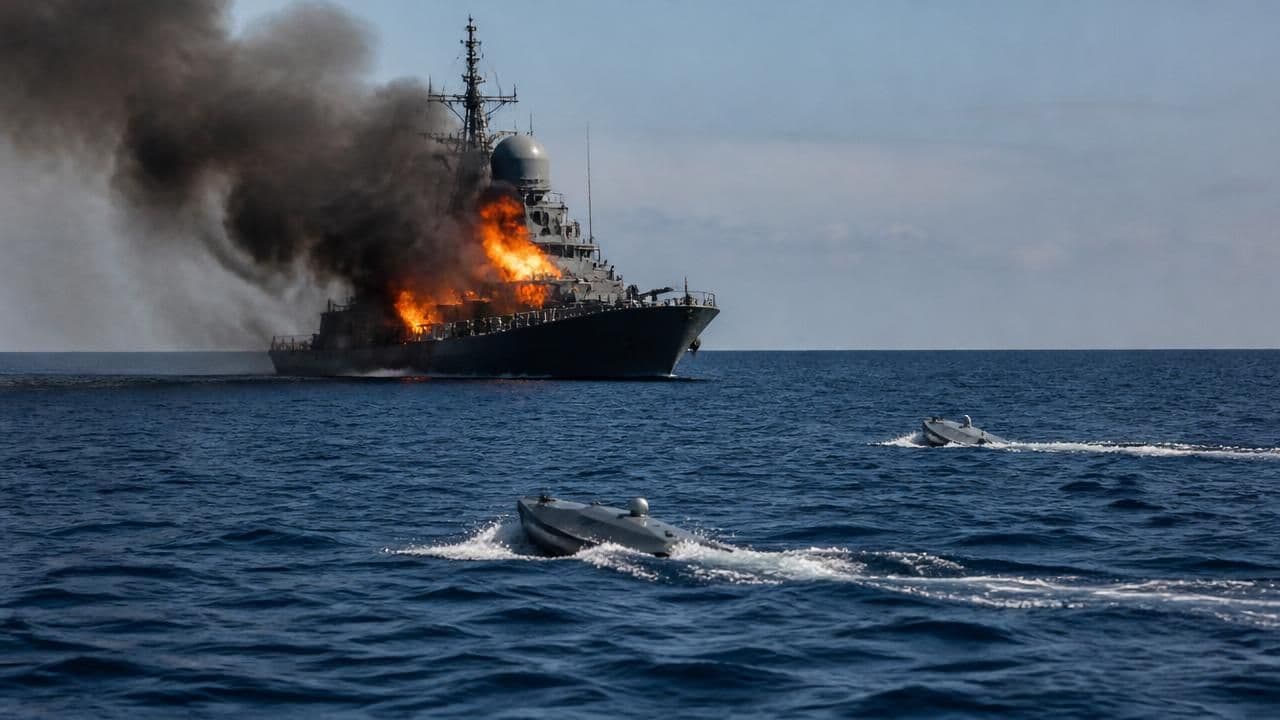
The paradox of the moment is that diplomacy has not stopped. SBS reported that Russia and Ukraine resumed end-of-war talks even as clashes intensified, with Ukraine sinking a Russian patrol boat in the same period. Kyiv Post described the campaign as an "oil blitz," noting the Yaroslavl strike as further evidence of an accelerating tempo; Ukrainian officials have separately outlined the long-range campaign's main impact as the degradation of Russia's refining and export capacity.
Why it matters
- For Kyiv: the refinery campaign is one of the few levers that imposes direct economic pain on Moscow without requiring Western permission — and it gives Zelenskyy a bargaining chip if talks resume in earnest.
- For Moscow: domestic fuel restrictions and rising public questioning are precisely the kind of pressure the Kremlin has sought to avoid, though the regime has absorbed far worse.
- For Washington: a brokered truce that collapsed within weeks is a setback for Trump's push for a quick settlement, and it hands both belligerents an incentive to keep fighting for leverage before any deal.
- For energy markets: repeated refinery outages mean more Russian crude heading for export markets and less refined product — a mix that nudges global product cracks higher even as crude supply stays ample.
What happens next depends largely on interception rates and stockpiles. Ukraine's drone advantage holds only as long as production outpaces Russian air defense adaptation; Russia's missile stockpile holds only as long as its own energy revenue can pay for it. For now, both sides are betting the other's economy breaks first.