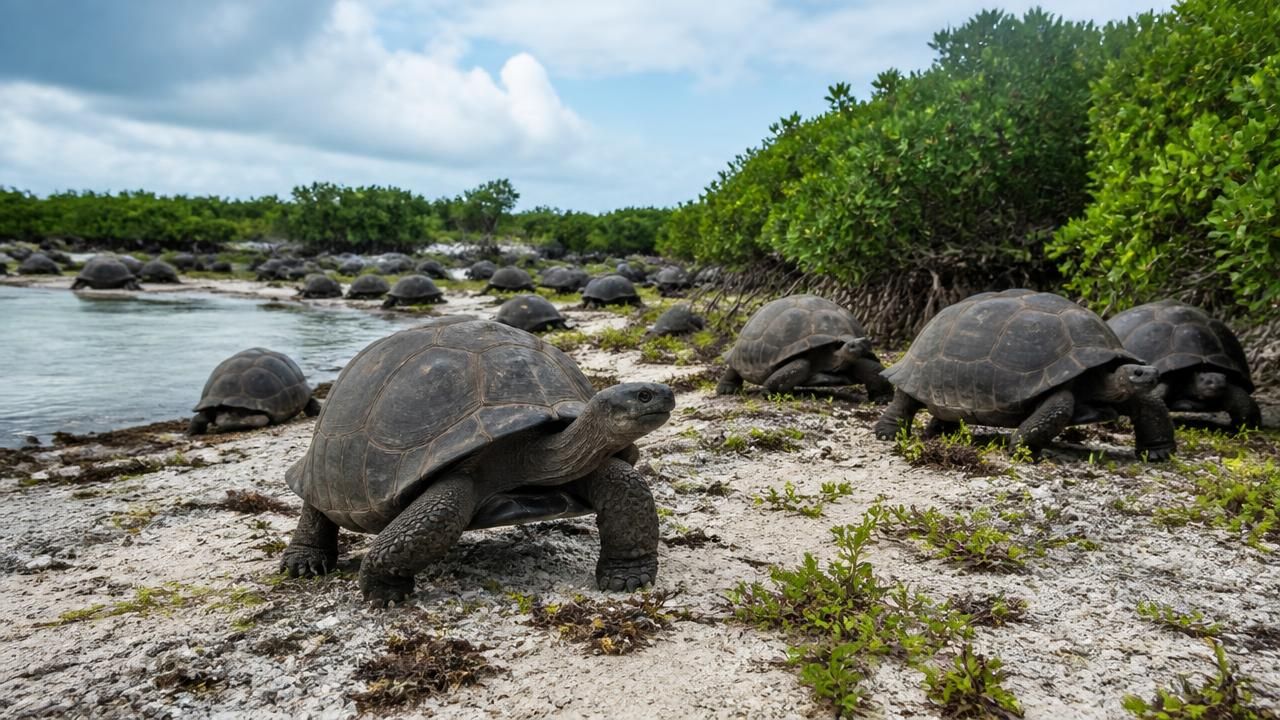
A survey of the world's largest free-roaming giant tortoise population has counted 180,000 animals on a single island in the Seychelles — the highest figure ever recorded for the species and a definitive confirmation that one of the Indian Ocean's great conservation rescues has succeeded.
The animals are Aldabra giant tortoises (Aldabrachelys gigantea), and their stronghold is Aldabra Atoll, a UNESCO World Heritage site so remote that it has no permanent human population, only a small rotating staff of researchers and rangers. The Guardian, which first reported the survey results, described the finding as confirmation of "one of the Indian Ocean's greatest conservation success stories."
A number that resets the baseline
The scale of the count matters as much as the headline. Earlier estimates of the Aldabra population had hovered at roughly 100,000 animals for years, making the new figure a substantial upward revision rather than a marginal gain. Because the atoll hosts no roads, no resorts and no resident settlements, the survey effectively captures an entire wild population of a species that exists almost nowhere else in the world.
Aldabra is administered and monitored as a strict nature reserve by the Seychelles Islands Foundation, which has run long-term monitoring programmes on the atoll's tortoises, seabirds and endemic plants. The atoll's isolation — it lies more than 1,000km southwest of Mahé, the Seychelles' main island — is a large part of why its ecosystem has survived largely intact.
From ship's larder to conservation icon
The recovery is all the more striking given how close the species came to oblivion. From the 17th century onward, passing ships and whalers harvested Aldabra tortoises in huge numbers, storing them alive on deck as a source of fresh meat on long voyages. By the late 19th century, scientists feared the species was effectively extinct.
A second threat arrived in the 1960s, when Britain considered building a military airbase on Aldabra. The plan was abandoned in the early 1970s after sustained lobbying by scientists and conservation groups, and the Royal Society subsequently took over a research station on the atoll. Aldabra was inscribed as a UNESCO World Heritage site in 1982.
- Predation history: centuries of harvesting for ship provisions depleted the population before protection began.
- Introduced species: feral goats, rats and cats — largely removed or controlled — once competed with and preyed on the tortoises.
- Legal protection: strict reserve status and World Heritage listing now constrain human access.
Why 180,000 tortoises matter beyond Aldabra
Giant tortoises are what ecologists call ecosystem engineers. They graze and browse across the scrub, trample paths, disperse seeds over long distances and recycle nutrients through their droppings, in effect shaping vegetation patterns across an entire island. A population of 180,000 animals on a single atoll represents a functioning ecological process at a scale that has vanished from most of the planet.
That also makes the count a climate-change benchmark. Sea-level rise, warming seas and increasingly severe storms all threaten low-lying coral atolls, and Aldabra's tortoises provide one of the clearest datasets anywhere for measuring how an intact island ecosystem responds to those pressures.
In the Galapagos, a very different story
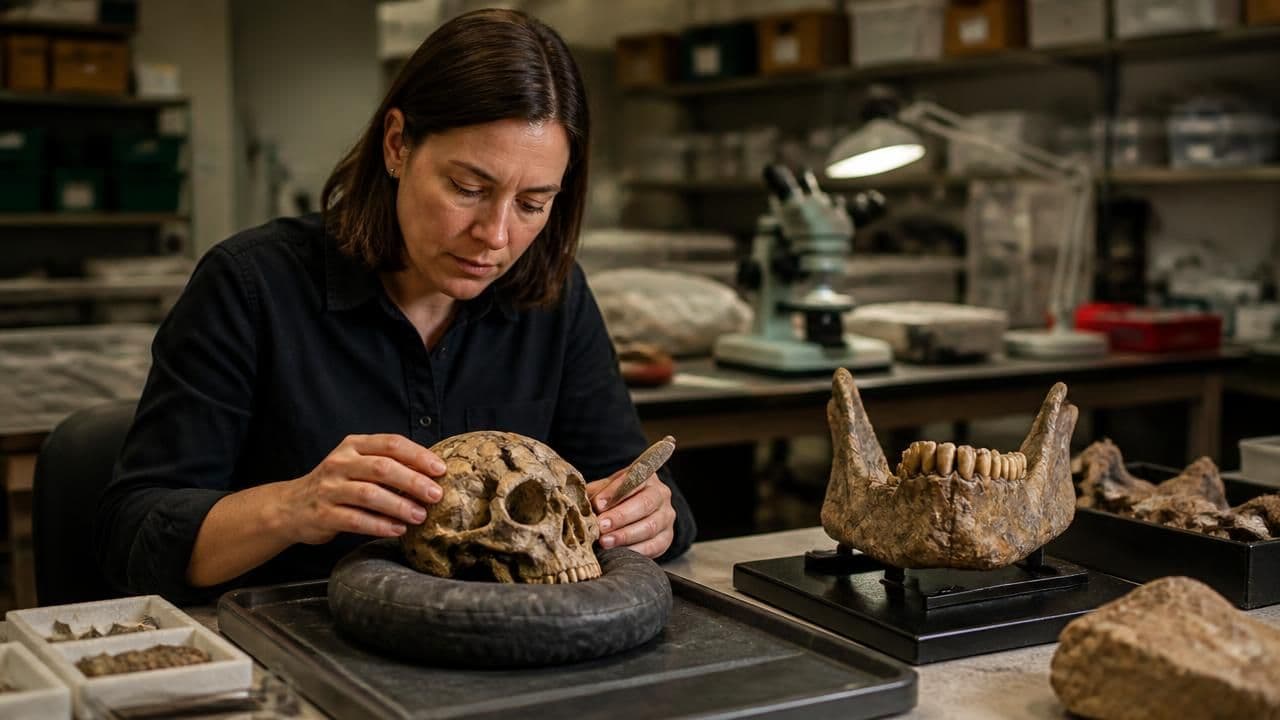
While Aldabra's tortoises thrive, research on the other great tortoise archipelago is documenting what was lost. Scientists working from degraded DNA recovered from museum specimens have identified two extinct lineages of Galapagos giant tortoises — part of a broader effort to reconstruct the islands' tortoise diversity from bones, shells and century-old preserved tissue.
The technique matters because Galapagos tortoises were devastated so quickly by whalers and settlers that some populations disappeared before anyone catalogued them properly. By extracting and sequencing heavily fragmented genetic material from old specimens, researchers — including teams associated with Yale University's Gisella Caccone — have been able to identify lineages that no longer exist in the wild.
The Galapagos work has already produced a remarkable twist: tortoises on Volcano Wolf carrying hybrid ancestry from the extinct Pinta and Floreana lineages, raising the possibility that species declared lost might one day be bred back toward their original form.
The death of Lonesome George, the last known Pinta Island tortoise, in 2012 became the global emblem of that loss. The surviving hybrids suggest a partial, contested route to restoration — a field where optimism is measured in decades, not years.
Deep time: when crocodiles ate tortoises
Palaeontologists have added a longer perspective. Fossil evidence from the region indicates that ancient crocodilians once preyed on giant tortoises on the island, a reminder that these animals evolved within a food web containing large predators — and that their modern predator-free islands are a historical anomaly created largely by human-driven extinctions.
Today, adult Aldabra tortoises have essentially no natural predators on the atoll, though hatchlings are vulnerable to crabs and birds.
What happens next
Conservationists caution that a record count is not a permanent guarantee. Rising sea levels threaten Aldabra's low-lying terrain, and invasive species remain a constant risk on isolated islands. The tortoises have survived the ship's larder, the airbase plan and decades of uncertainty. The next test is whether the atoll itself can survive the coming century.