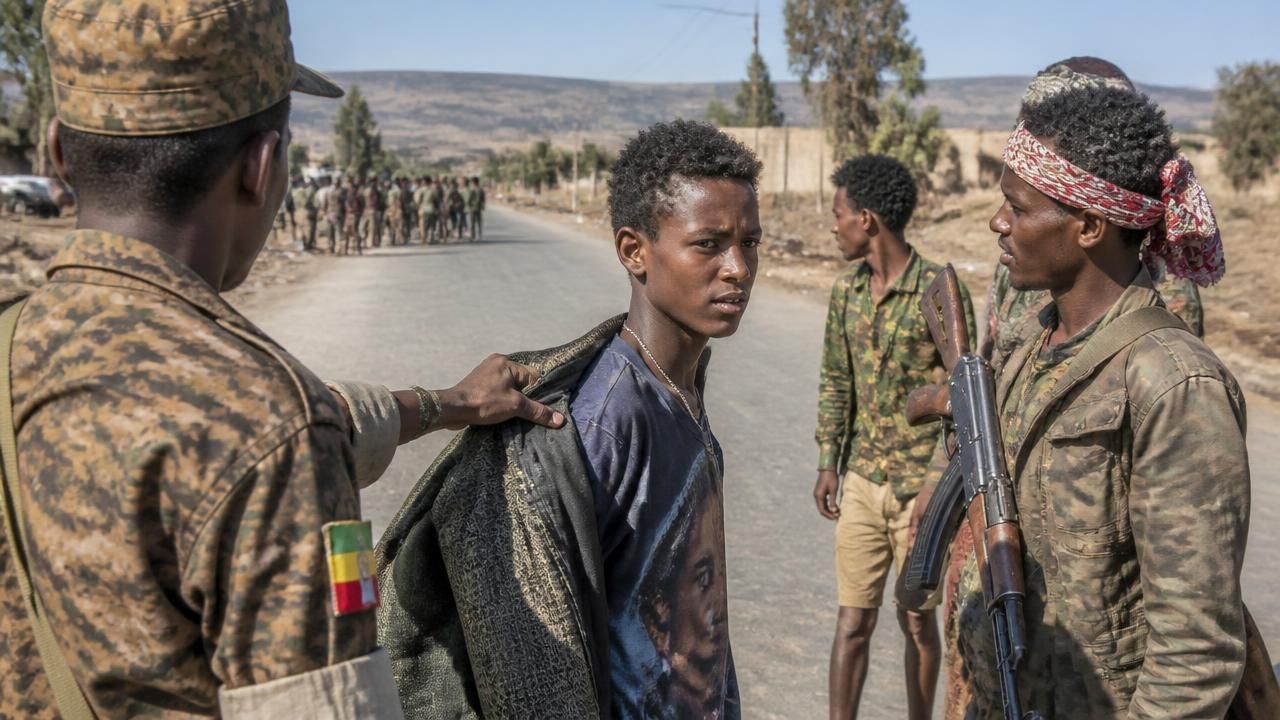
Renewed fighting in northern Ethiopia has triggered a fresh humanitarian emergency and a wave of allegations that a new alliance of armed groups in Tigray is forcibly conscripting men and boys — some reportedly as young as 15 — as terrified families flee the region.
Hostilities erupted again on 23 September between Ethiopia’s federal government and the Tigray People’s Liberation Front (TPLF), which rules the northern region. The renewed conflict shattered the Pretoria peace agreement signed between the two sides in November 2022, a deal that had formally ended a two-year war widely regarded as one of the deadliest conflicts of the decade.
A peace deal undone
The Pretoria agreement, brokered under African Union auspices in South Africa, was held up as a template for ending large-scale African conflicts. It provided for the disarmament of Tigrayan forces, the restoration of federal authority across the region, and the resumption of basic services and humanitarian access.
Nearly three years on, much of that architecture has unravelled. By some estimates, hundreds of thousands of people died during the 2020–2022 war from combat, starvation and the collapse of health services, and the region’s recovery had barely begun before the current round of fighting began.
‘Rounded up on the streets’
According to reporting by The Guardian, civilians are attempting to flee as men and boys are seized on the streets by a newly formed alliance of armed groups operating in Tigray. Witness accounts describe roundups in public spaces and raids on households, with recruitment targets extending to minors.
“Civilians try to flee as men and boys rounded up on streets by new alliance as Ethiopia conflict erupts again.” — The Guardian
The reports echo patterns documented during the earlier phase of the war, when both federal-aligned and Tigrayan forces were accused of mass conscription, including of children. Independent verification remains difficult: access to much of Tigray is restricted, communications are patchy, and aid agencies have warned that their ability to monitor protection concerns is severely constrained.
Human Rights Watch enters the fray
The allegations have been amplified by Human Rights Watch, whose findings — reported under headlines such as ‘Ethiopia: Tigray Authorities Forcibly Recruiting Civilians’ — sharpened the focus on the regional administration in Mekelle rather than on federal forces alone.
That framing matters. Early coverage of the war placed heavy scrutiny on Ethiopian federal troops and their Eritrean allies. The newest tranche of reporting shifts part of the accountability lens onto the Tigrayan authorities themselves, complicating a narrative in which the TPLF has long positioned itself as the principal victim of the conflict.
Neither the interim Tigrayan administration nor Ethiopia’s federal government has offered a detailed public response to the specific recruitment claims. Officials have previously rejected accusations of forced mobilisation, describing recruitment as voluntary and defensive in nature — a claim that families in the region say does not match what they are witnessing.
Protests — and a generation on the move
The allegations have spilled well beyond Tigray’s borders. Demonstrations have been held in which Ethiopians marched against what they describe as forced mobilisation in the region, a sign that the issue is becoming a national political flashpoint rather than a purely local security matter.
At the same time, young men are leaving Tigray in growing numbers, reportedly driven by fears of being pressed into service. Neighbouring regions and border crossings have become transit points for those able to escape, and humanitarian organisations warn that displacement will deepen an already acute food-security crisis.
How the story is being framed
- Human-rights outlets lead with child recruitment, framing the story as a protection crisis and a potential war crime.
- The Guardian and international press centre on civilian flight and the collapse of the Pretoria framework.
- Rights-monitoring coverage emphasises institutional responsibility, naming the Tigrayan authorities directly.
- Domestic and diaspora outlets foreground public protest and popular anger over mobilisation.
- Regional analysts treat the flare-up as a Horn of Africa security problem, with implications for Eritrea, Amhara and Sudan’s fragile borderlands.
Why it matters
The renewed conflict threatens to reverse whatever fragile gains were made since 2022. Aid flows that had partially resumed are again at risk, and a region still recovering from mass displacement and famine-like conditions now faces the prospect of a second prolonged campaign.
It also tests the credibility of African Union mediation. The Pretoria deal was the AU’s flagship achievement in recent years; its collapse would raise hard questions about whether externally brokered ceasefires can hold when underlying political disputes — over territory, autonomy and power-sharing — remain unresolved.
What to watch
- Whether international monitors gain access to verify recruitment allegations.
- Whether the African Union or outside powers can reconvene the parties.
- How neighbouring states respond to cross-border displacement.
- Whether the recruitment drive signals preparation for a sustained offensive.
For now, the immediate picture is one of uncertainty and flight: a peace agreement in tatters, a population bracing for another round of war, and young men deciding whether to stay — or run.