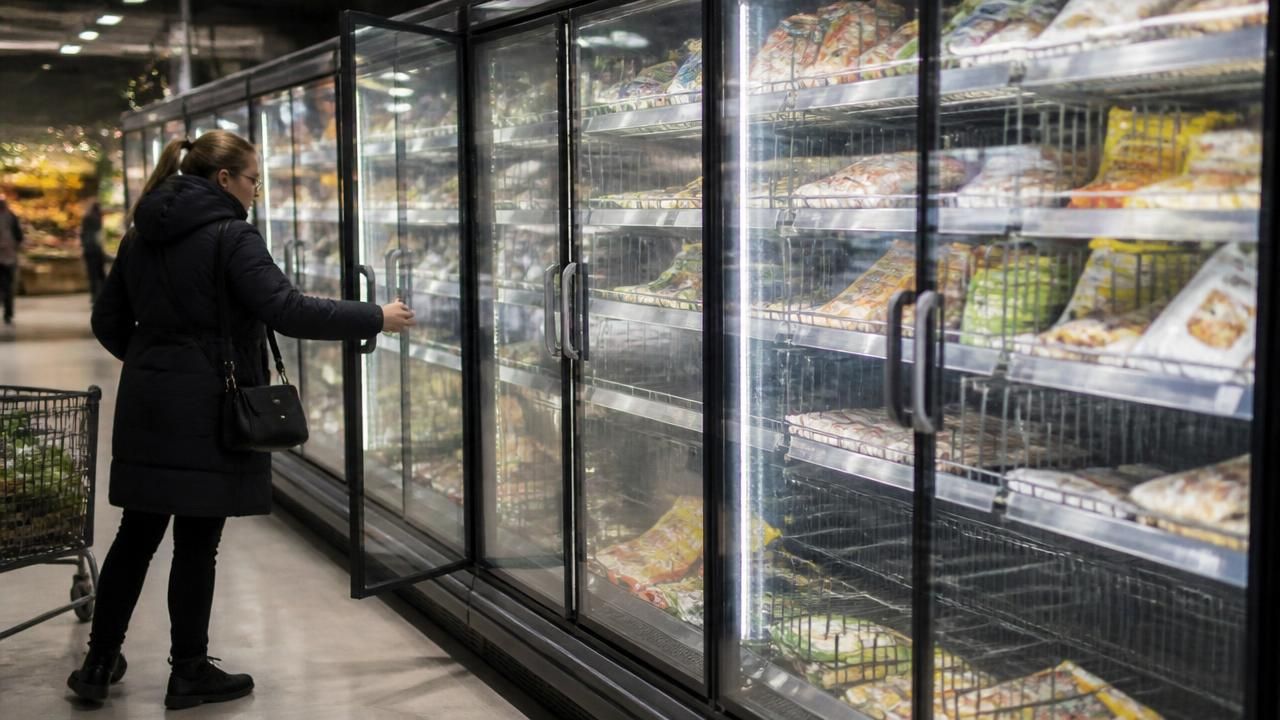
For shoppers in Sweden, the sabotage was measured in degrees. According to accounts circulated by Swedish media and relayed by the national news agency TT, an intruder gained remote access to refrigeration systems and pushed freezer temperatures up to 50 degrees Celsius — hot enough to ruin stock and force employees to haul food out of display cases. Similar disruptions rippled through retail operations elsewhere in Europe, prompting British firms to issue warnings as the outages spread.
It was, on its face, a story about groceries. But the freezer attacks landed in the middle of a broader and more unsettling week — one in which cyber intrusions touched water utilities in the United States, critical infrastructure operators, small businesses and crypto exchanges alike. The question posed bluntly by NPR and echoed across outlets was simple: just how vulnerable are we?
The mundane attack that worries analysts most
Perhaps the most striking lesson from the freezer campaign is how unremarkable the underlying technique appears to have been. The compromised systems were not cutting-edge artificial intelligence; they were internet-connected industrial controllers — the kind of equipment that sits in thousands of back rooms and is rarely patched.
NPR noted that in a week dominated by talk of AI-powered cyberattacks, the most concerning threats are often not the most sophisticated ones, but "the easy targets buried in old software." Forbes made a parallel point about consumer and industrial IoT devices, arguing that poorly secured connected hardware is putting critical infrastructure at risk. Each internet-facing thermostat, sensor or refrigeration controller is a potential doorway; in aggregate, they form an enormous, weakly defended surface.
Just how vulnerable are we to cyberattacks? — a question posed by NPR and MSN as outages piled up across sectors
Water systems and the AI question
The stakes rise sharply when the same weaknesses appear in utilities. Reports from the Christian Science Monitor and Marketplace described cyberattacks on U.S. water facilities that are testing American defenses and, in the Monitor's framing, revealing gaps. Water treatment and distribution networks are classic critical infrastructure: geographically dispersed, often under-resourced, and increasingly remotely monitored.
Meanwhile, Forbes reported on AI-powered Iranian cyberattacks threatening critical infrastructure, part of a wider shift in which adversaries use automation to scan for exposed systems and probe defenses at scale. The combination is uncomfortable: attackers gaining speed and reach, while defenders are still trying to inventory devices that should never have been connected to the public internet.
Why the most digitized are the most exposed
One counterintuitive finding, reported by Phys.org, is that digitalization front-runners are more vulnerable to cyberattacks — not because they are careless, but because they have more systems online, more integrations, and more to lose. Depth of digital adoption correlates with breadth of attack surface.
That pattern shows up at the smaller end of the market too. A report covered by Punch described SMEs as underprepared for growing cyberattacks, and a separate Nigerian audit story noted that firms remain vulnerable despite passing compliance checks — a reminder that an audit is a snapshot, not a defense. In the crypto sector, Binance founder Changpeng Zhao weighed in with a pointed claim: banks may be more vulnerable to cyberattacks than crypto exchanges, flipping a common industry assumption on its head.
A very long history of easy targets
None of this is new. Wikinews archives document the same recurring themes: digital security researchers publicly revealing the KRACK vulnerability in the WPA2 Wi-Fi protocol, forcing a global scramble to patch routers and devices; French and German officials warning citizens against using Internet Explorer; and the 2005 arrests tied to the Zotob worm, which exploited unpatched Windows systems to cripple corporate networks. Another Wikinews item recorded the ACLU and EFF challenging secret U.S. court orders seeking Twitter user data — a reminder that the battle over security and transparency has always run alongside the technical fight.
The pattern repeats because incentives repeat. Vendors ship quickly, users defer updates, and operational technology that runs for twenty years was never designed with the internet in mind.
Competing frames, competing fixes
- National security lens: Coverage of state-linked attacks, including Iranian activity, emphasizes deterrence, sanctions and intelligence-sharing.
- Corporate accountability lens: Forbes and consumer-facing reports stress that device makers and retailers have left known flaws unaddressed.
- Structural lens: Phys.org and SME reporting argue vulnerabilities are a byproduct of rapid digitalization outpacing security investment.
- Civil liberties lens: The ACLU/EFF case illustrates concern that expanded surveillance powers — sought in the name of security — may weaken trust without improving defenses.
What happens next
The freezer incident offers a preview of how modern cyberattacks will feel: less like a single dramatic blackout, more like a series of localized, costly disruptions that erode confidence in the systems people rely on daily. The remedies are unglamorous and well understood — segment operational technology from corporate networks, change default credentials, patch aggressively, monitor for anomalies, and require security-by-design in connected devices.
The open question is whether the response will keep pace. If the past two decades are any guide, the fixes will come — usually after the spoilage, the boil-water notices and the headlines.