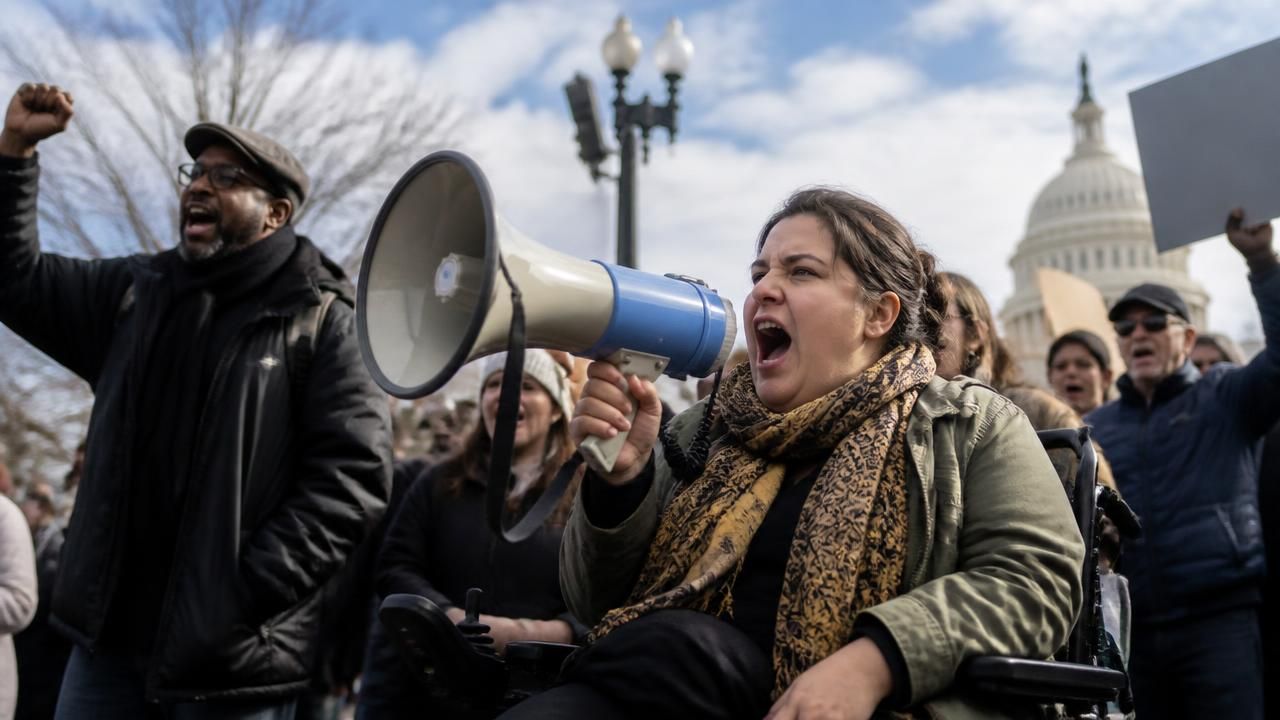
Disability rights advocates confront a federal reversal
Disability rights advocates are reacting with anger and organizing after the Trump administration reversed its stance on the integration of people with disabilities. The shift, reported by NPR and Boise State Public Radio, strikes at the heart of decades of civil rights law built around the principle that people with disabilities should live, work and receive services in their own communities rather than in institutions.
Advocates say the reversal threatens the fragile architecture of community integration that grew out of the Americans with Disabilities Act and the Supreme Court’s 1999 Olmstead decision, which held that unjustified segregation of people with disabilities is a form of discrimination. The administration’s specific policy changes were not fully detailed in early reports, but the political signal is unmistakable: federal enforcement priorities are changing.
Disability rights advocates are angered by the latest reversal but are rallying behind proposed legislation and working with states to strengthen protections for community integration.
That dual strategy—pushing new legislation while defending gains at the state level—reflects the reality of a divided federal system. Even as Washington rolls back or reinterprets integration requirements, states and local agencies can still adopt stronger safeguards. Advocates are betting that grassroots pressure, litigation and state-level policy can preserve the promise of inclusion.
The reversal also raises questions about funding, oversight and the everyday services that allow people with disabilities to remain in their homes. Community integration is not merely a legal abstraction; it determines whether someone can access transportation, housing, employment support and health care. When federal guidance shifts, providers and families often face confusion about what is required and what is merely encouraged.
Canada and Europe recalibrate as Trump reshapes alliances
On the international stage, the same word—integration—carries a very different charge. The Hill reported that Mark Carney, the former Bank of Canada and Bank of England governor, is building a new relationship for Canada in Europe after President Trump shattered Canada’s old relationship with the United States. The headline captures a widening sense in Ottawa and European capitals that North American and transatlantic ties can no longer be taken for granted.
The National Interest, meanwhile, made the case for U.S.-European defense base integration, arguing that deeper military infrastructure cooperation could strengthen deterrence and burden-sharing. The article itself was not fully accessible, but the title alone signals a debate over how integrated allied forces should be—whether bases, logistics and command structures can be shared without eroding national sovereignty.
Those arguments are unfolding against a volatile diplomatic backdrop. MSN’s “Europe Today” reported that Trump told countries to quit the International Criminal Court and that the EU’s defense chief spoke to Euronews. The combination suggests a moment of strategic fragmentation: Washington is pressing allies to abandon multilateral institutions, while European officials search for a coherent defense posture that can survive American political shifts.
For Canada, the calculation is especially acute. Its economy and security have long been intertwined with the United States through trade, NORAD and shared supply chains. If that old model is being shattered, as The Hill put it, then Carney’s outreach to Europe is less a luxury than a hedge. It also mirrors a broader pattern: middle powers and allies are diversifying partnerships in anticipation of a more transactional American foreign policy.
Health care consolidation continues with UPMC-Trinity integration
In the domestic health care sector, integration is proceeding not through federal mandates but through corporate mergers. UPMC has finalized its integration of Ohio-based Trinity Health System, according to MSN. The deal expands UPMC’s footprint into Ohio and continues a long trend of hospital consolidation that has reshaped American medical care.
Health system mergers promise economies of scale, standardized care and stronger bargaining power with insurers. But they also raise concerns about higher prices, reduced competition and diminished local control. For patients in Ohio, the practical question is whether integration with a large Pittsburgh-based academic medical center will improve access to specialty care or simply redirect decisions to a distant headquarters.
The UPMC-Trinity integration is a reminder that “integration” is not inherently progressive or regressive. In disability policy, it means inclusion in community life. In defense, it means interoperability and shared bases. In health care, it often means consolidation under a single corporate umbrella. The same word can empower some and concentrate power for others.
Why the convergence matters
These stories are not formally the same news event. They emerge from different institutions, different countries and different policy domains. Yet they share a common fault line: who decides how people, systems and nations are brought together, and on whose terms.
- Disability integration: Federal reversal sparks anger, but advocates are turning to legislation and states.
- Transatlantic integration: Trump’s pressure campaign pushes Canada and Europe to rethink defense and diplomacy.
- Defense base integration: Analysts argue for deeper U.S.-European military cooperation even as political trust frays.
- Health system integration: UPMC’s absorption of Trinity Health System extends consolidation in Ohio.
The through-line is institutional trust. When the federal government reverses a long-standing interpretation of disability rights, advocates lose faith in Washington’s commitment. When Trump tells countries to quit the ICC, allies question the reliability of U.S.-led multilateralism. When a health system integrates a regional provider, communities wonder whether local needs will survive the merger.
How these integration battles unfold will depend on countervailing power: state legislatures, European defense planners, antitrust regulators, and disability activists who have spent decades turning principle into practice. Integration, in other words, is never just a technical process. It is a contest over values, resources and who gets to belong.