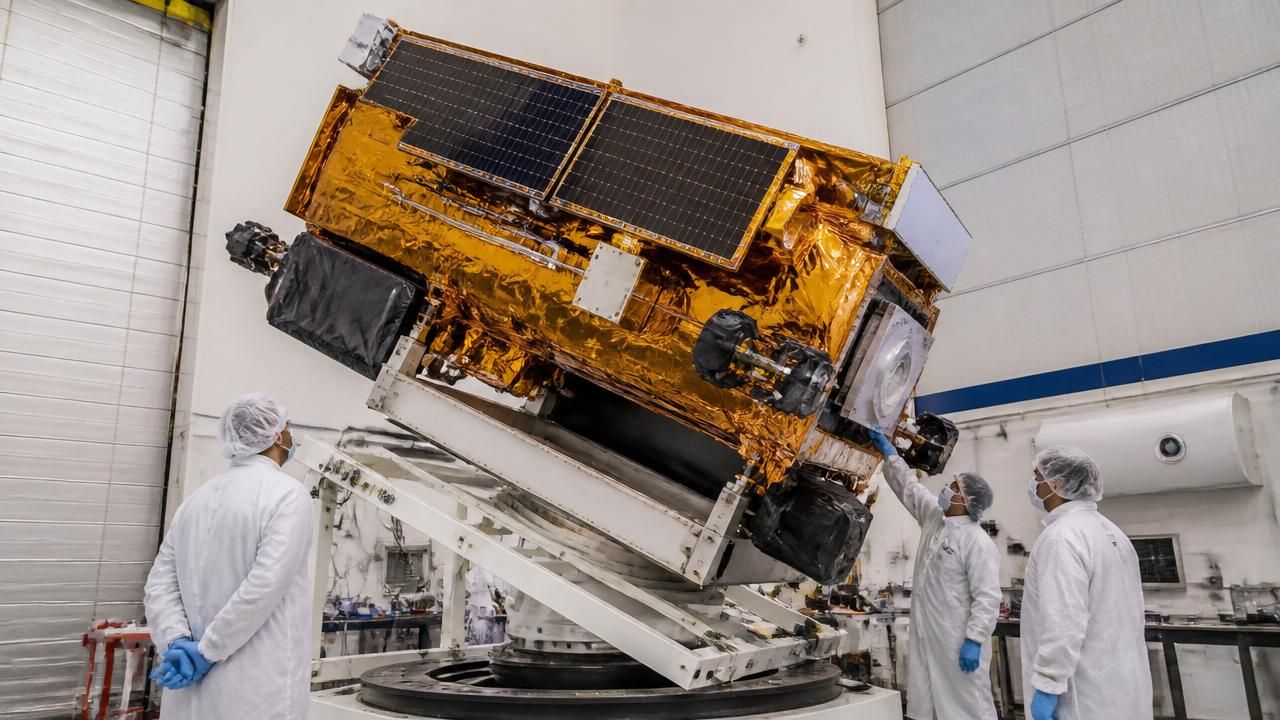
NASA has called off an ambitious commercial effort to lift its aging Neil Gehrels Swift Observatory into a higher orbit, effectively sealing the fate of a telescope that has stared down the universe's most violent explosions for more than two decades. According to the agency, Swift will now re-enter Earth's atmosphere by the end of the year, burning up in a controlled descent that ends one of the most productive astrophysics missions in NASA's history.
The decision came after the privately built spacecraft tasked with rendezvousing with Swift and nudging it upward ran into a cascade of technical problems, according to multiple reports. Headlines across outlets described the attempt as everything from a "high-risk, high-reward mission" to a rescue that "spun out of control." The commercial servicing vehicle ultimately fell back toward Earth, with the booster — and the hope of extending Swift's life — lost.
A Telescope Built to Catch the Universe's Brightest Flashes
Launched in November 2004, Swift was designed with a singular purpose: to detect gamma-ray bursts, the most powerful explosions in the cosmos, and pivot toward them within seconds. Its name reflected that agility. Equipped with the Burst Alert Telescope, an X-ray Telescope and an Ultraviolet/Optical Telescope, Swift could reorient itself faster than any observatory of its era, catching the fleeting afterglow of explosions that fade within minutes.
Over two decades, the observatory reshaped astrophysics. It helped establish that gamma-ray bursts signal the birth of black holes, tracked supernovae, monitored comets and asteroids in our own solar system, and became a crucial asset in the emerging field of multi-messenger astronomy — following up gravitational-wave detections with rapid X-ray and ultraviolet observations. Its data archive underpins thousands of published papers.
But Swift orbits in low Earth orbit, where the tenuous upper atmosphere exerts a steady drag. A period of heightened solar activity inflated the atmosphere and accelerated that decay, pushing NASA to explore options that had once seemed like science fiction.
The Boost That Almost Was
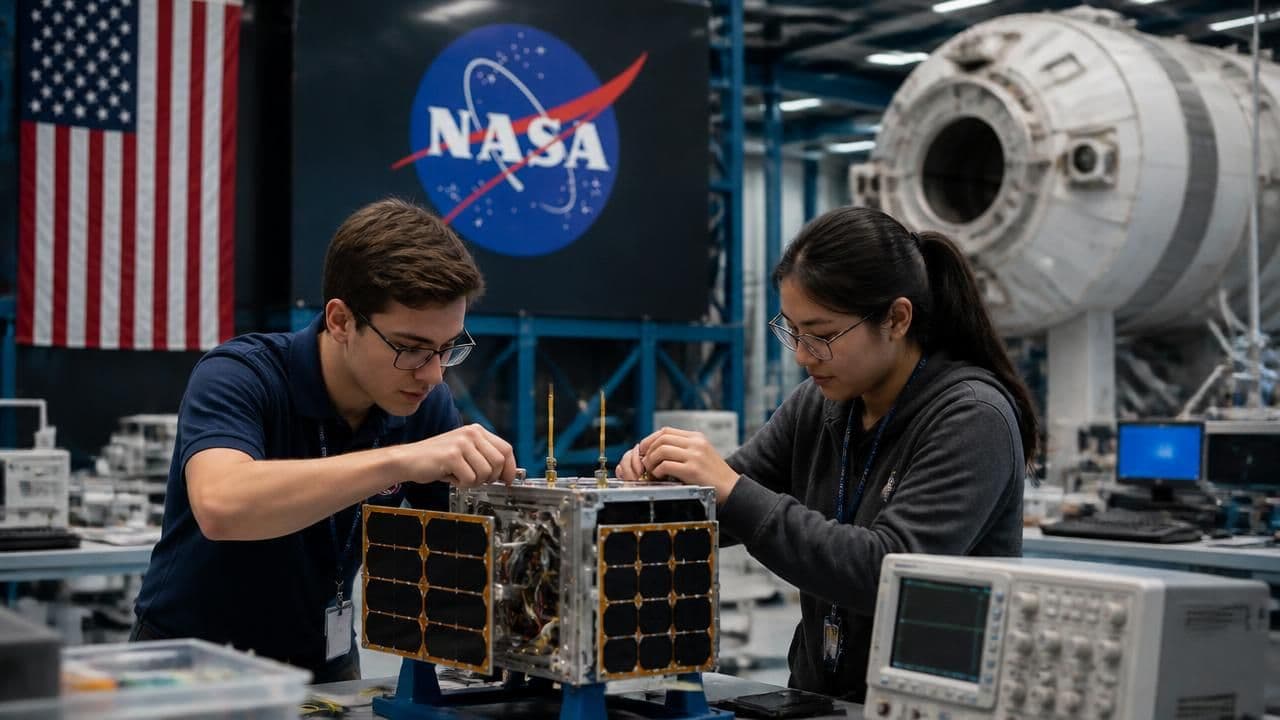
Rather than build a costly dedicated rescue, NASA turned to the commercial space industry. The agency contracted Katalyst Space, a private servicing vendor, to send a small spacecraft to rendezvous with Swift and raise its orbit — an operation that would have been the first of its kind for a NASA astrophysics observatory and a proving ground for the broader in-space servicing economy.
The mission was always a gamble. Time was brutally short; engineers had to compress years of typical mission planning into months. And the servicing craft would have to navigate, grapple or dock with a satellite never designed to be serviced.
Reports indicate the attempt encountered trouble almost immediately, with the spacecraft losing control during critical phases of the operation. Coverage varied in tone. NASA's own account was measured and forward-looking, emphasizing lessons and technological gains. Commercial outlets leaned into the drama — CNN described a mission that "spun out of control," while USA Today called it "an alarming turn." Scientific American and Mashable framed the outcome as a reluctant surrender, with Mashable writing that NASA was "throwing in the towel" on saving the spacecraft.
NASA's View: Failure Was Always on the Table
In the agency's official post-mortem, officials acknowledged the loss while stressing that the attempt had value beyond this single mission.
"From the beginning, this was a high-risk, high-reward mission," said Shawn Domagal-Goldman, Astrophysics Division director at NASA Headquarters in Washington. "Without intervention, Swift was going to re-enter the atmosphere by year's end. And while we'll be sad to see Swift's mission come to a close, we knew this boost effort would be valuable to the agency on multiple levels — advancing U.S. spacecraft servicing technology, challenging us to meet unprecedented mission timelines, and testing how we operate satellites to extend their time in low Earth orbit."
Domagal-Goldman added that the team was "capturing lessons learned to ensure we're ready to go even farther." That framing reflects a strategic priority: as low Earth orbit grows more crowded and more valuable, the ability to refuel, repair and reposition satellites — rather than discard them — is becoming central to both NASA planning and commercial ambitions.
What Went Wrong — and What Comes Next
While NASA has not published a full technical timeline, the reported sequence is sobering for the servicing industry:
- An unprecedented schedule. The boost effort demanded compressed development and launch timelines far tighter than standard missions allow.
- Loss of control. Multiple outlets reported the servicing spacecraft experienced technical failures, with at least one describing the vehicle as tumbling or spinning out of control during the attempt.
- Reentry of the rescue craft. The private spacecraft ultimately fell back to Earth without completing its objective.
- No reprieve for Swift. The observatory's orbit was never raised, leaving atmospheric drag to finish the job.
Swift's eventual reentry is expected to be destructive and largely harmless, burning up in the atmosphere as most satellites do. The greater loss is scientific. Unlike the Hubble Space Telescope, which was serviced five times by space shuttle crews, Swift was never designed for on-orbit repair. Its instruments have no robotic handholds, no refueling ports, no modular components meant to be swapped.
A Test Case for the Servicing Era
The failure underscores how far in-space servicing still has to travel. Robotic refueling demonstrations and servicing experiments have shown promise, but no one has yet routinely extended the life of a flagship science observatory. Industry advocates argue that the Swift attempt, however unsuccessful, will accelerate that maturation by exposing hard engineering truths about rendezvous, control and mission assurance under deadline pressure.
For astronomers, the near-term outlook is bittersweet. Swift will keep observing until its orbit deteriorates past the point of usefulness, and its data archive — available to researchers worldwide — will outlive the spacecraft for generations. But the rapid-response capability that made it unique, the ability to swing toward a fading burst within seconds, will disappear when the telescope does.
NASA has not announced a direct replacement for that role, though newer observatories and ground-based networks are taking on parts of Swift's portfolio. What remains clear is that the agency got a costly, incomplete but instructive answer to a question it will keep asking: can we save the satellites we already have in orbit — and if so, at what cost, and how quickly?