Two senior U.S. envoys, Jared Kushner and Steve Witkoff, met with Russian President Vladimir Putin inside the Kremlin on Wednesday, concluding a round of talks that Washington hopes will revive a stalled push to end the war in Ukraine. The pair were then scheduled to fly onward to Ireland for a meeting with Ukrainian President Volodymyr Zelenskyy, according to U.S. officials and multiple outlets tracking the trip.
The meeting was confirmed by NPR, The Associated Press, Deutsche Welle, The Hindu, MSN and a string of international outlets including the National Herald India and Britain's Northwich Guardian — all of which described the same sequence: a U.S. delegation arriving in Moscow after earlier Ukraine-related talks in Abu Dhabi, briefing Putin, and then departing for a session with Zelenskyy.
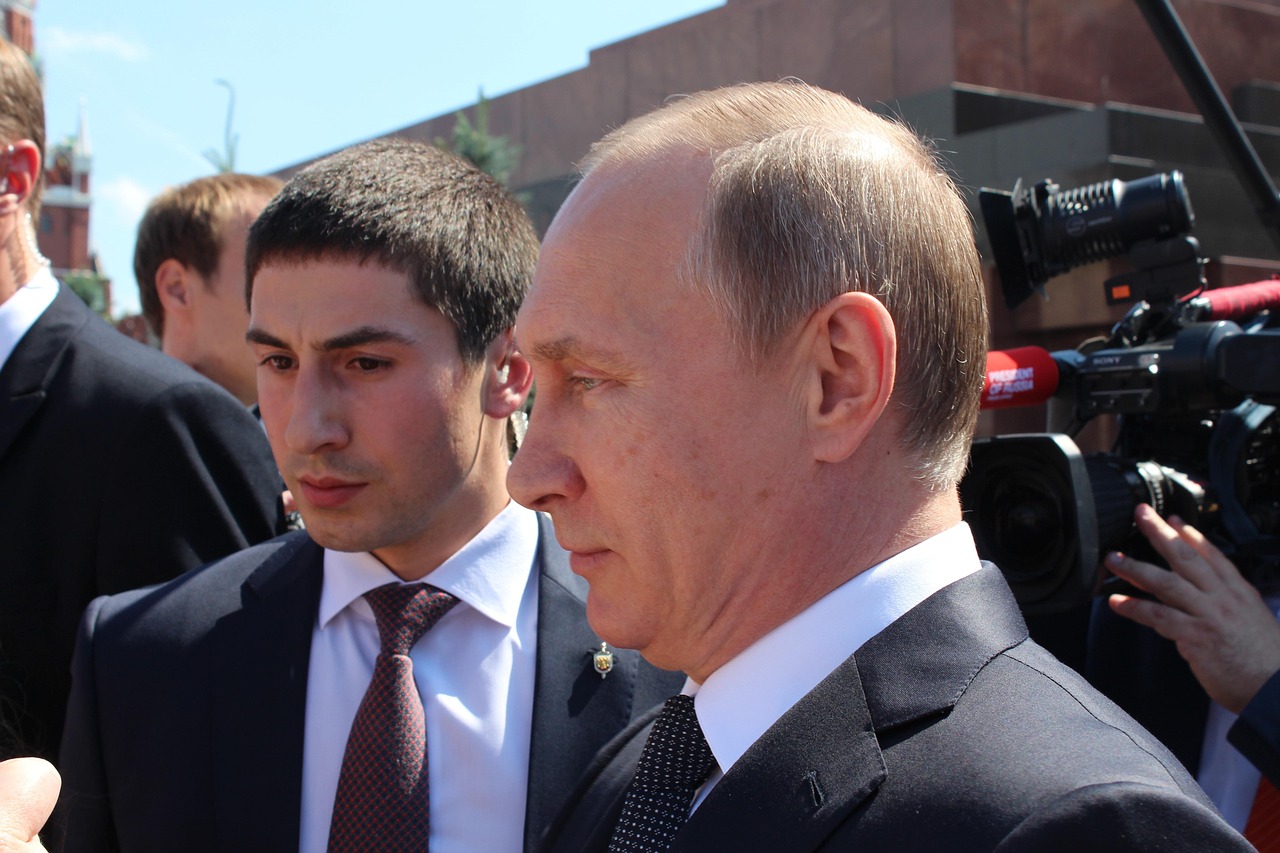
Photographs distributed from Moscow showed the envoys entering the Kremlin complex; the pool image was credited to Vyacheslav Prokofyev. Neither the Kremlin nor the U.S. delegation issued an immediate substantive readout of what was discussed, and it was not clear whether the session produced any agreement, a framework document, or simply a continuation of exploratory talks.
A shuttle diplomacy built on sequence
The choreography is itself the story. The envoys' itinerary — the Gulf, then Russia, then a neutral European venue for the Ukrainian side — reflects a deliberate attempt to keep both capitals inside the same diplomatic process without forcing them into the same room. Abu Dhabi has emerged as a favored back-channel location for Ukraine-related negotiations, prized by mediators for its distance from both Washington's and Moscow's immediate political gravity.
Kushner and Witkoff have become the administration's principal troubleshooters on the file, a pairing that mixes a business-dealmaking instinct with a preference for direct, leader-to-leader engagement over the slow machinery of multilateral talks. That approach has drawn both interest and unease from allies, who worry that bilateral channels can sideline European partners and the sanctions architecture built up over years.
The sequence — Abu Dhabi, then Moscow, then Dublin — has become the defining rhythm of this diplomatic push.
Coverage of the trip varied in emphasis. U.S. outlets such as NPR framed the Kremlin visit as a briefing — an effort to inform Putin of what had been discussed in Abu Dhabi — and highlighted the onward leg to Ireland. European coverage, including Deutsche Welle, cast the meeting more explicitly as "peace talks" and led with the conclusion of the Putin session. South Asian and aggregator outlets emphasized the Abu Dhabi precursor and the fact that Zelenskyy was next on the schedule.
Why Ireland, and why now
The choice of Ireland as the venue for the Zelenskyy meeting is notable. Dublin has been a consistent supporter of Ukraine and has hosted Ukrainian refugees in large numbers, but it has not previously figured prominently in high-level mediation. A meeting on Irish soil allows the U.S. side to stage a session with the Ukrainian leadership in a friendly but geographically neutral setting, away from the intense press concentration of Brussels, Warsaw, or Washington.
For Zelenskyy, the meeting is an opportunity to press for clarity on what, if anything, Washington is prepared to offer Moscow — and to ensure that Ukrainian red lines on territory, security guarantees, and the return of deported children are not traded away in bilateral conversations Ukraine is not party to.
A battlefield reminder: the Starshield dispute
Even as the diplomats moved between capitals, the war's technological dimension intruded on the diplomacy. Ukrainian officials said that Starshield — the military-oriented satellite communications service tied to SpaceX's Starlink constellation — was being limited once again, hampering Ukrainian defenses against Russian attacks.
The complaint is a recurring one in Kyiv. Ukrainian forces rely heavily on satellite connectivity for artillery targeting, drone operations, and command coordination along the front. Periodic restrictions or service interruptions — whether the result of commercial policy, export controls, or contractual disputes — have repeatedly triggered alarm in Kyiv and among Western military planners who treat the constellation as de facto battlefield infrastructure.
The timing matters politically. Any perception in Kyiv that its defensive capacity is being constrained while talks with Moscow proceed will complicate Zelenskyy's room to maneuver and strengthen domestic arguments that negotiations are being conducted over Ukraine's head.
What to watch next
- Readouts: Whether Moscow and the U.S. delegation publish substantive accounts of the Kremlin session, or stay with the vague formulations typical of exploratory rounds.
- The Ireland meeting: Whether Zelenskyy emerges with new security assurances, or with public reservations about the shape of any emerging framework.
- European reaction: Whether Brussels, Berlin, and Paris are briefed in parallel, or learn of developments after the fact.
- The battlefield: Whether communications restrictions for Ukrainian forces persist, and how Kyiv characterizes them publicly.
For now, the trip amounts to motion rather than resolution. But after months in which the peace process appeared frozen, the sight of American envoys moving between Putin's Kremlin and a planned session with Zelenskyy in a single day is the clearest signal yet that Washington intends to test whether a deal is reachable — and to find out quickly.