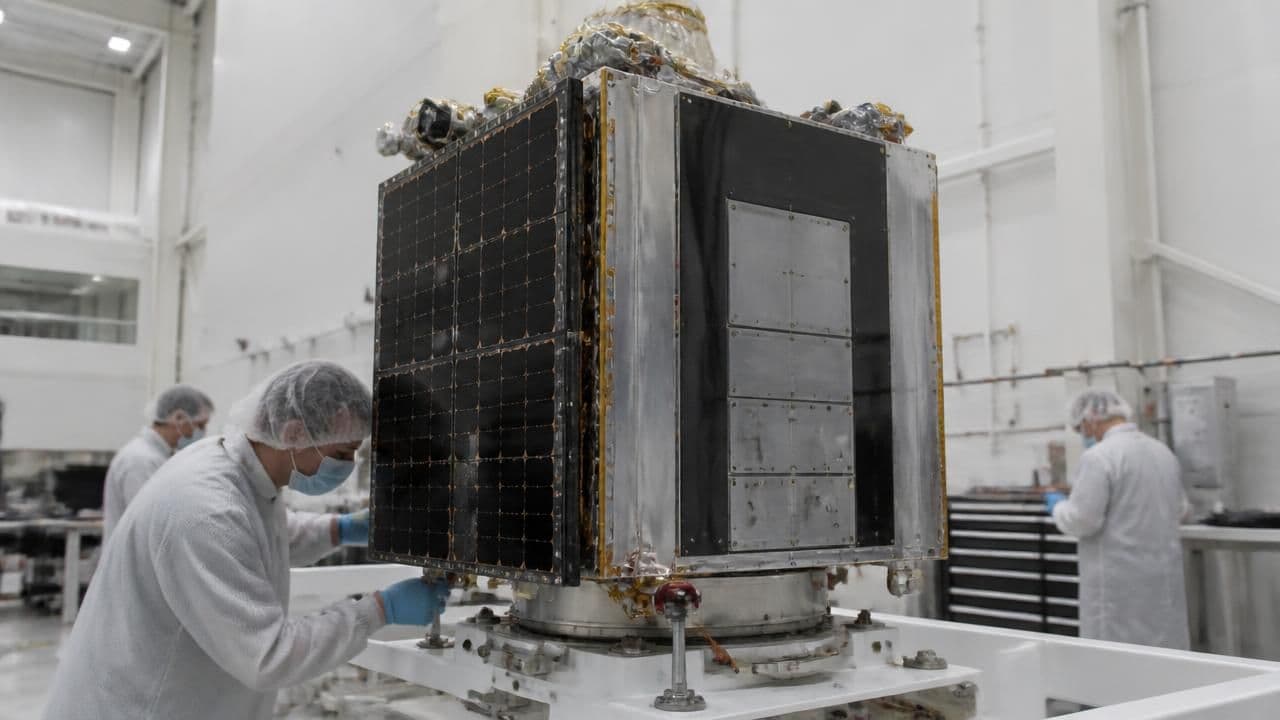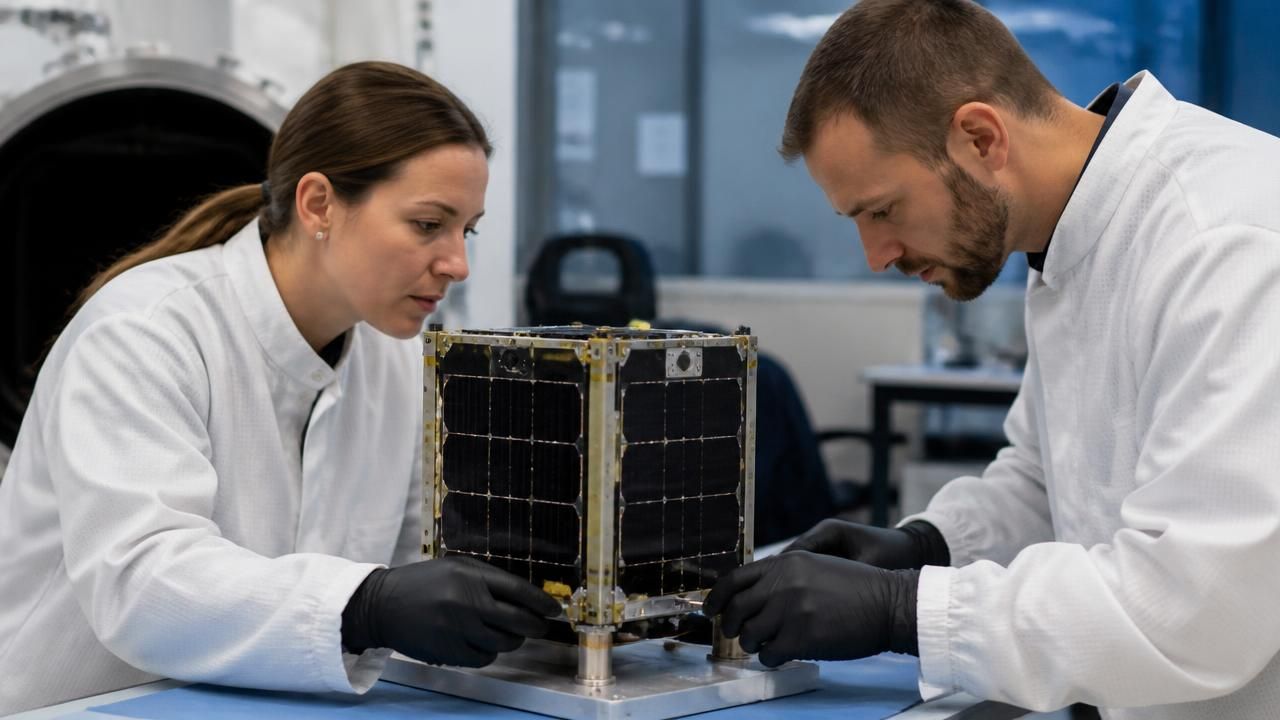
Engineers at NASA's Marshall Space Flight Center in Huntsville, Alabama, have completed a rigorous series of environmental and physical tests on a small satellite that could change how spacecraft maneuver in orbit and beyond. The spacecraft is the centerpiece of the ASCENT (Advanced Spacecraft Energetic Non-Toxic) Propulsion Dual Mode mission, a flight demonstration designed to validate a single, integrated propulsion system that uses one common fuel tank to feed two different types of engines.
The CubeSat, about the size of a large shoebox, aims to solve a long-standing problem in spacecraft design. Traditionally, satellites carry two separate propulsion systems: a high-thrust chemical system for rapid movements such as entering orbit or avoiding collisions, and a low-thrust electric system for highly efficient, slow maneuvers like station-keeping. This dual approach requires multiple fuel tanks and heavy plumbing, consuming valuable mass and volume.
The ASCENT mission flips that paradigm. It uses a single non-toxic propellant—also called ASCENT—that can be used in both a high-thrust chemical mode and a low-thrust electric mode. The system is designed to be safer for ground crews and more efficient for spacecraft, eliminating the need for volatile, toxic fuels and redundant tanks.
The mission will demonstrate a single, non-toxic propulsion system that combines both high-thrust and low-thrust capabilities into a common tank.
Dr. Nehemiah Williams, the demonstration's project manager at NASA, was on hand as the flight hardware began testing in a clean room at Marshall. The tests, which include environmental and physical evaluations, are a critical step before the spacecraft is cleared for launch. NASA says the mission is a 'historic spaceflight demonstration' because it will be the first to prove that a dual-mode propulsion system can work in the harsh conditions of space.
The technology has deep roots in academic research. MIT researchers have been developing a dual-propulsion system that uses a single propellant to provide both chemical and electric thrust. According to MIT, such a system could one day bring CubeSats to Mars, enabling small, low-cost spacecraft to perform deep-space maneuvers that were previously impossible. The NASA mission is expected to test that concept in orbit, bridging the gap between laboratory prototypes and operational spacecraft.
A paradigm shift in spacecraft propulsion
For decades, the trade-off between thrust and efficiency has forced mission planners to choose between speed and fuel economy. Chemical rockets deliver the power needed to escape Earth's gravity or perform rapid orbital adjustments, but they guzzle propellant. Electric thrusters, such as ion drives, are far more fuel-efficient but produce very low thrust, making them unsuitable for quick maneuvers. Combining both on a single spacecraft has meant carrying two separate propulsion systems, each with its own tank, feed lines, and control electronics.
The ASCENT dual-mode system eliminates that redundancy. By using a common propellant and tank, it reduces mass and volume, freeing up precious space for scientific instruments or additional fuel. The propellant itself is non-toxic, unlike hydrazine, a common but highly toxic chemical used in many spacecraft. That makes ground handling safer and cheaper, and it reduces the risk of contamination if a launch fails.
From lab to launch
The recent tests at Marshall are part of NASA's effort to mature the technology for flight. Engineers subjected the CubeSat to a battery of physical and environmental trials to ensure it can survive the vibrations of launch and the vacuum, temperature extremes, and radiation of space. The spacecraft was assembled and tested in a clean room, where Dr. Williams and his team prepared the flight hardware for its upcoming demonstration.
While NASA has not announced a specific launch date, the completion of testing marks a major milestone. The mission is described as a 'flight demonstration,' meaning its primary goal is to prove the technology works, not to carry out a specific science mission. If successful, it could pave the way for a new generation of small satellites capable of operating in deep space, including missions to the Moon, asteroids, and eventually Mars.
Why it matters for CubeSats and deep space
CubeSats have revolutionized access to space by offering a standardized, low-cost platform for small payloads. However, their small size limits how much propellant they can carry, which in turn limits their ability to change orbits or travel beyond low Earth orbit. A dual-mode propulsion system that is compact and efficient could dramatically expand their capabilities.
MIT's research suggests that a CubeSat equipped with such a system could perform the kinds of maneuvers needed for interplanetary travel. For example, a Mars-bound CubeSat could use its high-thrust mode to escape Earth's orbit, then switch to low-thrust electric mode for efficient cruise and course corrections. The same tank would feed both modes, simplifying the design and reducing mass.
- Safety: Non-toxic propellant reduces handling hazards and environmental risks.
- Efficiency: A single tank and integrated plumbing save mass and volume.
- Flexibility: High-thrust and low-thrust modes can be used as needed for different phases of a mission.
- Accessibility: Smaller, cheaper spacecraft could reach destinations once reserved for large, expensive missions.
Differing perspectives and next steps
NASA's framing emphasizes the mission's role in making spaceflight safer and more efficient. The agency highlights the environmental and physical testing as a key step toward launch, and it positions the demonstration as a way to validate a technology that could become standard for future spacecraft. MIT's perspective, meanwhile, looks further ahead, focusing on the potential for CubeSats to reach Mars and other deep-space destinations. Media coverage has picked up on both angles, with headlines touting a 'historic spaceflight demonstration' and a system that 'could bring CubeSats to Mars.'
Despite the promise, challenges remain. Dual-mode propulsion requires precise control of the propellant flow between two very different engine types, and the system must operate reliably in the vacuum of space. The upcoming flight demonstration will be the ultimate test. If it succeeds, ASCENT could mark a turning point in how small spacecraft are designed and where they can go.
As Dr. Williams and his team at Marshall wrap up their testing, the small satellite now stands ready for the next phase: launch. The mission may be small in size, but its implications for the future of space exploration are anything but.