An analysis of ancient grains trapped inside one of the oldest known meteorites has revealed a surprisingly powerful magnetic field in the first 200,000 years of the solar system, a finding that could rewrite the story of how the Sun and planets emerged from a collapsing cloud of gas and dust.
The discovery, reported across science outlets and linked to a NASA study of a pristine meteorite, suggests that magnetism did not play a minor role in the birth of the solar system. Instead, it may have worked alongside gravity, helping to channel material inward, shed angular momentum, and shape the disk that eventually became the planets.
A Time Capsule From the Solar System's Infancy
Meteorites are leftovers from the construction of the solar system about 4.6 billion years ago. Some contain microscopic grains that formed before the planets did, preserving records of the physical conditions in the primordial cloud. By measuring the magnetization of these grains, scientists can reconstruct the strength and direction of ancient magnetic fields.
According to Science Daily, the ancient grains show that a strong magnetic field existed during the solar system's first 200,000 years. That is an extraordinarily early chapter—before the Sun had fully ignited and before the first planetary building blocks had assembled. The field was strong enough to influence the dynamics of the gas and dust from which everything formed.
The discovery suggests magnetism worked alongside gravity to help transform a vast cloud of gas and dust into the sun and planetary disk.
Why Magnetism Matters in Planet Formation
For decades, the standard picture of solar system formation has been dominated by gravity. A molecular cloud collapses, spins faster, flattens into a disk, and gradually clumps into planets. But gravity alone struggles to explain how material actually reaches the growing Sun. As gas falls inward, it conserves angular momentum and spins faster, which should fling it back out.
Magnetic fields offer a solution. They can transfer angular momentum outward, allowing gas to spiral inward. They can also launch powerful jets from the poles of the young star, carrying away excess spin. If the early solar system had a strong field, as the meteorite grains suggest, magnetism may have been a co-star in the formation process, not a background actor.
MSN framed the same result as a fundamental answer to the question of how the solar system formed, emphasizing that the ancient meteorite reveals a key magnetic force alongside gravity. That framing captures the significance: the discovery is not just about a curious magnetic signal but about the basic physics of star and planet birth.
Fire Over Ice
Another Science Daily headline put it bluntly: the solar system chose fire over ice from the very beginning. That phrase reflects a growing body of evidence that the inner regions of the early solar system were hot, with rocky material condensing at high temperatures. Icy bodies may have been more common farther out, but the meteoritic record shows that the building blocks of the terrestrial planets formed in a fiery environment.
The magnetic field finding fits this picture. Strong magnetic activity is associated with vigorous accretion, shocks, and the rapid processing of material. It suggests that the earliest stages were dynamic and energetic, not a gentle, cold collapse.
Pristine Meteorites and Ancient Asteroids
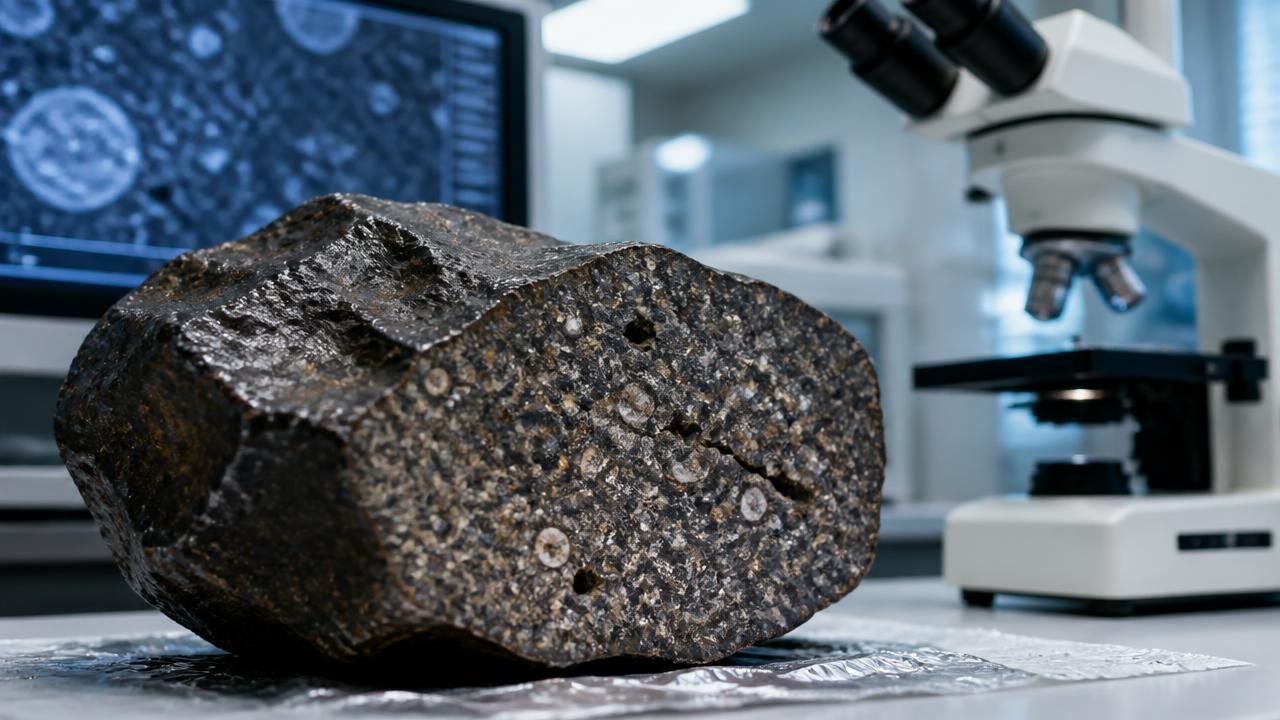
Lake County News, carrying a NASA space news item, reported that a study of a pristine meteorite adds to the story of ancient asteroids. Pristine meteorites are especially valuable because they have not been heavily altered by Earth's environment or by melting and differentiation. They preserve chemical and magnetic signatures from the earliest epochs.
Such samples act as forensic evidence. They tell scientists not only what the early solar system was made of but also what forces were acting on it. The NASA-linked study reinforces the idea that asteroids are not just inert rubble; they are archives of the physical processes that built the planets.
Different Outlets, One Emerging Story
Coverage of the discovery has varied in emphasis. Science Daily focused on the magnetic force itself and its role alongside gravity. MSN highlighted the broader question of solar system formation. Lake County News approached it through NASA's study of pristine meteorites and ancient asteroids. Discover Magazine promised traces of an ancient magnetic field that may have helped build the solar system.
Despite the different angles, the core message is consistent: ancient meteorites are revealing that the infant solar system was more magnetic, more dynamic, and more complex than many models assumed.
What Comes Next
Planetary scientists will now test whether the strong field was a local phenomenon or a widespread feature of the protoplanetary disk. They will compare magnetic records in other ancient meteorites, refine laboratory techniques to avoid contamination, and feed the new data into computer simulations of star formation.
The implications extend beyond our own solar system. Magnetic fields are thought to play a crucial role in the birth of stars and the formation of exoplanets. If magnetism was this important 4.6 billion years ago, it may shape planetary systems around other stars as well.
For now, the message from the meteorites is clear. Gravity may have been the architect, but magnetism was an early and powerful partner in the construction of the solar system. The grains that survived from the first 200,000 years are telling a story of fire, force, and formation—one that scientists are only beginning to read.