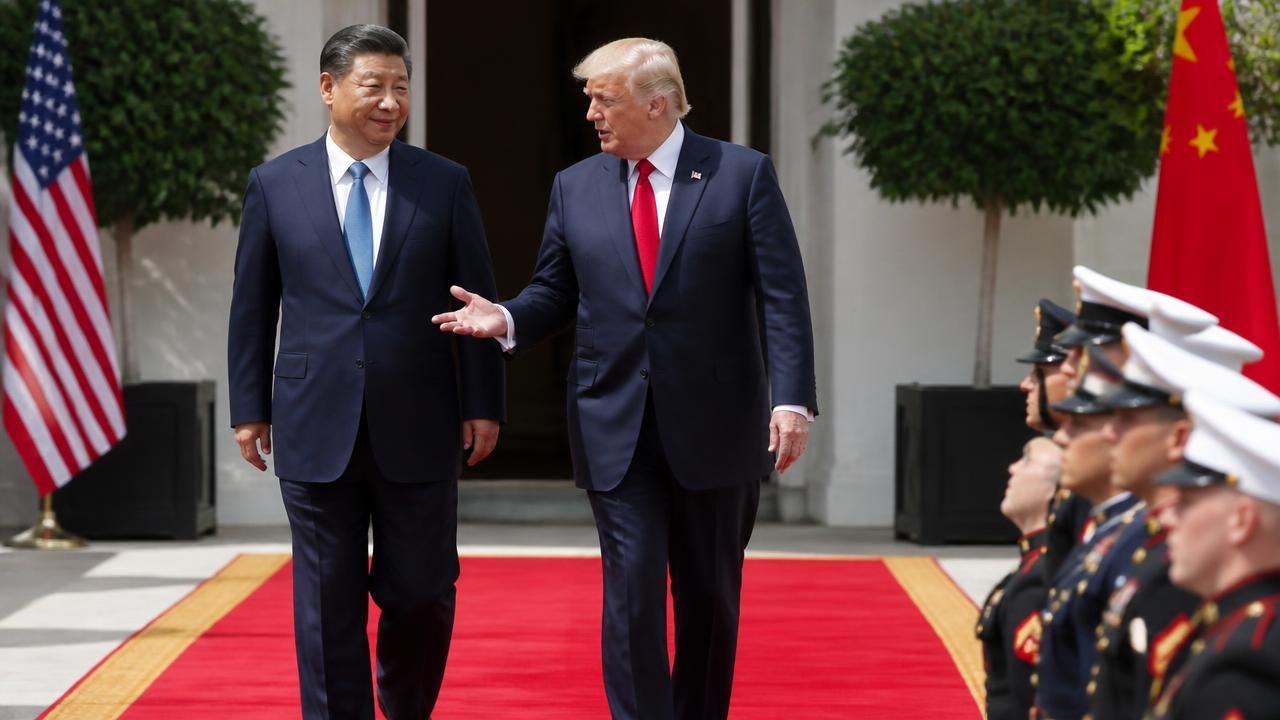
President Trump greeted Chinese President Xi Jinping at the White House on Thursday, opening a carefully choreographed summit that both sides are framing as a chance to steady a relationship defined for years by tariffs, export controls and strategic rivalry. The two leaders were expected to hold meetings across the day, with discussions set to cover artificial intelligence, rare earth minerals, trade and a range of geopolitical flashpoints including Iran and Taiwan, according to NPR News.
The tone struck by both men was notably cordial — a deliberate contrast to the sharp rhetoric that has dominated U.S.-China relations in recent years. But beneath the ceremony, the underlying tensions that brought the two leaders together remain unresolved, and the gap between the summit's atmospherics and its substance is where the real story lies.
A red carpet with hard edges
Coverage of the encounter emphasized the pageantry of the moment. The New York Times described the scene in its live updates as Trump greeting Xi at the White House, "where pomp may mask tensions" — a framing that captures the central dynamic of the day. North Country Public Radio went further, characterizing the event as Trump "rolling out the red carpet" as a high-stakes summit began.
For both leaders, the ceremony itself is part of the negotiation: an outward display of goodwill that buys room for the harder conversations happening behind closed doors.
That gap between image and reality is familiar territory in U.S.-China diplomacy. Summits between the two powers have historically produced warm photographs and limited breakthroughs, with the most consequential outcomes often emerging months later in the form of tariff adjustments, export-license decisions or military-to-military communication agreements.
The agenda: technology, minerals and trade
The issues on the table reflect where the U.S.-China competition has concentrated in recent years.
- Artificial intelligence: Both Washington and Beijing have treated AI as a strategic priority, and U.S. restrictions on advanced semiconductor exports to China have become one of the most sensitive points of friction between the two economies.
- Rare earths: China dominates global processing of rare earth elements, which are essential to everything from electric vehicle motors to defense systems. Any hint of export restrictions from Beijing has repeatedly rattled manufacturers and policymakers in Washington.
- Trade: The tariff architecture built since 2018 remains largely in place, and American importers, farmers and exporters continue to press for clarity on what comes next.
- Geopolitics: Iran and Taiwan are both expected to surface in discussions — two issues where the two governments hold fundamentally divergent positions.
Each topic carries its own domestic political constituency in the United States, which constrains how far Trump can go in offering concessions, just as Xi faces his own internal pressures in Beijing.
Taiwan and Iran: the fault lines beneath the handshake
If trade and technology represent the negotiable tier of the relationship, Taiwan and Iran represent the structural tier — areas where neither side has shown willingness to move.
Washington's longstanding security relationship with Taipei remains a red line for Beijing, and any presidential comment on Taiwan during or after the summit is likely to be parsed as closely in Taipei as in Beijing. Iran adds a second layer of complexity, with U.S. and Chinese interests diverging sharply over sanctions, energy markets and regional security.
Analysts caution that these are not topics amenable to a single afternoon of diplomacy. At most, a summit can produce a commitment to keep talking — and, crucially, to keep channels open in the event of a crisis.
An economic backdrop that raises the stakes
Domestic economics add urgency to the encounter. In a separate development, mortgage rates have surpassed 7% for the first time in well over a year, a threshold that directly affects American household budgets and the broader housing market.
That figure matters to the summit in two ways. First, it illustrates why the White House is under pressure to deliver economic stability — including on trade policy, where tariff costs feed into prices paid by consumers and businesses. Second, it shapes the negotiating environment: a president dealing with elevated borrowing costs at home has less room for a prolonged trade standoff that could unsettle markets further.
For China, a slowing domestic economy and persistent property-sector challenges make access to export markets equally important. Both sides, in other words, arrive at the table with reasons to want a stable outcome — even if their definitions of stability differ markedly.
How the story is being framed
The divergence in coverage is itself instructive. Outlets leaning on the diplomatic angle emphasized the cordial tone and the breadth of the agenda, casting the summit as a genuine attempt at de-escalation. Others foregrounded the theatrics of the White House welcome, noting that elaborate receptions are often used precisely when the underlying relationship is strained.
Both framings can be true simultaneously. A cordial tone is not the same as agreement, and a warm greeting does not erase export controls, tariff barriers or competing claims over Taiwan.
What to watch next
Observers will be looking for signals in three areas:
- Deliverables: Whether the summit produces concrete commitments on rare earth supply, agricultural purchases or a resumption of regular military-to-military talks.
- Language on Taiwan: Even small shifts in phrasing carry outsized diplomatic weight.
- Follow-through: Almost every recent U.S.-China understanding has been tested within months by enforcement actions, licensing decisions or new restrictions.
For now, the image of the two leaders together on the White House grounds will travel further than any communiqué. Whether that image reflects a genuine thaw or simply a pause before the next round of friction will only become clear in the weeks ahead, as policy — not pageantry — tells the truer story.