Collision in al-Ayyat
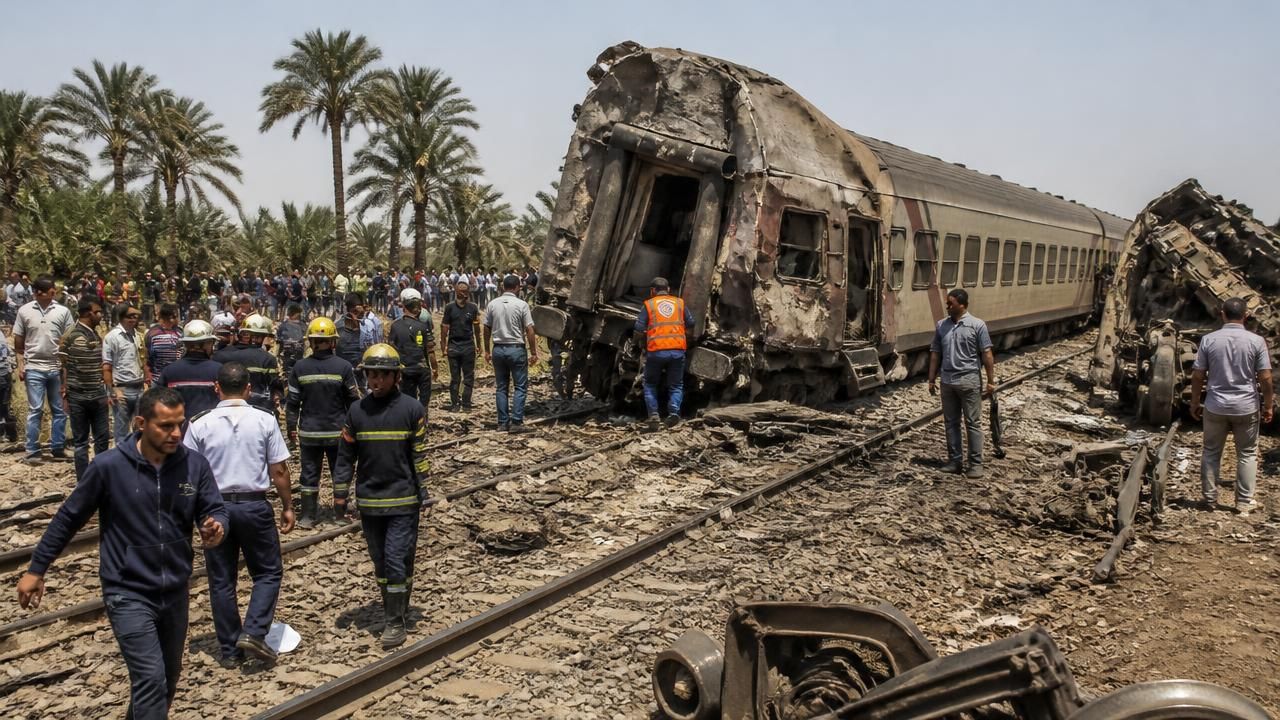
At least seven people were killed and more than 100 injured when two passenger trains collided on Sunday in al-Ayyat district in Giza province, about 30 miles south of Cairo, according to Egypt's health and transport ministries. The crash sent mangled carriages off the tracks and triggered a major emergency response, with rescue teams working into the day to reach the injured and secure the site.
According to the transport ministry, a train travelling to the south-western Fayoum province crashed into the rear of another train heading to the southern province of Aswan. The force of the impact derailed carriages and left debris scattered along the track, according to witness accounts and footage circulated by international broadcasters and social media users. The location, al-Ayyat, is a district in Giza that sits on a busy rail corridor linking Cairo with Upper Egypt.
Casualty toll evolves
The casualty figures shifted through the day, a common feature of fast-moving disaster reporting. Early reports from The New York Times, The Statesman, The Sun and Yahoo put the toll at four dead and 88 injured. By later Sunday, Egypt's health ministry and state-linked Ahram Online reported seven dead and 112 injured, while NBC News, MSN and Three FM cited figures ranging from 112 to 114 injured. The Guardian and BBC reported at least seven killed and more than 100 injured.
At least seven people were killed and more than 100 injured, the health ministry said.
The differences reflect the confusion that often accompanies major transport accidents, as officials revise counts and hospitals update casualty lists. Egyptian authorities did not immediately release the names of the dead, and officials cautioned that the toll could change as rescue work continued.
Emergency response and service disruption
Emergency teams worked around derailed train carriages in the deadly crash, with ambulances ferrying the injured to nearby hospitals. Egypt Railways offered ticket refunds and deployed buses to help passengers whose journeys were disrupted by the El-Ayyat collision, according to Ahram Online. The state-linked outlet framed the story around the impact on Upper Egypt services, reflecting how Egyptian media often emphasise official response and service restoration alongside casualty reporting.
The crash disrupted rail traffic on a route used by thousands of passengers daily. Buses were deployed to bridge gaps for stranded travellers, and railway officials advised passengers to check for updates. The transport ministry said it was coordinating with health authorities and local officials in Giza.
Investigation and political response
President Abdel Fattah el-Sisi ordered a prompt investigation into the collision, according to The Guardian, as questions mounted about how one train was able to strike the rear of another on the same track. The transport ministry said the train bound for Fayoum hit the rear of the Aswan-bound service. Investigators are expected to examine signalling, communications between drivers and control rooms, speed, braking and track conditions.
The political response was immediate but familiar. Egyptian leaders have repeatedly promised accountability after rail disasters, yet serious accidents have continued. The latest crash is likely to renew scrutiny of the country's rail infrastructure, much of which dates back decades and has suffered from underinvestment, overcrowding and maintenance problems.
Safety record and historical context
Egypt's railways have a long and troubled safety record. In 2021, two trains collided in Sohag province, killing more than 30 people and injuring dozens. In 2017, a collision near Alexandria killed dozens more. Smaller derailments and level-crossing accidents occur regularly. Analysts have long pointed to a combination of ageing equipment, insufficient maintenance, human error and weak enforcement of safety rules.
The government has in recent years promoted investment in transport infrastructure, including new rail lines and station upgrades. But the persistence of fatal accidents has undermined public confidence and raised questions about whether spending has reached day-to-day safety operations. The al-Ayyat crash will add to those concerns, particularly because it involved a rear-end collision on an active line.
How outlets framed the story
International outlets led with the human toll and dramatic images of mangled carriages. The Guardian emphasised the presidential order for an investigation, while BBC and CBS News focused on the health ministry's casualty figures. NBC News and MSN highlighted the rising injury count, and tabloid outlets such as The Sun ran shocked footage of derailed carriages.
- The Guardian: President orders prompt investigation after trains collide in al-Ayyat.
- BBC and CBS: At least seven killed and more than 100 injured, health ministry says.
- Ahram Online: Egypt Railways offers refunds and deploys buses as El-Ayyat collision disrupts Upper Egypt services.
- The New York Times and The Statesman: Early reports put the toll at four dead and 88 injured, before later revisions.
- NBC News, MSN and Three FM: Injury figures ranged from 112 to 114 as hospitals updated counts.
The divergence in early numbers is not unusual. In the first hours after a mass-casualty incident, officials often rely on preliminary field reports, while hospitals provide separate counts that are later reconciled. The shift from four to seven dead does not necessarily indicate that victims were initially missed; it can reflect the time needed to confirm deaths and notify families.
What happens next
Investigators will face pressure to establish a clear timeline: which train was moving, what signals were displayed, whether warnings were missed and how quickly emergency services responded. The health ministry will continue to update casualty figures as injured passengers are treated. Egypt Railways will seek to restore full service on the affected line while managing refunds and replacement transport.
For families of the dead and injured, the immediate focus is on hospitals and identification. For the wider public, the crash renews a familiar debate about rail safety in a country where trains remain a vital mode of transport for millions. The outcome of the investigation will determine whether the al-Ayyat collision becomes another grim statistic or a turning point for Egypt's railways.