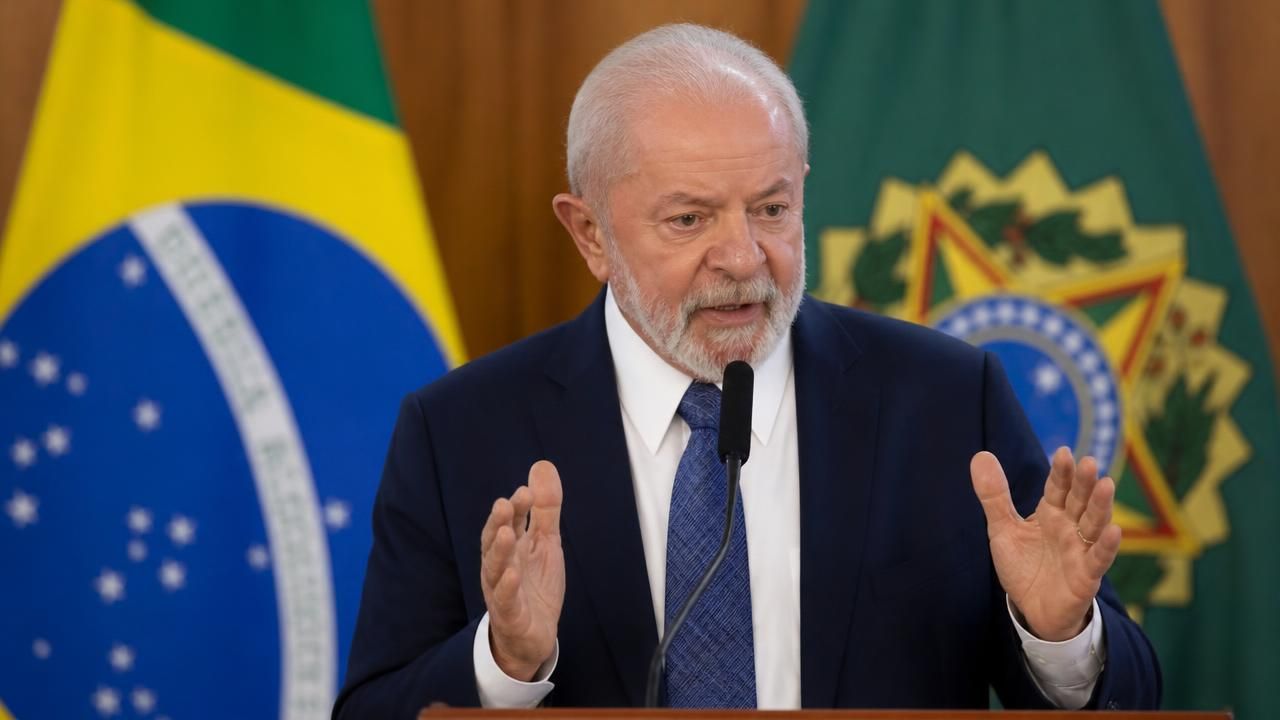
Luiz Inácio Lula da Silva has been declared the winner of Brazil's presidential runoff, completing one of the most improbable political turnarounds in modern Latin American history and securing a fourth non-consecutive presidential term. But the victory, relayed across Brazilian broadcasters and confirmed by the country's electoral authorities, immediately opened a second contest — this one over the direction of Brazil's public finances, the credibility of its institutions and the willingness of a defeated incumbent to accept the result.
Within hours of the result, Lula delivered his first televised address since the vote, using the platform to send a deliberate signal to financial markets. According to Bloomberg Markets, the president-elect pledged to preserve Brazil's public finances without abandoning the social programs that form the backbone of his political coalition — an explicit attempt to reassure investors who had spent the campaign pricing in the risk of looser spending under a Workers' Party government.
Other accounts of the address, carried by MSN, framed the speech as a reaffirmation of fiscal commitment, with Lula described as personally worried about Brazil's persistently high interest rates and pledging budget discipline as the remedy. The emphasis was notable: rather than leading with the expansion of social spending that animated his earlier terms, Lula led with the cost of credit.
Markets Rocked as the Result Landed
The immediate market reaction was turbulent. CNBC reported that Brazilian stocks were "rocked" as Lula's victory became clear, with the report adding that Bolsonaro was reportedly refusing to concede. The same outlet had earlier framed the underlying economic problem in blunt terms:
"Lula's election win leaves Brazil facing a fiscal tightrope." — CNBC
That tension is the central economic story of the new administration. Brazil's fiscal arithmetic is unforgiving: a constitutionally mandated spending floor for health and education, a large and growing pension bill, a highly fragmented Congress that must approve any adjustment, and a central bank that has kept the benchmark Selic rate in double digits to fight inflation. Any new president who loosens spending risks pushing inflation expectations and borrowing costs higher; any president who tightens too aggressively risks breaking the social compact that delivered the victory.
Lula's own diagnosis, as relayed by MSN, points squarely at interest rates — a framing that places the central bank, rather than the budget, at the center of the debate. That is a politically convenient emphasis for a government that wants to spend, but it also reflects a genuine constraint: with debt service consuming a large share of the federal budget, high rates directly crowd out the programs Lula has promised to protect.
A Divided Country and a Hostile Congress
Yahoo News framed the outcome around governance rather than economics, reporting that Lula faces a hostile Congress and a divided country after his win — a characterization echoed in the composition of the legislature, where the incoming president's coalition is far from a working majority and where the centrist bloc that controls the agenda will extract a price for cooperation.
The result also carries an institutional dimension. Multiple outlets, including Reuters and local broadcasters, reported that Bolsonaro rejected the results, declining to concede in the hours after the race was called. The refusal revives memories of the 2022 contest, when the incumbent's silence and subsequent challenges to the electronic voting system unsettled Brazil's institutions and prompted a broad defense of the electoral court by the judiciary, the military and civil society.
The New York Post framed the story through a different lens entirely, casting Lula as a "Trump critic" whose reelection represents a setback for the American right, and describing the defeated incumbent as a Trump ally. That framing speaks to how the Brazilian result is being read internationally: less as a domestic fiscal story than as a data point in the broader contest between populist nationalism and the center-left in the Americas.
Why It Matters Beyond Brazil
Brazil is the largest economy in Latin America and a critical supplier of food, iron ore and increasingly oil to global markets. Its fiscal trajectory determines the path of its currency, the real, and therefore the returns of foreign investors who hold roughly a fifth of the country's traded debt. A credibility problem in Brasília translates quickly into higher borrowing costs across emerging markets.
- Fiscal credibility: whether the new administration presents a credible medium-term budget framework to Congress within its first hundred days.
- Monetary policy: whether the central bank, which holds formal autonomy, can begin cutting rates without inflation expectations de-anchoring.
- Institutional legitimacy: whether Bolsonaro's refusal to concede remains rhetorical or translates into a formal challenge to the result.
- Governance: whether Lula can assemble a working majority in a legislature dominated by an emboldened centrist bloc.
The Long Arc of a Comeback
Lula's return completes a remarkable personal and political arc. A former metalworker and union leader who governed from 2003 to 2010 amid a commodity boom, he left office with record approval ratings, was later imprisoned on corruption charges that were subsequently annulled on procedural grounds, and mounted a comeback that has now delivered a fourth term. His earlier governments paired generous social transfers with fiscal surpluses generated by high commodity prices — a combination that is simply not available in today's more constrained environment.
The tone of coverage across outlets reflects this. Bloomberg and MSN emphasize reassurance: a president-elect who knows he must court investors. CNBC emphasizes the tightrope — structural pressures that no speech can dissolve. Yahoo emphasizes the fragility of governing a divided nation. And the New York Post emphasizes the geopolitical symbolism.
All of them converge on a single point: the televised address was the easy part. Whether Lula can hold together a coalition demanding spending while convincing markets that the arithmetic works will determine whether his fourth term is remembered as a stabilization or as another chapter of Brazilian fiscal drift.